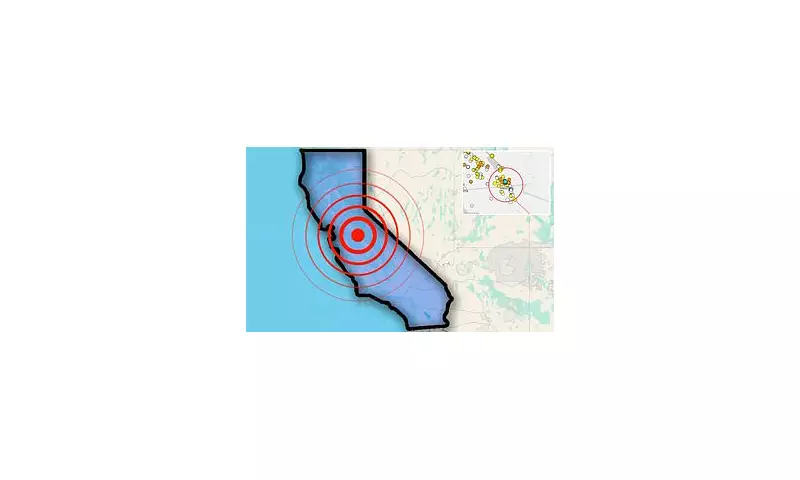
A significant swarm of more than 40 earthquakes has jolted Southern California since the early hours of Wednesday morning, unsettling residents and putting seismologists on alert.
A Flurry of Seismic Activity
The sequence began with a tremor detected by the US Geological Survey (USGS) at 1:40am Pacific Time on Wednesday near the town of Holtville. Activity continued through the night and into Thursday morning, with the most powerful event registering a magnitude of 4.4. The magnitudes within the swarm have varied widely, from minor tremors of 1.1 up to the notable 4.4 event.
According to data from Michigan Tech University, earthquakes below a magnitude of 2.5 are seldom felt, while those between 2.5 and 5.4 are often noticeable and can occasionally cause minor damage. Hundreds of local residents have submitted reports of shaking to the USGS, confirming the widespread sensation. The shockwaves were not confined to California; instruments also recorded the tremors in neighbouring Arizona and Mexico.

Location in a Seismic Hotspot
The epicentre of this activity is critically located. Holtville, a small community of roughly 6,500 people situated about 130 miles east of San Diego, lies within Imperial County's highly active seismic zone. This area is part of the Salton Trough, a slowly spreading rift valley where the Earth's crust fractures under immense tectonic pressure, leading to frequent small-to-moderate earthquakes.
More importantly, the region contains a complex network of fault lines intimately connected to the main San Andreas Fault. Scientists have long warned that this major fault line is overdue for a massive earthquake, potentially reaching a magnitude of 7.9 or higher. While swarms of this size are typically harmless in themselves, seismologists note they can signify shifts in stress along major faults, which sometimes act as precursors to a larger seismic event.
Monitoring and Preparedness
Authorities and researchers are closely monitoring the situation. The USGS continues to track aftershocks and analyse data from the swarm. For residents across Southern California, this event serves as a stark reminder of the region's volatile geology and the constant need for earthquake preparedness.
This remains a developing story, and further updates are expected as more data becomes available.