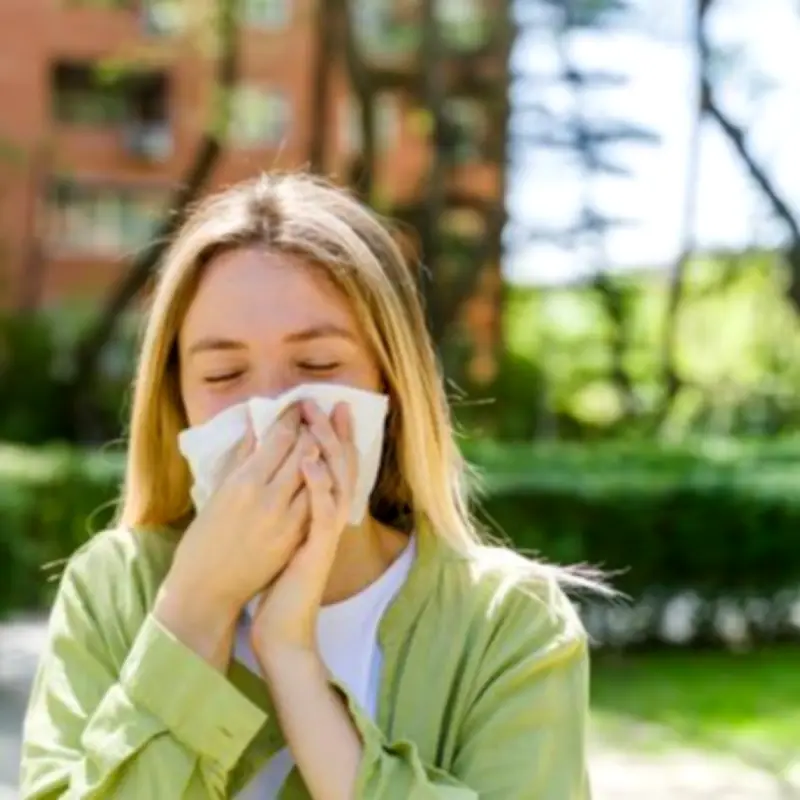
Many hay fever sufferers in Greater Manchester are experiencing increased symptoms today due to a surge in pollen levels. The Met Office has warned that high pollen counts are affecting the region, with grass pollen particularly prevalent.
Why is pollen so high today?
According to the Met Office, recent warm, dry conditions with light winds have created ideal conditions for pollen release and dispersal. A lack of rainfall has prevented pollen from being washed away, exacerbating symptoms. Additionally, last week's wet weather in Greater Manchester promoted grass growth, leading to higher pollen production.
Andrea Bishop, a Met Office spokesperson, explained: "Grass pollen is the main cause of hay fever at this time of year and typically peaks in June, with levels currently high across parts of the Northwest, including Greater Manchester. Weed pollen is also present at lower levels."
Pollen count details
In Greater Manchester, grass pollen levels are particularly high. The Kleenex pollen forecast indicates a grass pollen reading of 74 for Monday, June 15, which falls within the high range of 50 to 150 per cubic metre. More than 10 million Brits suffer from hay fever, an allergy to pollen particles released by plants.
What can hay fever sufferers do?
Thorrun Govind, a TV pharmacist based in Manchester, advises hay fever sufferers to seek advice from their local pharmacy. She emphasizes the importance of taking antihistamines regularly during peak pollen season rather than waiting for symptoms to flare.
"Pharmacies are well placed to support people early and to help them get the right treatment combination," Ms Govind said. "We can also advise patients when they need to contact their GP if symptoms aren't improving."
Practical tips include checking pollen forecasts, reducing outdoor exposure when levels are high, wearing wraparound sunglasses, and using barrier balm around the nostrils.
Outlook for the week
The Met Office predicts high pollen levels across the North West from Monday to Wednesday, dropping to medium on Thursday, and rising to high again on Friday. Southern and eastern areas may experience very high levels throughout the week.
Ms Govind added: "Community pharmacy is often the first point of contact for patients when it comes to hayfever. We are well placed to support early, effective management without the need for a GP appointment in most cases."