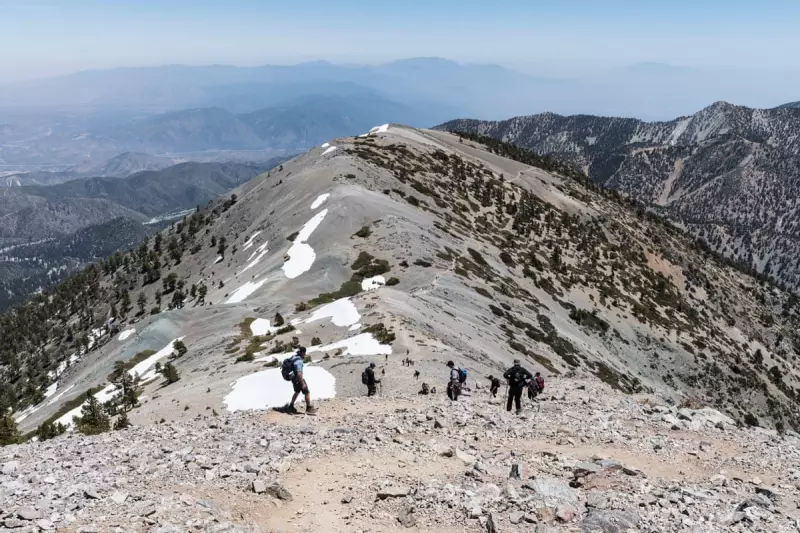
The snow-dusted peak of Mount Baldy, a familiar sight on the Los Angeles skyline, has long lured city-dwellers seeking a wilderness escape. Yet this seemingly accessible mountain has become a deadly trap for the unprepared, with a recent tragedy renewing urgent calls for stricter safety measures.
A Fatal Plunge and a Grim Discovery
In late December 2024, a 19-year-old hiker fell 500 feet from the perilous Devil's Backbone trail on Mount Baldy. When rescue crews finally reached the location in fierce weather, they found the teenager dead. Shockingly, they also discovered the bodies of two other men who had perished. The recovery operation took an additional day due to dangerous conditions.
This incident brought the mountain's grim tally to 23 fatalities between 2016 and 2025. In response, local officials closed all hiking trails in the area for two weeks to "prevent further loss of life," according to the county sheriff. While trails have since reopened, the deaths have ignited a fresh debate about introducing a permitting system or preemptive closures during hazardous weather.

"It's Unforgiving": The Rescue Veteran's Warning
Rob Klusman, operations leader of the Sierra Madre Search and Rescue Team, has 30 years of experience rescuing people from Mount Baldy. He has participated in over 70 operations on its slopes. Klusman emphasises the mountain's unique and deceptive nature.
"In a straight line, in less than 50 miles, you go from sea level to 10,000ft. And in between are 10 million people," he explained. This proximity leads many Angelenos to venture out without understanding how conditions can change dramatically, not just seasonally, but from one day to the next.
Klusman notes that for every 1,000 feet in elevation, the temperature drops by 5F. On an 80F day in LA, it can be near-freezing at the summit. "The winter is far more complex, far more unforgiving," he stated. "A minor injury in the summertime that may incapacitate you... may kill you in the winter."
Inadequate Gear and a Close Call
The critical need for proper equipment was highlighted earlier in January when two teenagers ignored trail closures and became stranded overnight. They were wearing microspikes, designed for flat trails, but Mount Baldy's icy slopes require crampons—metal teeth that bite into hard snow and ice.
Klusman explained the danger: "That snow will be slop right now, but as soon as the sun goes down... it's going to turn into bulletproof ice. If you have something like microspikes on, they will not penetrate it at all, period—they will not work." The teens survived a cold night and hiked out unharmed, but rescue teams searched for them throughout the night.
Official Calls for Federal Action and Hiker Responsibility
San Bernardino County Sheriff Shannon Dicus has called for a permitting process to manage hiker numbers on Mount Baldy, which sits within the federally managed Angeles National Forest. Following the recent deaths, Dicus urged the US Forest Service to take visitor safety "seriously."
"The frequency of rescues our department is involved in annually, and the lack of concern for what’s happening on Mount Baldy by those who are responsible for maintaining visitor’s safety needs to be addressed," Dicus said in a statement. He confirmed ongoing meetings with federal officials to express his concerns.
Meanwhile, Angeles National Forest management announced it would seek public comment on a new strategy for the Mount Baldy area until the end of February. A forest spokesperson stated the goal was to "balance public safety with keeping the area open" and encouraged visitors to "know before you go."
The Vital Message from Search and Rescue
Rob Klusman believes managing agencies must re-evaluate best practices for the mountain. He noted that eight search and rescue teams in Los Angeles County alone respond to roughly 800 mountain rescues a year.
However, he delivered a crucial final message for all potential hikers: "Search and rescue is free. We don’t charge for responding, and if somebody needs help, that’s what they do." His advice is clear: for some, it means staying away until the snow melts; for others, it means getting the right equipment, proper training, and building experience slowly.

The stark beauty of Mount Baldy continues to beckon, but its dangers are now impossible to ignore. The conversation has shifted from simple warnings to serious discussions about systemic change to protect the public while preserving access to the wild spaces so close to the city.