Hopes for a picture-perfect white Christmas with festive snowball fights are set to be dashed this year, according to the latest forecast from the Met Office. The national weather service indicates that the chance of any significant snowfall on 25 December is remarkably low, predicting largely dry and settled conditions for many across the UK.
A Chilly but Largely Snow-Free Festive Forecast
The meteorological picture for the holiday period is being shaped by an area of high pressure building over the country. While this will bring more settled weather, it also ushers in a strong easterly breeze that will make it feel distinctly chilly. Temperatures on Christmas Day are expected to reach a daytime high of around 7°C, with night-time lows plunging to between -3°C and -4°C in some areas.
Marco Petagna, a Met Office meteorologist, told The Guardian that the south coast of England, particularly towards South Devon and Cornwall, stands the greatest chance of seeing "the odd wintry flurry." However, he was quick to temper expectations, stating plainly: "The chance of noteworthy snowfall is only around 10%, so nothing significant."

The Technicality of a 'White Christmas' and Its Historical Rarity
For a day to be officially recorded as a 'white Christmas' by the Met Office, only a single snowflake needs to be observed falling somewhere in the UK. By this technical definition, it is not an unusual event. Data from the Royal Meteorological Society (RMetS) shows snow has fallen on Christmas Day at least 54 times in the past 66 years somewhere in Britain. In fact, every year since 2020, except for 2024, has technically qualified.
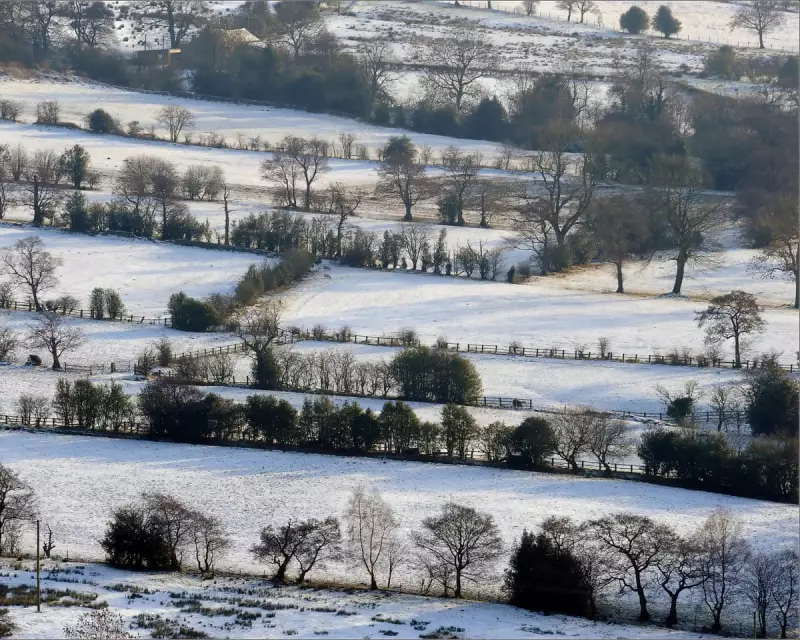
However, the dream of waking up to a thick, festive blanket of snow is increasingly rare. The RMetS notes that widespread lying snow on Christmas Day has occurred only four times since 1960: in 1981, 1995, 2009, and 2010. The record was set in 2010, when 83% of the UK's weather stations reported snow on the ground.
The decline in snowy Decembers is linked to the broader climate crisis, with Met Office data confirming warmer average temperatures for the month in recent decades. This reduces the overall likelihood of festive snow, though natural variability can still bring cold snaps.
Snow's Seasonal Shift and Historical Winters
Those disappointed by the Christmas forecast should not give up on winter entirely. The Met Office confirms that most of the UK's snow days typically occur between January and March. History is filled with examples of profoundly harsh winters that truly began after the festive season.
The infamous winter of 1962-63, for instance, saw much of England covered in snow every day from late December until early March. Similarly severe conditions were recorded in the winter of 1946-47. These periods contrast with the common cultural image of a snowy Christmas, often attributed to the influence of Charles Dickens's writings and the fact that Christmas fell later in winter under the old Julian calendar before 1752.
So, while the prospects for a white Christmas this year are slim, the potential for wintery weather and snowball fights in the new year remains very much alive. As the poet Sara Coleridge once wrote: "January brings the snow, makes our feet and fingers glow."