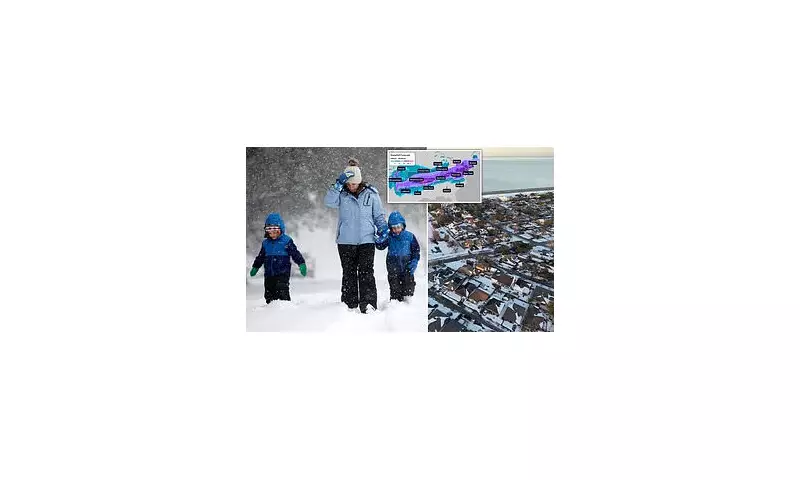
A crippling winter storm system, named Winter Storm Fern, is poised to unleash devastating conditions across a vast swathe of the United States, threatening millions from Texas to the Northeast. Forecasters warn of potentially historic snowfall totals reaching up to two feet alongside dangerous ice accumulations, with the severe weather expected to disrupt travel and cause widespread power outages.
Unprecedented Scale and Severity
Meteorologists are describing the impending storm as potentially one of the worst in recent memory for the southern and eastern regions. The system could impact upwards of 180 million people—approximately half of the U.S. population—as it moves through 33 states from Friday through Monday. The storm's development involves arctic air from Canada colliding with moisture-rich air from the Gulf of Mexico, creating a perfect setup for broad swaths of heavy snow, sleet, and freezing rain.
Geographic Impact and Forecast Timeline
The storm is forecast to begin its assault on Friday afternoon, initially dumping snow, sleet, and freezing rain on areas of Kansas, Oklahoma, and western Texas. It will then rapidly intensify and spread eastward.

By Friday night, a "wintry mess" of precipitation is expected to engulf the Central Plains, lower Mississippi Valley, and parts of Tennessee. The peak severity is anticipated for Saturday and Sunday, with the worst conditions covering:
- The Mississippi and Ohio Valleys
- Kentucky, Tennessee, West Virginia, and Virginia
- Parts of the Carolinas and northern Georgia
Major metropolitan areas in the path include Charlotte, Richmond, Washington D.C., Baltimore, Philadelphia, New York City, Dallas, Houston, Nashville, St. Louis, Chicago, and Cincinnati, among others. Many of these cities could see heavy snow accumulations of up to two feet.
Crippling Ice and Extreme Cold Threats
Particular concern is focused on the threat of crippling ice. The Weather Channel has issued its most severe ice warning—termed "crippling"—for parts of Texas, Louisiana, Mississippi, Alabama, and Tennessee, where ice accumulations could reach one-tenth of an inch. This is especially dangerous for southern states unaccustomed to such extreme winter weather, where even small amounts can cause widespread chaos on roads and power networks.
Accompanying the precipitation will be dangerously low temperatures. Wind chills could plummet below zero in Dallas, Austin, and Oklahoma City by Sunday morning. In the Midwest, wind chill values may fall between 35 and 50 degrees below zero, with temperatures up to 30 degrees below normal in the Dakotas and Michigan.
Emergency Declarations and Official Warnings
In anticipation of the storm's devastating impact, multiple state governors have declared states of emergency to mobilize resources. These declarations allow for the activation of the National Guard and coordination of emergency response efforts.
States that have taken official action include:
- Texas: Governor Greg Abbott activated state emergency response resources on Tuesday.
- South Carolina: A state of emergency is in effect, enabling resource mobilization and National Guard activation.
- North Carolina: Governor Josh Stein declared a state of emergency on Wednesday, urging residents to prepare for power outages and avoid travel.
- Maryland: Governor Wes Moore declared a "State of Preparedness" to enhance response collaborations.
Governor Stein specifically advised North Carolinians: "Please get ready. Get everything you need in advance of the storm and have a plan in case your power goes out... stay home and off the roads this weekend unless absolutely necessary." Similar pleas for vigilance and preparation have been issued by officials in Georgia and other affected states.
Public Response and Lingering Effects
The severity of the forecasts has already triggered panic buying in stores across threatened regions as residents rush to secure supplies. The National Weather Service has issued winter storm alerts for millions living in the storm's path.

While the storm is expected to begin subsiding in southern states like Texas, Oklahoma, and the Mississippi Valley by Sunday, bad weather will persist in the Ohio Valley, Virginia, and the Carolinas. Snowfall is forecast to linger in New England and New York through Monday, potentially compounding issues in areas recently hit by severe winter weather over the New Year period.
Officials are warning that the combination of heavy snow, ice, and extreme cold could lead to long-lasting power outages, treacherous road conditions, and significant disruptions to daily life for a large portion of the country well into next week.