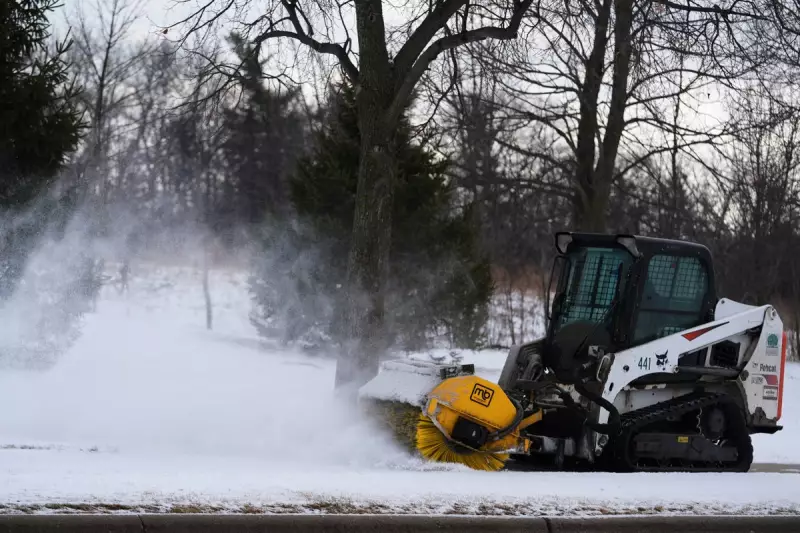
As millions across the United States brace for a major winter storm this weekend, public safety officials and medical experts are urging residents to take proactive measures against the season's most dangerous hazards. The National Weather Service warns that heavy snow, sleet, and freezing rain will impact regions from the Midwest to the East Coast and across southern states including Texas, Georgia, and the Carolinas.
Critical Indoor Safety Measures During Winter Storms
While staying indoors during severe weather is advised, home heating systems operating continuously can inadvertently create lethal risks. The US Centers for Disease Control and Prevention highlights that furnaces, stoves, and heaters can produce deadly carbon monoxide fumes, with portable generators and cars running in garages posing additional threats.
Dr. Alex Harding, assistant professor of emergency medicine at Houston's Baylor College of Medicine, emphasises the particular danger of carbon monoxide's undetectable nature. "The symptoms of carbon monoxide poisoning can be really insidious. They can sneak up on patients and can range from just developing a headache or maybe a little bit of nausea to all the way to losing consciousness and seizures," he explains.

Understanding and Preventing Hypothermia Risks
The approaching cold snap presents significant dangers through unsafe exposure to elements, particularly in regions like Texas that have experienced mild conditions until now. Jon Palmer, a meteorologist with the National Weather Service in Gray, Maine, notes: "Really cold temperatures and winds can make temperatures feel a lot colder, and the result of that could be cold air that could eventually lead to frostbite at a much faster rate or hypothermia at a much faster rate than normal."
Hypothermia occurs when the body loses heat faster than it can produce it, with prolonged exposure to frigid temperatures creating serious risks. Dr. Harding identifies this as "one of the bigger concerns, especially if we do have any kind of certainty in like power grids or electricity failing." The danger intensifies for those exposed outdoors without appropriate clothing or with wet garments, though vulnerable populations including people with disabilities and homeless individuals face particular challenges finding warm shelter.
Protecting Home Infrastructure from Freezing Damage
Frozen pipes present a widespread problem during severe winter weather, particularly in southern regions where plumbing is often located outside structures. Jose Parra, a master plumber with Abacus Plumbing, Air Conditioning & Electrical in Houston, recommends insulating exposed pipes, draining sprinkler systems, and allowing indoor faucets to drip during freezing temperatures to maintain water flow.
"A lot of what we're fixing, I would say 80% to 90%, could have been prevented with just a little bit of work ahead of time," Parra observes, highlighting the importance of preventive maintenance.
Navigating Electric Vehicle Challenges in Cold Conditions
Experts acknowledge that cold weather presents specific difficulties for electric vehicle owners, though with proper planning and adjustments, normal travel remains possible. The performance limitations stem from lithium ions moving more slowly through electrolyte fluids in cold temperatures, reducing energy release and depleting batteries faster.
Neil Dasgupta, associate professor of mechanical and materials science engineering at the University of Michigan, indicates that automakers are developing better battery protection and warming systems for charging, while new, more cold-resilient battery chemistries are under development.
This comprehensive winter safety guidance comes as communities nationwide prepare for potentially hazardous conditions, emphasising that advance preparation and awareness of these specific risks can significantly reduce winter weather dangers.