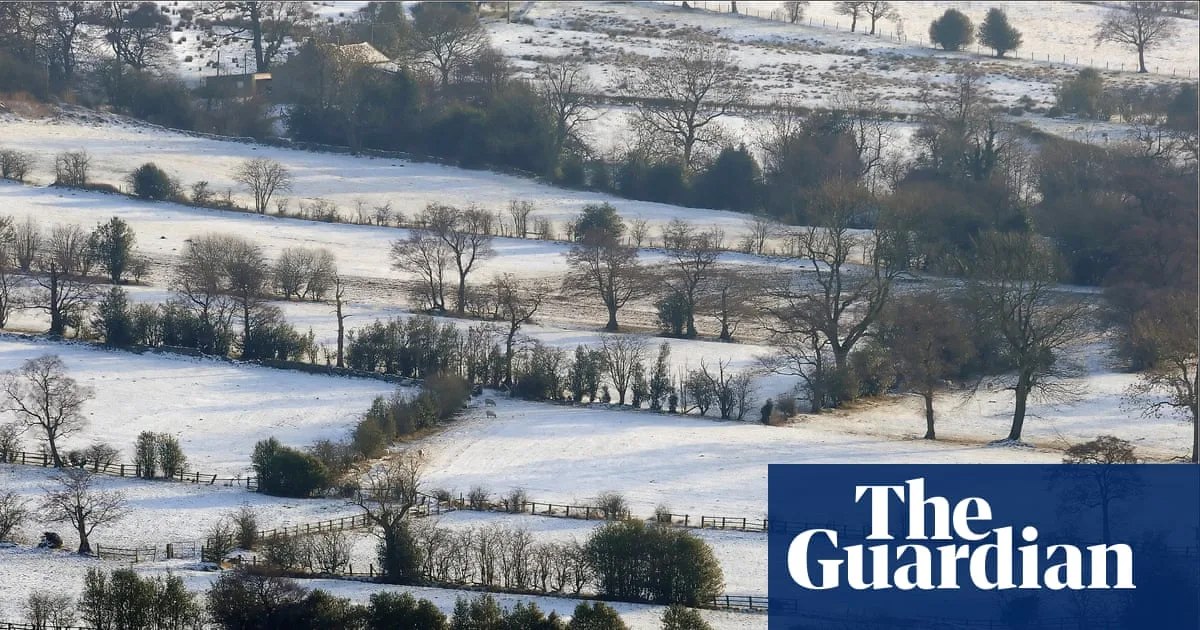
The Met Office has indicated that while a white Christmas is technically possible, the chances of significant snowfall are slim this year. High pressure building over the UK is expected to bring drier and more settled weather for many, though some areas may see showers. A strong easterly breeze will make it feel colder, with temperatures on Christmas Day forecast to reach a daytime high of 7°C and night-time lows of -3°C to -4°C.
According to Marco Petagna of the Met Office, the south coast of England, particularly South Devon and Cornwall, has the greatest chance of seeing the odd wintry flurry. However, he noted that the probability of noteworthy snowfall is only around 10%, meaning any snow is unlikely to settle. Technically, a white Christmas only requires a single snowflake to fall anywhere in the UK, but widespread snow cover is rare.
The Royal Meteorological Society reports that snow has fallen on Christmas Day in at least one location in the UK 54 times in the past 66 years. Every year since 2020 has seen snowflakes, though not necessarily settling. In 2023, 11% of weather stations recorded snowfall, and 9% in 2022, but none reported lying snow. A thick blanket of snow on Christmas has occurred only four times since 1960: in 1981, 1995, 2009, and 2010.
Historically, white Christmases were more common during the Little Ice Age between the 16th and 19th centuries, which may explain why Charles Dickens' writings often feature snowy Christmases. Additionally, before 1752, Christmas fell later in winter due to the Julian calendar. More recently, harsh winters like those of 1946–47 and 1962–63 brought extensive snow cover, but climate change has made Decembers warmer, reducing the likelihood of snowfall.
Despite the low chance of a white Christmas this year, the Met Office notes that most UK snow days occur between January and March, so winter weather enthusiasts may still see snow later in the season.