The Truth About 'Exploding' Trees During Extreme Cold Weather
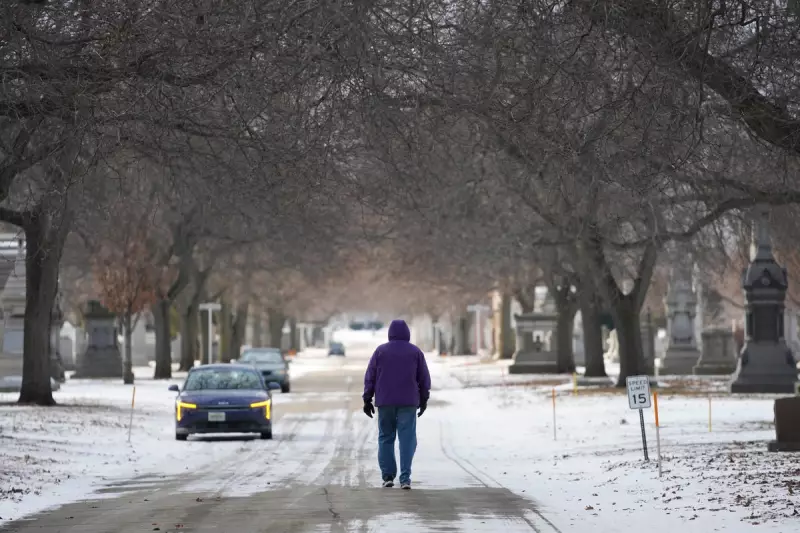
As a dangerous winter storm threatens to impact over 200 million Americans this weekend, sparking concerns about travel disruptions and power outages across more than two dozen states, a curious meteorological claim has captured public attention. A popular social media meteorologist recently warned of 'exploding trees' in the Midwest and Northern Plains, where temperatures are forecast to plummet well below zero. This dramatic assertion has prompted both fascination and scepticism, leading experts to clarify what truly happens to trees during severe cold snaps.
What Actually Occurs When Trees Face Extreme Cold?
Contrary to the sensationalised 'exploding trees' narrative, arborists and meteorologists explain that trees do not literally explode. Instead, they can develop what are known as frost cracks. This phenomenon occurs when extreme cold causes the sap inside a tree to rapidly freeze and expand, while simultaneously, the outer bark contracts due to the frigid temperatures. The resulting pressure build-up can lead to a loud splitting sound as the wood fibres separate.
While this splitting can be remarkably loud—often compared to the crack of a rifle shot—actual tree explosions are considered exceedingly rare. Frost cracks typically require temperatures to drop to -20 degrees Fahrenheit or lower to occur, conditions that are severe but not unheard of in regions like the Northern Plains during intense winter storms.

Expert Criticism of the 'Exploding Trees' Claim
Many professional meteorologists and forestry experts have criticised the 'exploding trees' description as hyperbolic and misleading. They emphasise that while the visual and auditory effects can be startling, the process is a natural mechanical response to thermal stress rather than a violent explosion. Understanding this distinction is important for public awareness, as it helps demystify winter weather phenomena and prevents unnecessary alarm.
The broader context of the forecasted winter storm, which poses genuine risks to infrastructure and safety, underscores the need for accurate scientific communication. By focusing on factual explanations like frost cracks, experts aim to provide clear information that enhances public preparedness without resorting to sensationalism.