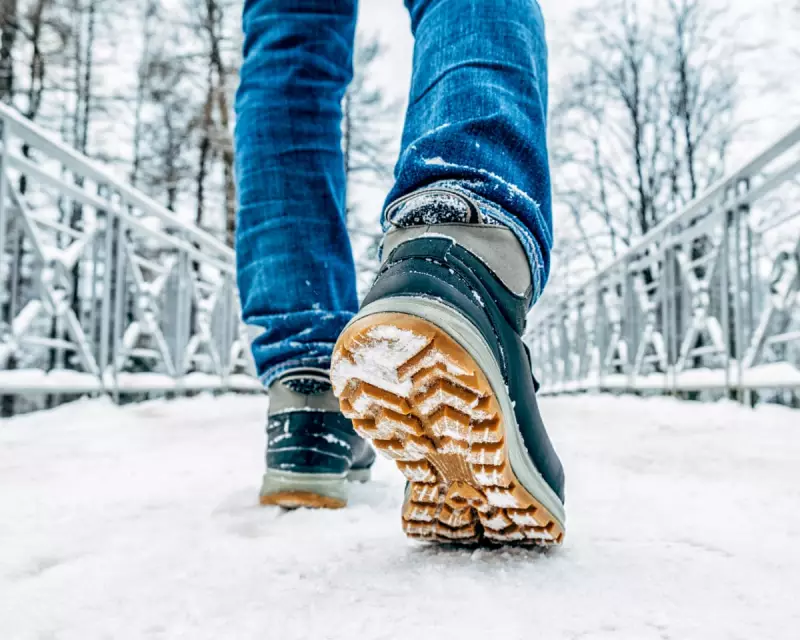
Canadians have long held a fascinating belief: they can gauge the outdoor temperature simply by listening to the sound of snow crunching under their boots. This piece of folklore, often shared in snowy regions, now finds support from scientific inquiry, shedding light on the intricate relationship between temperature and auditory cues in winter environments.
The Science Behind Snow's Sonic Signature
Researchers from the University of Wisconsin have delved into this phenomenon, suggesting that temperature plays a crucial role in shaping the sounds produced when snow is compressed. While the topic has not been extensively studied, their insights offer a compelling explanation for why snow can sound different across various temperature ranges.
Above -10C: The Crunch and Squelch
At temperatures above -10 degrees Celsius, the pressure from a footstep causes a thin layer of snow to melt momentarily. This process generates a distinctive crunching noise as the snow compresses. As temperatures climb closer to zero degrees Celsius, the sound transitions into more of a squelch, akin to walking through slush, as the snow grains slide against each other with increased moisture content.

Below -10C: The Squeak of Ice Crystals
When the mercury dips below -10 degrees Celsius, the auditory experience shifts dramatically. Here, the dominant sound arises from the crushing of ice crystals themselves, producing a characteristic squeaking noise. The lower the temperature falls, the more these ice crystals tend to adhere to one another, creating greater friction and, consequently, a louder and more pronounced squeak underfoot.
Factors Influencing Snow Sounds
Beyond temperature, several other elements contribute to the exact sound of snow. These include the depth of the snow layer, the type of surface beneath it, and how long the snow has been settled on the ground. Each factor adds complexity to the acoustic profile, making every snowy walk a unique auditory experience.
Learning to Listen: A Lifelong Skill
Given these variables, it seems plausible that individuals who have spent a lifetime navigating snowy terrains could develop the ability to distinguish subtle sound differences associated with specific temperatures. This skill might not only serve as a quirky party trick but also as a practical warning system. For instance, recognising the sharp squeak that signals extremely cold conditions could prompt someone to turn back indoors for safety.
In summary, while the interplay of factors is complex, the research from the University of Wisconsin lends credence to the Canadian claim. By understanding how temperature affects snow's sound, we gain a deeper appreciation for the subtle ways in which nature communicates through everyday experiences.