Historic Snowfall Buries Russia's Far East in Arctic Blast
The Russian Far East has been engulfed by its most severe snowfall event in six decades, as a powerful winter storm system swept across vast swathes of Asia. This extraordinary meteorological phenomenon has triggered widespread transport disruption, closing major roads in China, stranding air passengers in Japan, and leaving entire regions of Russia at a standstill.
Kamchatka Peninsula Submerged Under Metres of Snow
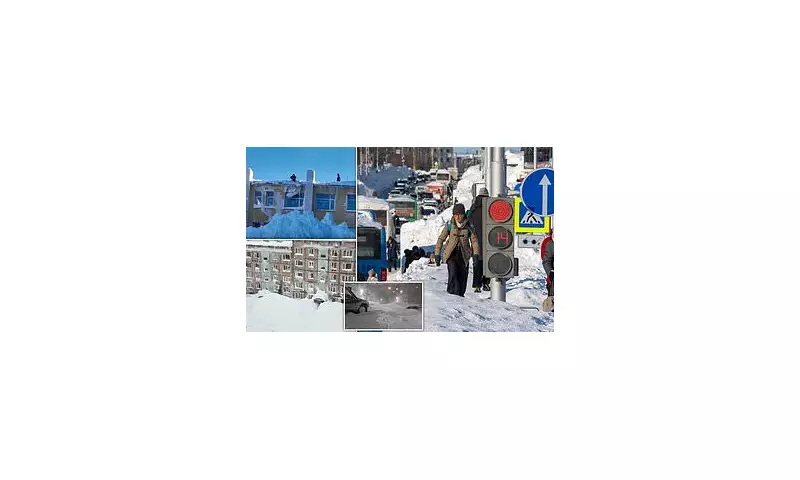
In Russia's remote Kamchatka Peninsula, communities have been contending with snowdrifts several metres high, which have completely blocked building entrances and buried vehicles. Official weather monitoring stations recorded accumulations exceeding two metres (6.5 feet) of snow in some areas during the first half of January alone.
The scenes have been described as apocalyptic, with many cars almost entirely submerged. Even robust four-wheel-drive vehicles have struggled for traction or been rendered completely immobile. Residents have been forced to dig narrow, trench-like paths through the dense snowpack simply to access their apartment block entrances.

In the port city of Petropavlovsk-Kamchatsky, located some 6,800 kilometres east of Moscow, locals adapted with a degree of dark humour. Videos emerged showing people walking atop towering snowbanks next to traffic lights, with some even leaping from the drifts for amusement. 'It's like a sand dune,' remarked resident and blogger Polina Tuichieva, capturing the surreal, mammoth scale of the snowfall.
The Science Behind the Arctic Onslaught
Climate scientists have identified the root cause of this extreme weather event. They point to concurrent waves of frigid air descending from the Arctic, simultaneously impacting Eastern Russia, Asia, and a separate system affecting Eastern Europe.
'You've got these two simultaneous bursts of cool air coming down from the Arctic due to a waviness in the jet stream,' explained climate scientist Theodore Keeping. He was referring to the powerful air currents in the upper atmosphere that dictate global weather patterns.
Keeping, an extreme weather researcher for World Weather Attribution at Imperial College London's Centre for Environmental Policy, elaborated further. 'The Arctic polar vortex, which is this massive cold air circulating the Arctic, is relatively weak right now. What that means is it drives the jet stream less intensely, and that leads to these waves of cool air coming down from the Arctic.' This instability in the polar vortex is a key factor in the severe disruptions being witnessed.
Transport Chaos Spreads Across Asia
The ripple effects of this Arctic blast have been felt across the continent. In China, the same weather system swept southwards, bringing a dramatic plunge in temperatures and rare, heavy snowfall to the financial metropolis of Shanghai. Authorities warned residents that the frigid conditions could persist for at least three days, marking a stark contrast to the unseasonably warm 20-degree Celsius weather the city experienced just a week prior.
'It was the first time I have seen such heavy snowfall in Shanghai,' said 23-year-old student Li Meng. Another local resident, Yu Xin, 30, noted the strange volatility: 'The weather seems rather strange this year... Last week, it was still over 20 degrees Celsius, but this week it dropped below zero and started snowing.'
The disruption extended across Chinese provinces, with sharp temperature drops reported south of the Yangtze and Huai rivers. In Guizhou, forecasts predicted a dramatic fall of 10 to 14 degrees Celsius. Icy conditions forced authorities to shut sections of major highways across twelve provinces, including Shanxi, Inner Mongolia, and Heilongjiang.
Japan's Travel Network Gripped by Winter Fury
Meanwhile, in Japan, the northwestern coast was battered by strong winds and heavy snowfall, severely disrupting travel during the peak winter season. The Japan Meteorological Agency issued warnings for northern and western regions, urging the public to avoid all non-essential travel between January 21st and 25th.

The impact on air travel was significant. ANA Holdings was forced to cancel 56 flights, affecting approximately 3,900 passengers, with the majority concentrated at New Chitose Airport near Sapporo in Hokkaido. Similarly, Japan Airlines scrapped 37 flights, disrupting the plans of 2,213 travellers. The extreme conditions have left popular ski regions isolated and highlighted the vast geographical reach of this historic winter storm system.