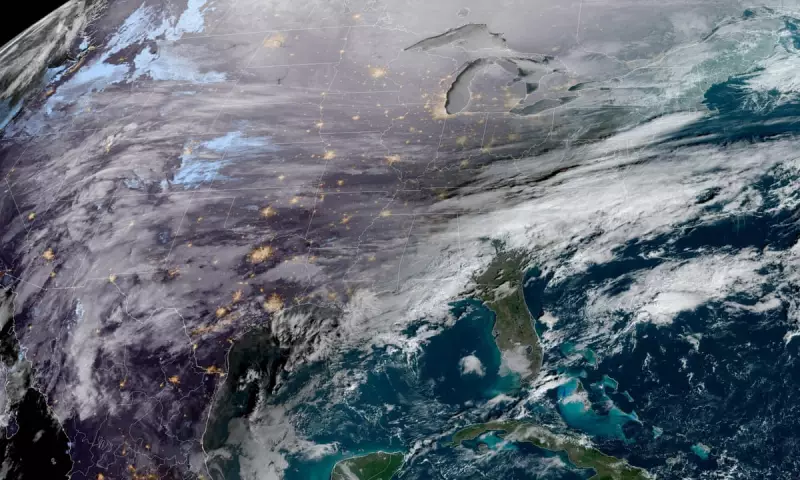
A colossal winter storm system, described by meteorologists as a "monster" event, is bearing down on the United States, threatening to impact approximately half of the nation's population. With twelve states already declaring states of emergency, authorities are warning of potentially life-threatening conditions, including heavy snowfall, treacherous ice accumulation, and prolonged power outages.
Widespread Emergency Declarations and Preparations
By Friday, state governors had proactively declared emergencies across a swathe of the country. These declarations serve a dual purpose: alerting residents to the mortal dangers posed by the severe weather and unlocking financial reserves to facilitate emergency response efforts. The list of affected states includes Texas, Louisiana, Mississippi, Alabama, Georgia, South Carolina, and North Carolina in the southern US. Further north, Missouri, Tennessee, Virginia, Maryland, and Pennsylvania have also enacted emergency measures.
In anticipation of the storm's arrival, residents in several states have been forming long lines at supermarkets and hardware stores, hurriedly stocking up on essential supplies. Items flying off the shelves include bottled water, non-perishable food, toilet paper, blankets, and portable electricity generators. Local media outlets have circulated images on social media showing increasingly empty retail shelves as the public heeds warnings to prepare.

Forecast Details and Meteorological Warnings
The National Weather Service has issued stark warnings for the coming days. The massive winter weather system is expected to form over parts of the Rocky Mountains and Great Plains before surging across southern and midwestern areas from Friday. It is then forecast to intensify as it moves up the east coast on Saturday, reaching as far north as Maine by Sunday.
Meteorologists are predicting a dangerous mix of precipitation, including snow, sleet, and significant amounts of freezing rain. This freezing rain is particularly treacherous, as it is expected to leave thick layers of ice on roads and power lines, creating deadly driving conditions and increasing the risk of widespread power failures. The National Weather Service indicated that snowfall totals exceeding 12 inches are likely across the Ohio Valley, the Mid-Atlantic, and the north-eastern United States.
Temperatures are set to plummet well below freezing, not only in northern states accustomed to harsh winters but also across southern regions where such prolonged, deep chills are atypical. Authorities in these southern areas are specifically warning residents to brace for extended electricity outages due to the strain on infrastructure not designed for such extreme cold.
Climate Context and Political Commentary
The severe weather event has sparked commentary on the relationship between extreme storms and the broader climate crisis. Former President Donald Trump posted on his social media platform, questioning the occurrence of a "Record Cold Wave" in the context of global warming discussions.
In reality, climate scientists explain that the climate crisis is contributing to greater instability in global weather systems. This includes disruptions to the polar vortex, which can lead to more frequent and persistent outbreaks of Arctic air sweeping into regions unaccustomed to them. Organisations like the American Red Cross note on their website that while winters are generally getting warmer and shorter due to climate change, a warmer atmosphere can hold more moisture, paradoxically increasing the likelihood of heavier snowfall events during winter storms.
Federal Response and Travel Disruption
The Federal Emergency Management Agency (FEMA) has activated its National Response Coordination Center in response to what it terms a "historic winter storm." The agency issued a statement clarifying its staffing protocols, emphasising that its workforce is designed to fluctuate based on disaster activity and operational need. This followed a CNN report suggesting FEMA had paused the off-boarding of certain staff whose contracts were due to expire.

The storm is already causing significant travel disruption. Airlines have begun cancelling hundreds of flights in anticipation of the severe conditions, and transportation across all modes—including road, rail, and air—is expected to be severely affected throughout the weekend. Officials are urging the public to avoid unnecessary travel and to focus on safety preparations as the monster storm system approaches.