Major Winter Storm Set to Bring Widespread Snow Chaos Across UK Next Week
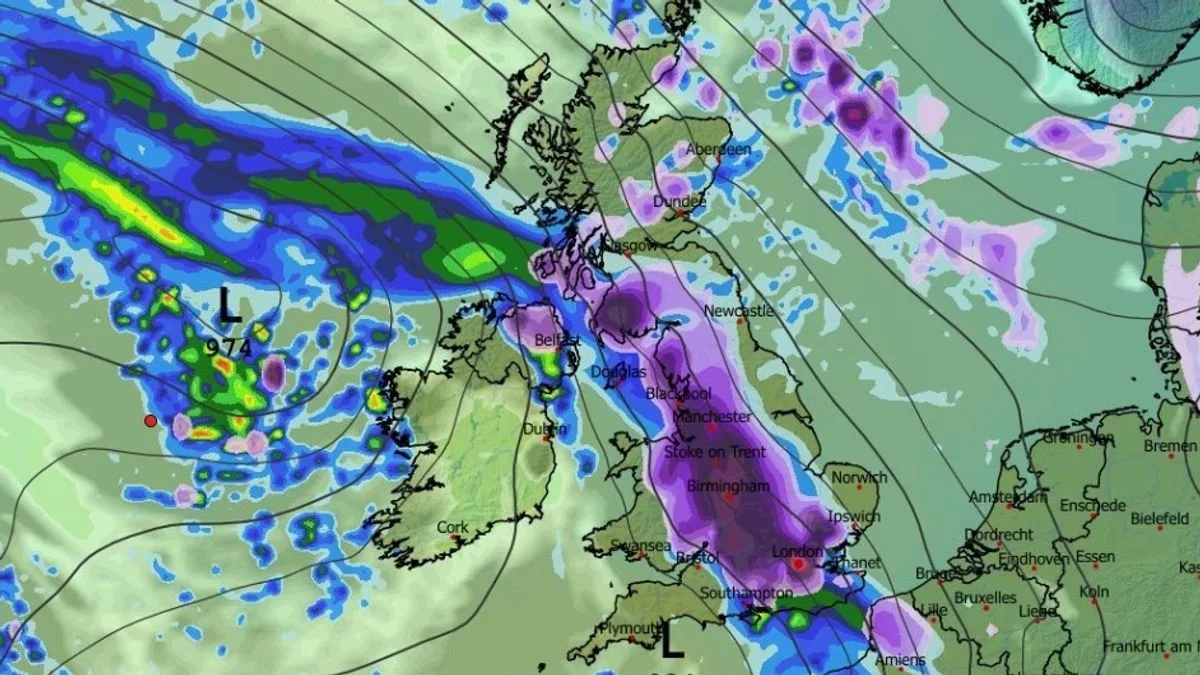
Advanced weather modelling maps are indicating a substantial winter storm is poised to sweep across the United Kingdom next week, potentially bringing significant snowfall and disruption to several major cities. The forecast suggests a period of wintry chaos could unfold from the early hours of Tuesday, January 27, with snow depths predicted to reach up to 22 inches in some regions.
Timeline of the Approaching Blizzard
According to detailed projections from the ECMWF weather model, the initial impact of the storm is expected to be felt in Wales during the early hours of January 27. Cities such as Cardiff and Swansea are directly in the firing line for serious snow flurries at this stage. Concurrently, heavy rainfall is anticipated across Northern Ireland and the southwestern parts of England.
By approximately 3am, the meteorological data shows the snow front drifting northward and eastward across the country. Northern Ireland is forecast to experience the heaviest flurries around this time, with Belfast potentially facing substantial accumulations. The snow is then predicted to reach major English urban centres, including Manchester, Liverpool, Birmingham, and London. Weather maps indicate a large swathe of England will be covered, represented by deep purple shading signifying significant snowfall.
Snowfall Rates and Accumulation Predictions
As the morning progresses, maps for 6am reveal more heavy snow falling across England and southern Scotland. Data suggests snowfall rates could reach around one inch per hour during this period. Flurries are also expected in northern parts of Scotland, while East Anglia and Kent may see snow by approximately 9am as the blizzard continues its eastward movement.
Snow depth charts provide a stark illustration of the potential impact:
- The Scottish Highlands could see accumulations of up to 55 centimetres, equivalent to 22 inches.
- Northern England may receive around 6 centimetres, or two inches, of snow.
- Wales is forecast similar accumulations of approximately two inches.
- The Midlands could see up to 9 centimetres, or 3.5 inches, of settled snow.
Coverage maps for later in the day reveal the extensive reach of this weather front, with snow likely settled on the ground from the South Coast right up to the far north of Scotland.
Official Met Office Outlook and Long-Range Forecast
The Met Office has corroborated the possibility of significant snow next week. In its forecast for January 27 to February 5, the national weather agency states that weather systems moving from the Atlantic will tend to stall near the UK as they encounter high pressure to the north and northeast. This setup is conducive to further spells of heavy and persistent rain or showers, particularly in southern and western regions.
The forecast highlights: "Whilst mild conditions are expected to encroach into the south and southwest at times, cold air is likely to be positioned to the northeast, bringing wintry showers. Where fronts from the south west do reach the cold air towards the north east, there is the risk of some snow, most likely across hills, but perhaps extending to other areas at times."
Looking further ahead to February 6 to 20, the Met Office anticipates a similar theme continuing, with Atlantic frontal systems attempting to push eastwards. The agency notes that the jet stream is expected to be slightly further south than normal, making central and southern areas more likely to experience the wettest conditions. Northern and northwestern parts of the UK are predicted to be drier than average.
The long-range forecast adds: "Whilst mild incursions of wet and windy weather are favoured at times in the south and west, colder conditions in the north and northeast will bring associated wintry hazards where any precipitation attempts to spread in, especially on hills."
Residents across the UK, particularly in urban areas highlighted by the forecast models, are advised to monitor updates closely and prepare for potential travel disruption and hazardous conditions associated with this significant winter weather event.