Northeast Weather Whiplash Threatens Flower Farms Before Mother's Day
An abrupt and dramatic swing from unseasonably hot weather to freezing cold across the Northeastern United States is causing significant frustration and concern among flower and fruit farmers. Many are being forced to harvest blooms prematurely or face the potential loss of entire crops, with the critical Mother's Day sales period fast approaching.
While frosty nights are not uncommon during this transitional spring period, the extreme nature of this recent temperature fluctuation is creating unique challenges. According to data from the Northeast Regional Climate Center at Cornell University, the average date of the last frost in the region typically falls between mid-April and early June. However, the first half of April saw unusually warm conditions across much of the area, followed by a rapid and severe cooldown, setting the stage for potential agricultural damage.
Record Heat Followed by Sudden Freeze
Last week, temperatures soared into record-breaking territory. Boston experienced highs in the upper 70s Fahrenheit (approximately 26 degrees Celsius), while major metropolitan areas including New York City, Philadelphia, and Washington, D.C., saw thermometers climb into the 90s (around 32 degrees Celsius), as reported by the National Weather Service. This warm spell was shockingly short-lived.

By the weekend, a dramatic cooldown swept across the region, with temperatures plummeting into the 50s (about 10 degrees Celsius). Some areas in New England were even blanketed by unexpected snow showers. The cold persisted into the following week, prompting the National Weather Service to issue a freeze warning for Monday night and Tuesday morning for extensive parts of Ohio, Pennsylvania, Virginia, Maryland, and North Carolina.
Fruit and Flower Farms Grapple with the Fallout
The consequences of this weather whiplash are already being felt on the ground. In Ohio, the initial warm spell encouraged peach and apple trees at Apple Hill Orchards to begin budding early. The orchards span approximately 80 acres in Mansfield and 110 acres in Fredericktown. Unfortunately, the subsequent plunge in temperatures into the low 20s (around minus 5 degrees Celsius) has already destroyed one specific variety of peach crop.
"Farming is farming, and you never know what you’re gonna get, but we had a pretty good bloom, so we were expecting a pretty good crop," said owner Anne Joudrey on Monday. She noted that the apple crops appear to be faring better, partly due to the trees being strategically planted on higher ground, which allows cold air to drain away more effectively. "We should fare pretty well, hopefully," she added cautiously. "But you never know."
Mother's Day Blooms Forced Early
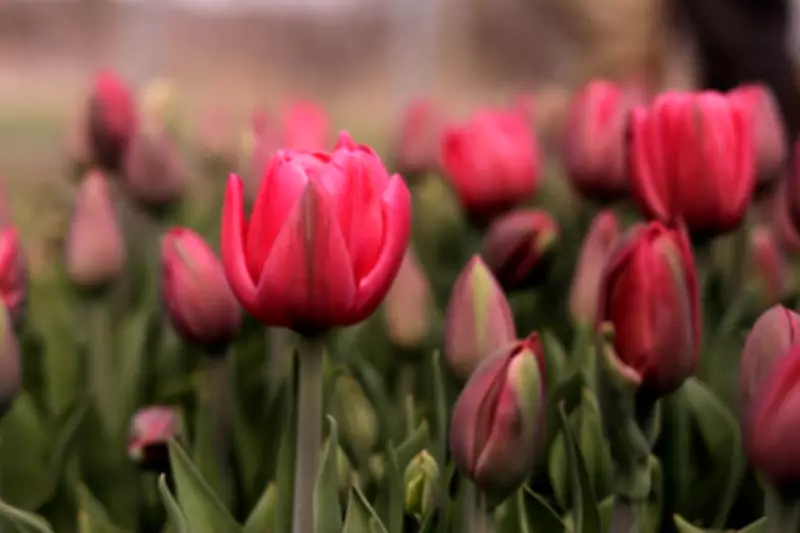
Further north in Vermont, the temperature swing has disrupted operations at Understory Farm in Bridport, a business specializing in cut flowers. Owner Gregory Witscher reported that tulips, which are typically timed to bloom perfectly for Mother's Day in mid-May, have already flowered prematurely inside the farm's greenhouses due to the earlier heat.
"That just means that we have to harvest them all at the same time," Witscher explained. "We have to harvest them and store them with the bulbs on in crates in a walk-in cooler for longer." This forced early harvest and extended cold storage represents a significant logistical and financial challenge for the farm, which grows around 50 different varieties of flowers for wholesale markets.
Witscher emphasized that such weather fluctuations demand immense flexibility from modern farmers. He observed that it is becoming increasingly common for small-scale vegetable and flower operations to invest in protective measures like row covers, heaters to guard against frost, or shade cloth to mitigate extreme heat.
"With the hot weather and then the cold weather, I think it's intense, and it makes things challenging," he reflected. "The longer I do this, the more I want to have as many options as possible and have a lot of tools and resources available to be extremely nimble." This sentiment underscores the growing need for agricultural resilience in the face of increasingly volatile and unpredictable weather patterns.