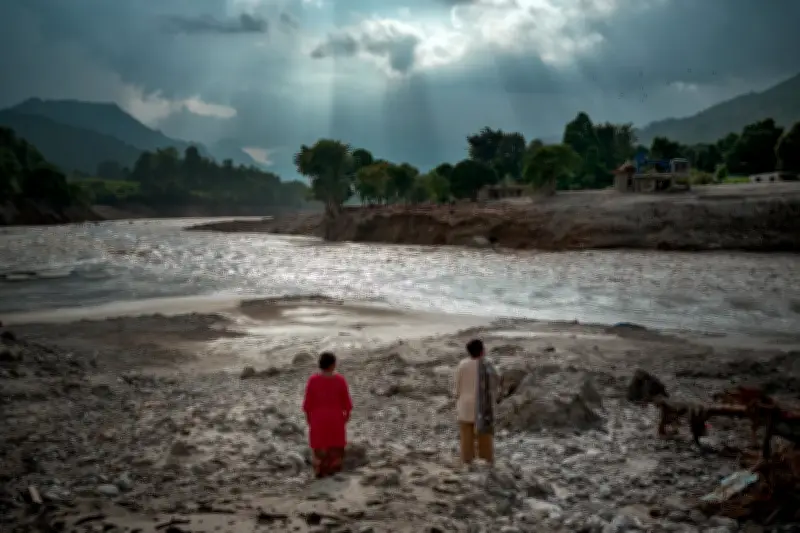
Relatives of those killed or missing in Nepal's flash floods are being urged to provide blood samples so that victims can be identified through DNA, a week after the disaster. Over 1,000 people are confirmed dead and nearly 4,000 are reported missing, with morgues full and hundreds of bodies being buried.
At a hospital in Kathmandu, 19-year-old Prakrit Gurung is among dozens lining up to give blood. Her father's body has been found—her brother recognised his picture on a wall outside the hospital—and she hopes her DNA will be linked to her mother's body.
Relatives from abroad asked to provide samples
An Australian citizen was among the first 14 people to attend on Tuesday morning, having flown over because his brother, a Nepali citizen, is missing. Authorities are asking relatives abroad to send their DNA profiles, and several Australian families have already had samples taken.
“We are collecting the blood samples here, from their siblings, or direct relatives,” says Rameshwor Adhikari from the army. “People are coming from all over the valley to give blood, and from different places all over the country.” Adhikari adds: “It is a disaster. A natural calamity.”
On the first day, 37 people came through, but numbers are growing, and the army has brought out more shade tents. As of Wednesday morning, 38 of the dead or missing are Australians.
Families call for more support and access
In a statement this week, family members of 25 missing Australians called for more government support to “bring our friends and loved ones back home.” Nepali families from the worst-hit upper Rasuwa district have been campaigning for more boots and rescue equipment on the ground. It has been a week since the floods, and contact has still not been established in some places along the Chinese border.
Lhakpa Gha's village, Timure, is one of them. Standing outside a Buddhist monastery on Tuesday afternoon, the 53-year-old lists her relatives who were washed away: her father, brother-in-law, son, daughter-in-law, their four-year-old daughter, her daughter, and her sister's brother. All seven, gone. Gha and her husband survived because they were in Kathmandu, looking after two of their grandchildren attending school here. “I lost my whole family,” she says through a translator. “We've lost everyone.”
The monastery is housing about 200 people from the upper region who survived because they were higher up on the mountain when the flood hit. “The army has not been able to reach the village,” Gha says. “They keep saying our village is high risk but we don't understand. We are fighting with them. If it's high risk, you need to act. But they have just said they can't get in.” Her son and daughter were doctors in the village and stayed to provide for the family. “We have nothing,” she says. “We depended on my son for money.”
Aid groups face same access problems
On Monday, a UN report said it could take weeks to reach the upper areas—hardly any roads remain, and bridges have been washed away. If the army cannot get in, nor can aid groups. Amy Sagitta Lefevre from Save the Children says: “Aid is definitely getting through, but to a point.” Speaking from the agency's warehouse in Kathmandu, she says its teams have reached Rusawa by road, and aid they can't get further is stored at the army barracks.
“The challenging bit for rescue workers is the same challenging bit for aid organisations, because we have the same access issues as they do,” she says. Save the Children is getting kits up the valley that include makeshift tents and is setting up mobile toilets. “On the ground we're giving out non-food items,” Lefevre says, “which are blankets, ropes, tarpaulin sheets—because a lot of people are sleeping exposed to the elements, so just sheets in case they need to be protected from the rain.” Many shelters up the valley are overcrowded, so families are being sent farther afield.
“We're also giving out things like buckets, just so people can carry things or wash, if need be. And then we have what we call dignity kits … they're aimed at women, but specifically pregnant women—they have an extra sari, some of the mothers need clothes because they're still wearing the same clothes they were wearing the day of the disaster.”
About 2,600 children are expected to need medical treatment for “severe wasting,” and more than 100 may have been separated from their parents. Lefevre says it's impossible to put a timeline on anything, but recognising that the full recovery process could take over a year, Save the Children has set up a field office.
Its workers are worried about the spread of disease, water contamination, overcrowded shelters, and the potential for children to be trafficked in the chaos of the recovery. “This area of Nepal has historically been a hotbed for child trafficking of girls,” she says. “We've heard anecdotally that it may have lessened in recent years, but because of this disaster we are now very concerned about the fact that children or girls … could be trafficked.”