Stargazers across the UK are in for a spectacular treat this week as the giant planet Jupiter makes its closest approach to Earth until 2026. The solar system's behemoth is exceptionally bright and perfectly positioned for observation, offering a dazzling sight even to the naked eye.
Where and When to Spot the Giant Planet
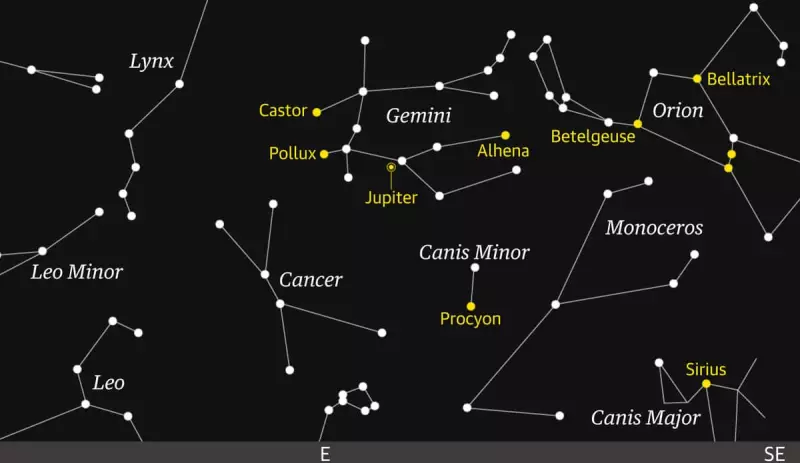
From this week, Jupiter is unmistakably bright in the constellation of Gemini, the twins. It forms a distinctive, lopsided triangle with the constellation's two leading stars, Castor and Pollux. Visible from both the northern and southern hemispheres, the planet will be a prominent beacon in the eastern sky. The chart shows the ideal view looking east at 20:00 GMT on 9 January.
Why Jupiter is So Brilliantly Visible
Despite being vastly further from the Sun than Earth, Jupiter's immense size and reflective cloud decks make it the second-brightest planet in our night sky after Venus. With a diameter more than 11 times that of Earth, its reflective power is immense. This week, it will be "just" 633 million kilometres distant. The sunlight we see bouncing off it has taken just over 35 minutes to travel from Jupiter to us, after a 43-minute journey from the Sun to the planet itself.

What You Can See With Simple Equipment
The planet's proximity makes its four largest moons – Io, Europa, Ganymede, and Callisto – visible through a modest pair of binoculars. Furthermore, small telescopes or binoculars with a magnification of x10 or above should reveal the planet's distinctive cloud belts. This is a rare opportunity for amateur astronomers to see remarkable detail on our largest planetary neighbour without needing professional-grade equipment.
So, wrap up warm, find a dark spot away from city lights, and look east. The king of the planets is putting on a majestic show that won't be matched in closeness or brilliance for another two years.