For the second consecutive year, thousands of hopeful revellers in Birmingham were left out in the cold after being tricked by online hoaxes into attending a non-existent New Year's Eve fireworks display.
The Scene of Disappointment
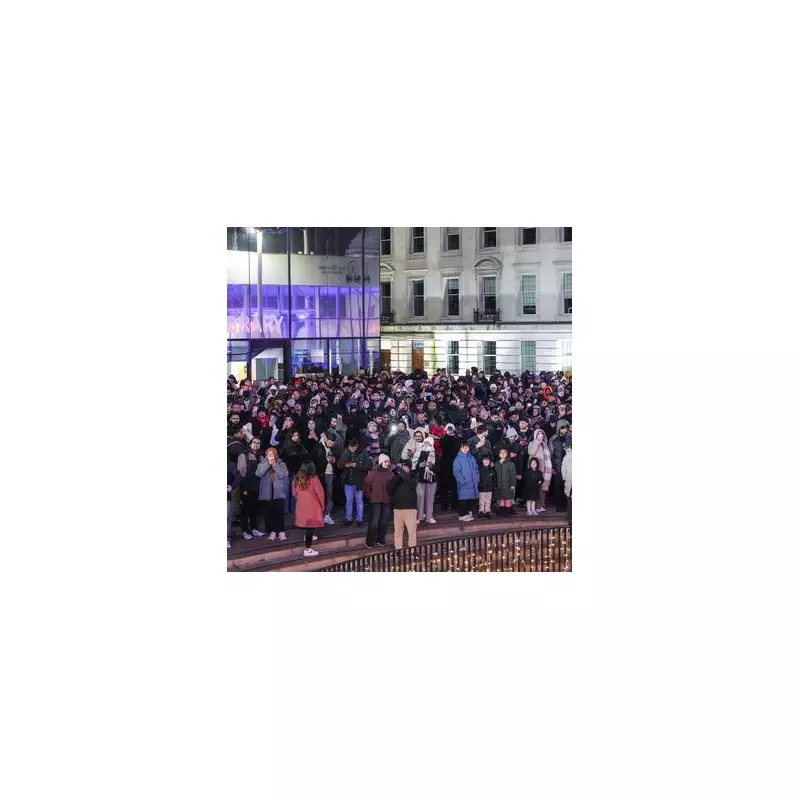
Large crowds gathered in Birmingham's Centenary Square on the evening of 31 December 2025, expecting what online posts had billed as "the biggest New Year's party in the city." Promises of street food, an ice rink, and bars had circulated widely on social media, convincing many to make the journey into the city centre. However, as midnight approached and passed, it became clear the event was a complete fabrication.
Attendees eventually dispersed, disappointed and cold, having apparently missed official warnings. West Midlands Police had issued a statement earlier in the week explicitly stating that no official fireworks display or city-organised events were planned for Birmingham city centre on New Year's Eve.

The Role of AI-Generated Fake News
The confusion is believed to have been driven by a series of convincing, fake articles and images generated by artificial intelligence. These posts mimicked legitimate event promotions and spread rapidly across social platforms. One such post read: "If you're spending New Year's Eve in Birmingham, don't miss the celebrations on Centenary Square which is by far the biggest NYE party in the city."
This mirrors an almost identical incident from the previous New Year's Eve, in 2024, when police officers had to enter the square to inform waiting crowds that the promised spectacle was not real. Birmingham has not held an official civic fireworks display since 2014.
Police Warnings and Wider Consequences
In their pre-emptive statement, West Midlands Police stressed that such misinformation "can create real safety issues in the city." They explained that large, unexpected gatherings for non-existent events put undue pressure on public transport, emergency services, and cause city centre congestion on one of their busiest nights of the year.
The force urged the public to treat any social media posts suggesting large-scale NYE events in Birmingham with extreme caution, confirming that all such claims are false. They highlighted the knock-on effect of these hoaxes, noting that last year, families made unnecessary journeys only to end up frustrated and let down.
The repeated nature of this AI-driven hoax underscores the growing challenge of combating digitally fabricated misinformation and its very real impact on public resources and safety.