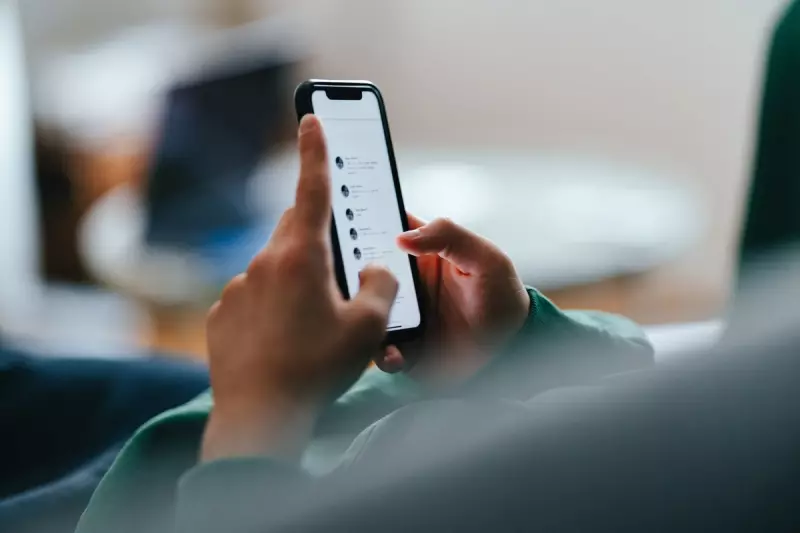
Think twice before you tap out 'hru' or 'wyd' in your next text message. New research suggests these tiny linguistic shortcuts, often seen as hallmarks of efficient digital chatter, may be subtly eroding the quality of our personal connections.
The Hidden Cost of Cutting Corners
The investigation was spearheaded by David Fang, a PhD student in Marketing at Stanford University, alongside fellow researchers Sam Maglio and Yiran Zhang. Their work, published on Monday 5 January 2026, began with a personal observation of Fang's own brother's cryptic texts. This sparked a series of studies to explore whether clipped digital missives undermine genuine dialogue.
An initial survey of 150 American texters aged 18 to 65 found a stark contradiction. While 90.1% reported regularly using abbreviations and 84.2% believed they had a positive or neutral effect, the team's experiments told a different story.

In controlled lab tests involving 1,170 participants aged 15 to 80, researchers presented near-identical text exchanges. One version used full words, the other was sprinkled with abbreviations like 'plz', 'sry', and 'idk'. In every scenario, participants rated the sender who used abbreviations as less sincere and less worthy of a reply. The recipients reported sensing a lack of effort, which caused them to disengage.
From Friends to Flames: The Universal Effect
The team wondered if closeness could override this effect. Could you abbreviate freely with a dear friend or romantic partner? The answer was a resounding no. Even people imagining chats with a longtime buddy felt put off by half-spelled words, with the disappointment chipping away at the interaction's perceived authenticity.
To move beyond the lab, the researchers took to Discord, an online community where abbreviation use is second nature, particularly among younger users. They messaged random users asking for TV show recommendations, using both full and abbreviated language. True to form, fewer people responded to the abbreviated requests, even among these digital natives.
Love on the Line: Abbreviations in Romance
The most telling experiments ventured into the world of modern dating. On Valentine's Day, the team conducted an online speed dating experiment. When some participants were incentivised to pepper replies with 'ty' instead of 'thank you', their dates were notably more reluctant to exchange contact information afterwards, citing a perceived lack of effort.
This was bolstered by a separate analysis of hundreds of thousands of Tinder conversations The researchers are not campaigning to ban 'lol'. Scattered abbreviations won't necessarily torpedo a friendship, and not every message warrants full spelling. However, an overall reliance on condensed phrases consistently lowers impressions of the sender's sincerity. "When we type 'plz' a dozen times in a conversation, we risk broadcasting that the other person isn't worth the extra letters," the research suggests. The effect may be subtle in a single exchange, but it accumulates over time. The article, republished from The Conversation, concludes with a simple recommendation. If your goal is to nurture a deeper connection, taking an extra second to type 'thanks' or 'how are you' is a wise investment. Abbreviations began as a workaround for clunky flip-phone keypads and strict character limits, but that necessity has long passed. As for David Fang's brother? After learning of the findings, he still fires off 'brb', but he has started typing 'thank you' in full occasionally. It's a modest shift, but it underscores the core finding: sometimes, just a few more letters can let someone know they really matter.It's the Thought (and the Letters) That Count