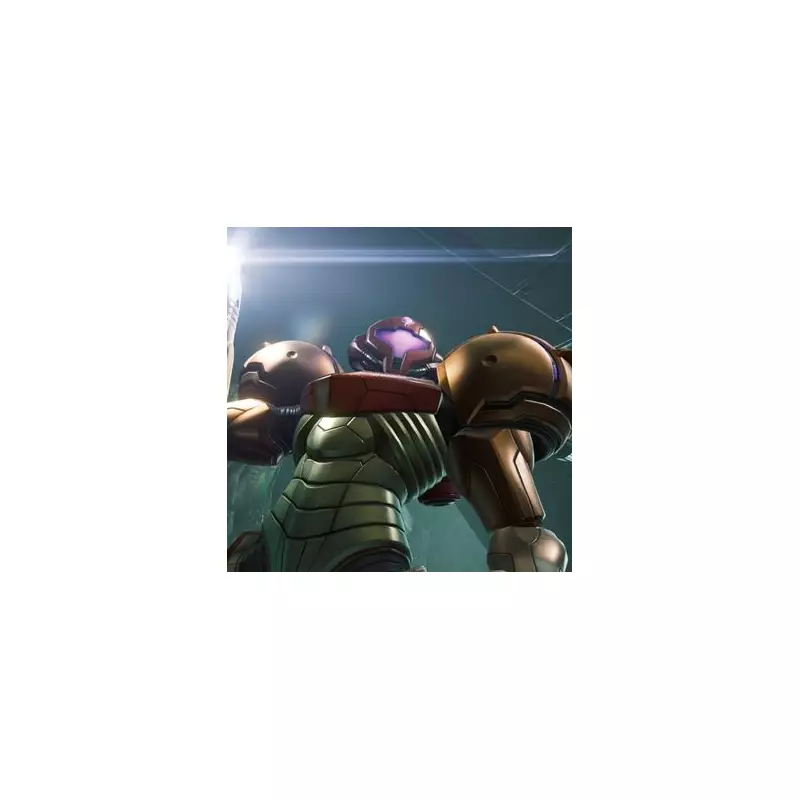
After years of anticipation, Metroid Prime 4: Beyond has finally landed, marking Samus Aran's first major first-person adventure in nearly two decades. The long-gestating sequel, initially announced in 2017 for the original Nintendo Switch, now finds itself bridging console generations and design philosophies, resulting in a game that is as alluring as it is occasionally at odds with itself.
A Familiar Start on an Alien World
The game opens on the planet Viewros, where bounty hunter Samus finds herself stranded after a skirmish with her rival, Sylux. The initial area, Fury Green, provides a comforting and expertly crafted return to the classic Metroid Prime formula. Players are swiftly reacquainted with the satisfying loop of scanning environments, traversing intricate landscapes, and engaging in combat, all while uncovering secrets about the mysterious Lamorn race.
For the first couple of hours, Beyond feels like a homecoming. Upgrades like the Missile Launcher and Morph Ball arrive in familiar fashion, and the atmospheric, isolated exploration that defined the original 2002 classic is present and correct. It’s a potent reminder of why the series is so revered.

Structural Conflicts and New Additions
The game's core conflict emerges with the introduction of Sol Valley, a vast, desert-like hub area connecting various elemental biomes. This semi-open world structure, reminiscent of The Legend of Zelda: Breath of the Wild, aims to grant more player freedom but clashes with Metroid's traditional progression of ability-gated exploration.
Scattered throughout Sol Valley are puzzle-box shrines. However, unlike Link’s versatile toolset, Samus must often leave these puzzles unsolved until she acquires the specific upgrade needed later, undermining the promised sense of open-ended discovery. This design choice highlights a tension between new ambitions and series traditions.
The new psychic abilities, heavily promoted before release, are functional but often feel like familiar mechanics with a purple sheen. The Psychic Boots essentially act as a double jump, while the Control Beam allows for guided shots. They integrate without revolutionising the established gameplay.
Highs, Lows, and a Controversial Bike
When Beyond focuses on curated, atmospheric locales, it shines. Volt Forge, a region perpetually racked by thunderstorms, is a standout, featuring an epic sequence where Samus constructs her new vehicle, the Vi-O-La motorcycle. Later areas like Ice Belt and Flare Pool are well-crafted but struggle to maintain this high bar or feel cohesively connected.
The Vi-O-La itself is a mixed bag. While boosting and jumping on the bike controls well, it feels like a solution to a problem of the game's own making—the sprawling Sol Valley. Its inclusion marks a significant departure from series norms. A more contentious addition is the need to return to NPC Miles Mackenzie in Fury Green to install major upgrades, an unnecessary break in the flow that previous games avoided.
Technical Performance and Final Verdict
Visually, Metroid Prime 4: Beyond is the best the franchise has ever looked. On the Nintendo Switch 2, it delivers a silky-smooth 60fps in both handheld and docked modes, with support for 120fps on compatible TVs. Control options are generous, including new mouse controls and refined pointer controls from the Wii era.
Ultimately, Metroid Prime 4: Beyond is a peculiar beast. Retro Studios' attempts to innovate with a semi-open hub, chatty NPCs, and the Vi-O-La often distract from the series' proven strengths: fuelling curiosity, delivering a satisfying power curve, and creating moments of profound isolation. The latter is frustratingly fleeting here.
This is not a disaster; the core exploration and atmospheric world-building remain compelling. However, the quest for freshness results in the most mystifying and mixed entry in Samus's first-person outings. It offers joy in peeling back the layers of its world, even if those layers sometimes feel disjointed.