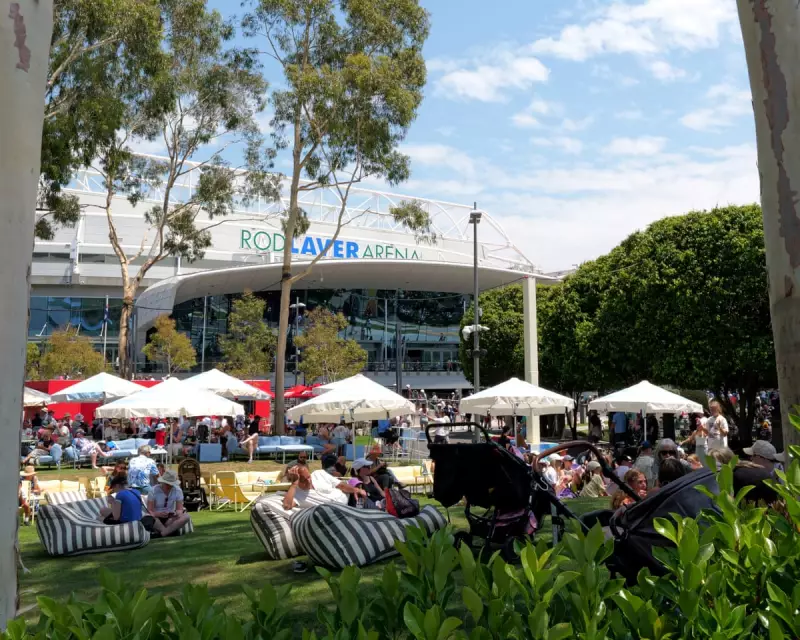
The Australian Open has boldly redefined the grand slam experience, expanding into a 21-day sporting and entertainment extravaganza. The tournament's new 'Opening Week' is now a major ticketed attraction, packed with music, food, and exclusive tennis showcases, as organisers aim to cement their dominance of the summer sporting calendar.
Owning January: A New Grand Slam Blueprint
On a record-breaking first day of the 2026 event, Tennis Australia's chief executive, Craig Tiley, outlined an ambitious vision. "Our objective is we want to own January," Tiley declared, smiling as he referenced cricket's seasonal slot. With the event now intensely focused on 21 consecutive days of activity, the strategy is clear: supercharge the fan experience from the very start.
This marks a significant shift. Previously a two-week tournament, it expanded to 15 days in 2024. Now, the traditional qualifying period—once free to attend—has been rebranded as 'Opening Week'. Ground passes now cost $20 per day, a move that begins to narrow the gap to the $65 fee for the main draw. Despite the new charge, a 'kids go free' promotion helped attract a first-day record crowd of 29,261 spectators—nearly four times last year's attendance—even with Bernard Tomic as the leading name on court.

More Than Tennis: Concerts, Wellness and a $1m Showdown
The week is now supercharged with far more than baseline rallies. The schedule features sold-out concerts by acts like Hot Chip, exhibitions featuring top players for charity, and a strong focus on wellness and dining. A major new draw is the $1m 'One Point Slam', a high-stakes showcase pitting professionals like Carlos Alcaraz and Nick Kyrgios against celebrities and qualifying amateurs, which is now a $29 ticketed event.
"It doesn't feel like it's the first day of qualifiers, it feels in many ways like it's the first day of the event," Tiley observed of the vibrant atmosphere. The commercial drive is evident, with food and drink vendors busy despite premium prices, such as $15.60 for a beer and $18.90 for a small pizza. The strategy appears successful; after attracting 116,000 fans last year, Tiley expects Opening Week attendance to double or triple this year, with an eventual target of half a million.
Fan Experience and Future Ambitions
For visitors like Alan Preston from Ireland, who compared it favourably to Wimbledon, the organisation and access to players were highlights. Tiley acknowledges the constant challenge of managing crowds and heat, pointing to new shaded areas and a fan-centric philosophy: "The objective is to bring the players and the fans closer together."
Future plans are even more ambitious, including a potential costly redesign to sink outside courts and raise spectator walkways, though this would require government support. With annual revenue already jumping to $693m, Tiley insists growth serves the sport's promotion. As the Australian Open cements its status as a January institution, it's clear the game—and the spectacle surrounding it—has been permanently transformed.