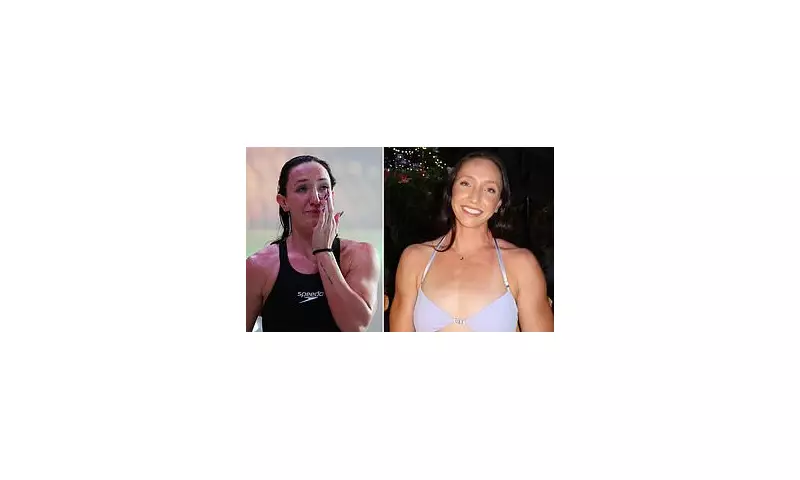
Australian swimming sensation Lani Pallister has emerged from what she describes as a "personal hell" involving an eating disorder and major heart surgery to challenge champion Ariarne Titmus and rewrite the national record books.
Record-Breaking Performances
At the 2025 Australian trials, Pallister delivered a stunning performance that announced her arrival as a genuine force in distance swimming. She shattered the national 800m freestyle record with a time of 8:10.84, surpassing the previous mark set by none other than Olympic champion Ariarne Titmus.
Just two days later, the rising star continued her dominance by setting new Australian and Commonwealth records in the 1500m freestyle, clocking an impressive 15:39.14. These achievements marked the culmination of years of dedication and resilience through significant health challenges.

The Descent into Personal Hell
Pallister's journey to the top has been anything but straightforward. She recently opened up about a devastating period that began with what seemed like innocent advice. "I think the eating disorder began because I was told by someone that if I wanted to swim my best times that I'd set in 2019 that I had to be the same weight that I was when I swam those times," she revealed to News Corp.
The young swimmer, desperate to qualify for the Tokyo Olympics, took the comment to heart. "I don't think it was given to me maliciously, I think it was just a very like throwaway comment at most. But I wanted to make the Tokyo Olympics so bad, I just kind of hung on to that," she explained, adding a cautionary note about speaking carefully to young athletes.
Her unhealthy focus on weight rather than strength and performance triggered a cascade of health complications. "I became very controlled with what I was eating, particularly if I had a bad session in the pool, and then because of that, my pre-existing heart condition got worse," Pallister recounted.
Medical Crisis and Recovery
The combination of reduced nutrition and prolonged physical stress exacerbated a pre-existing heart condition that required serious medical intervention. Doctors diagnosed her with supraventricular tachycardia, a condition causing dangerous spikes in heart rate during training.
Pallister described the terrifying episodes: "Imagine your heart is like an electrical circuit and instead of my heart completing the full loop through the electrical circuit, it would create like a shortcut and do like a half beat. My heart rate was getting to 250 beats a minute, and as I started eating less and less, it started happening more and more."
She underwent a cardiac ablation procedure to correct the faulty electrical pathway in her heart. The surgery was successful, but her challenges continued when she developed glandular fever during recovery, leaving her with post-viral fatigue that destroyed her Olympic dreams.
When she competed at the June trials for the 2021 Tokyo Olympics, she was unable to qualify for any of her events. "It was devastating," she recalled. "Not qualifying felt like the end of a dream for me. But I was just so sick, and my post-viral condition meant I had no energy. I remember I cried every day for weeks."
Family Support and Comeback
Central to her recovery was her mother Janelle, a former Olympian who competed in the 400m and 800m freestyle finals at the 1988 Seoul Olympics. "Family is everything to me. I don't think I would have got back in the water without them," Pallister acknowledged.
Her return to swimming was emotionally charged. "I remember my first session back on the pool deck. I walked in, saw the pool, bawled my eyes out and left. Like I didn't even want to get in the pool. And then it took me a while to just start feeling better, to feel normal."
Pallister's career trajectory shows remarkable resilience. She first emerged as a standout talent at the Junior World Championships, winning multiple gold medals in the 400m, 800m and 1500m freestyle events. Her transition to senior level competition has been equally impressive, with medals at the World Short Course Championships and world titles in her signature distance events.

Her story stands as one of the most compelling narratives in Australian swimming – a testament to overcoming serious health challenges through determination, medical intervention, and unwavering family support.