Super League Celebrates 30th Anniversary with Leeds Victory Over Warrington
Summer rugby league commenced with a burst of noise and excitement on the outskirts of Paris in 1996. As Super League marked its 30th anniversary weekend in the more traditional rugby league heartland of Leeds on Sunday, it provided a fitting moment to reflect on the past and consider the future.
A Thrilling Birthday Present at Headingley
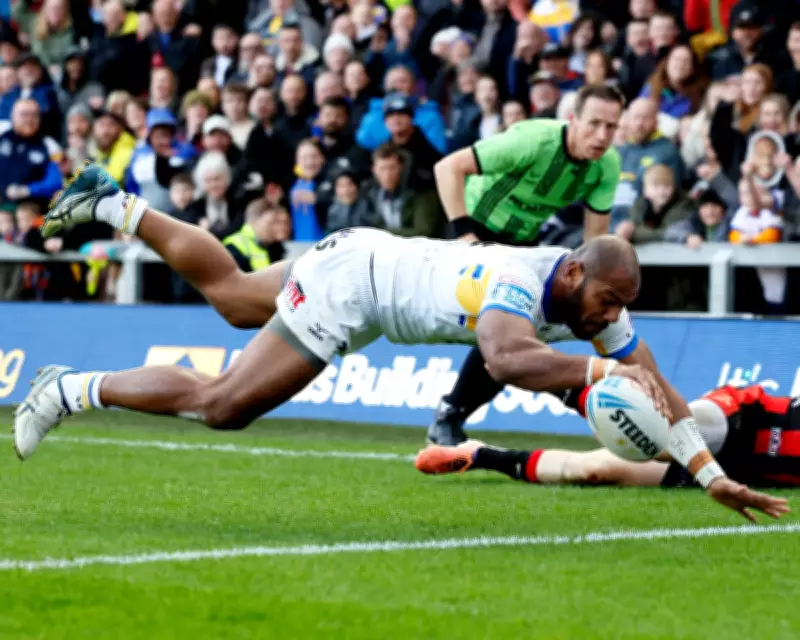
Amid the missed opportunities and boardroom frustrations that have often characterised the past three decades since the seismic shift from winter to summer rugby, Super League has consistently delivered high-quality entertainment on the field. This was emphatically demonstrated at Headingley, one of the competition's iconic venues, where Leeds Rhinos and Warrington Wolves served up a thrilling birthday present with a contender for the standout game of 2026 so far.
Leeds edged the encounter 26-22, continuing their historical dominance, but both teams demonstrated they are serious contenders for silverware this season. It was perhaps fitting that two heartland clubs present at the inception in 1996 were the teams to take the field on this significant anniversary.

The Expansion Challenge: From Paris to Present
In contrast to Sunday's matchup, thirty years ago Sheffield were tasked with traveling to Paris Saint-Germain, partly because the French capital required no introduction to casual observers worldwide. The hope was that the PSG franchise would ignite rugby league's expansion beyond its traditional M62 corridor constraints.
That vision has not materialised as many had hoped. Whether it was PSG in the 1990s, Celtic Crusaders in the 2010s, or Toronto Wolfpack in more recent years, numerous expansion projects have arrived with optimism only to fail or disappear from the game's footprint entirely.
Gary Hetherington, former Sheffield and Leeds chief executive now leading London Broncos, recently highlighted Super League's struggles with expansion. The Broncos appear poised to become a Super League club, and success in London could potentially transform the sport's landscape, much as was anticipated in the 1990s.
Leeds Rhinos: Emblem of Progress
Despite expansion challenges, rugby league's heartlands continue to offer significant value. No club better represents the progression since 1996 than Leeds Rhinos. The club began the summer era in severe financial distress, with a deteriorating stadium and a team that finished third-last in the inaugural Super League campaign.
Today, Leeds stand alongside Wigan and St Helens as the sport's powerhouses. Their historic Headingley home has been transformed into one of rugby league's premier venues, they attract the competition's largest attendances, and they are contenders for a ninth Super League title this year. If more clubs mirrored Leeds' success, Super League might not require investment from Australia's National Rugby League.
Looking Forward: Balancing Tradition and Growth
This brings us to the future and the anticipated investment from Super League's sister competition. Leeds Rhinos and Warrington Wolves represent central elements in the blueprint for the sport's broader development. With an NRL investment offer expected to reach Super League officials in coming weeks, there is much to contemplate.
Super League must navigate the delicate balance of maintaining the strength of its established clubs like Leeds and Warrington while simultaneously breaking into the mainstream consciousness. Only then will the aspirations of those who redirected the game in 1996 be fully realised.
There is considerable talent to market and celebrate. English stars such as Jake Connor, Jake Thewlis, and George Williams, who all excelled on Sunday, remain largely hidden from wider audiences despite their exceptional abilities showcasing rugby league's quality. Perhaps the NRL's resources will finally shatter that glass ceiling.
Few sports honour their history and heritage as profoundly as rugby league. These past few days have offered valuable reflection on how far the sport has progressed over thirty years. The true challenge now lies in looking ahead and ensuring an exciting future awaits on the horizon.