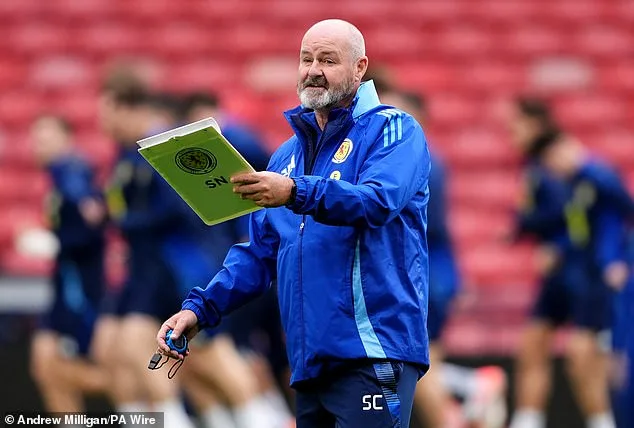
Steve Clarke's Polarising Legacy as Scotland Manager
Steve Clarke remains a figure who perpetually divides opinion among Scotland's passionate football supporters. He could broker peace in the Middle East, and some would still criticise his approach as overly cautious. There exists a faction who revere his every move, while others maintain he should have been dismissed following the Euro 2024 disappointment. He is, in essence, managerial marmite.
Regardless of personal sentiment, one fact stands beyond dispute. When Clarke eventually departs his role, he will be enshrined as one of Scotland's greatest ever managers. He may even claim the top spot, though a definitive verdict should perhaps be postponed until after the World Cup summer, allowing events to fully unfold.
A Historic Qualification Record
Clarke masterminded Scotland's escape from international obscurity, guiding the nation back to major tournament football. He achieved this remarkable feat not once, not twice, but on three separate occasions from just four qualifying campaigns. This accomplishment alone guarantees his place in the Hampden hall of fame. It is further burnished by his status as the first Scotland manager in history to secure qualification for three major finals.
The debate surrounding his tenure was reignited this week when Clarke addressed his contractual situation, set to expire after the upcoming tournament. When questioned on the likelihood of extending his stay, Clarke described it as a '50-50' prospect, conceding the decision ultimately rests with the Scottish Football Association regarding a potential new offer.
A Shift in the Managerial Landscape
This represents a significant shift in the narrative. Throughout the World Cup qualifiers, and even after securing passage with that memorable victory over Denmark last November, the prevailing assumption was that Clarke would depart post-tournament. The landscape has now altered. The central question is whether the SFA desires his continuation or believes a fresh start would benefit all involved.
From the SFA's perspective, two primary scenarios emerge. They could negotiate a new contract immediately, risking a supporter backlash if Scotland underperforms in the United States. Alternatively, they could adopt a wait-and-see approach, basing their judgment on the team's summer performances.
While some may demand clarity before the tournament to avoid distraction, the prudent course appears to be patience. It is no secret Clarke harbours ambitions for another stint in club management. Having led Scotland since 2019, he is now a more seasoned and capable coach, presenting an attractive proposition to potential employers.
Potential Replacements and Squad Evolution
His recent tonal shift may indicate a reassessment of options, perhaps finding no available club roles sufficiently appealing. Celtic represents a potential destination, though selling him to a fractious fanbase presents its own challenges. From the SFA's viewpoint, renewing Clarke's contract would not be surprising, given his strong rapport with chief executive Ian Maxwell.
When considering successors, obvious candidates are scarce. Derek McInnes emerges as the frontrunner, but he may be preoccupied with Hearts' title ambitions. Even without silverware, committing to another campaign at Tynecastle could make him difficult to lure away.
The association must be unequivocal about its objectives. The World Cup likely signals a farewell for several squad stalwarts. Andy Robertson is 32, Grant Hanley 34, John McGinn 31, and probable starting goalkeeper Craig Gordon is 43, with no clear successors emerging. Robertson and McGinn may have one more tournament left, but strategic planning is urgently required.
The Challenge of Rebuilding
This would not necessitate a complete overhaul, but a squad refresh is imperative, demanding the integration of new talent. Does Clarke possess the appetite for another long-term project? Would fans tolerate short-term growing pains, or would pressure mount for his removal?
Questions linger about a rebuild under the 62-year-old, given his loyalty to certain veterans and perceived reluctance to reward in-form Scottish Premiership performers. His recent comments regarding Hearts and Motherwell players were arguably clumsy, suggesting their squads' collective strength overshadowed individual merit, while continuing to select players lacking club minutes or from underperforming teams.
The World Cup as Ultimate Arbiter
Ultimately, many answers hinge on World Cup outcomes. Failure to progress from the group stage will likely trigger widespread calls for Clarke's departure. That is the nature of international management. He deserves immense credit for reversing similar demands after Euro 2024, achieving what many deemed impossible.
However, Scotland cannot afford to repeat the mistakes of the last two tournaments, where performances were poor and Clarke fortunate to retain his position. He now has a chance for redemption on the grandest stage. Navigating a group containing Haiti, Morocco, and Brazil to reach the knockout rounds would constitute another historic achievement.
Advancing and competing credibly in the latter stages would represent a marked improvement and provide the perfect platform for a triumphant farewell. While debates over style and selection will persist, the results speak for themselves. His legacy is secure. All things must end, and the World Cup presents an ideal juncture for one glorious final chapter before Clarke and Scotland potentially part ways.