Curtis Jones' Brutal Honesty Exposes Liverpool's Core Issue
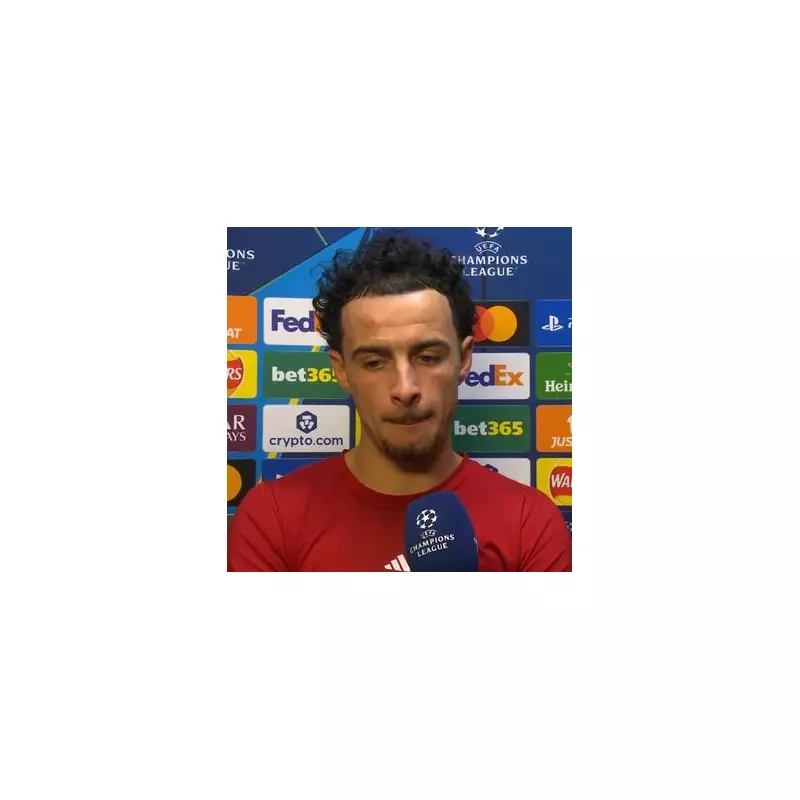
Curtis Jones did not hold back in a raw and emotional interview following Liverpool's humiliating 4-1 defeat to PSV Eindhoven. The midfielder's admission that the team is "in the s***" captured headlines, but his deeper analysis revealed a more systemic problem plaguing Arne Slot's side.
The Demand to 'Be Dogs' and Run More
Speaking to CBS on Tuesday night, Jones pinpointed the team's lack of off-the-ball intensity as the fundamental issue requiring immediate change. "We have to run more, we have to compete, we have to be dogs out there," he stated, delivering a powerful demand for greater physical commitment from every player.
When asked about these comments, manager Arne Slot responded, "He said we need to be dogs? Good to bring it to games." Slot did, however, suggest that several players had recorded seasonal personal bests in running statistics during the match, a claim that contrasted sharply with the visual evidence on the pitch.
PSV Goals Highlight Defensive Inertia
A rewatch of PSV's second and third goals provides stark examples of the physical shortcomings Jones described. For the second goal, Mauro Junior strolled past Mohamed Salah, who made no attempt to track back. For the third, the initial error came from Ibrahima Konaté, but the situation was compounded by Jones himself.
From a right-back position, Jones watched as PSV substitute Couhaib Driouech ran past him from just ten yards away. The Liverpool midfielder stood stationary as Driouech advanced another 20 yards to score from a rebound. This moment of inertia, whether from tactical confusion or physical fatigue, symbolised a wider issue.
This was not an isolated incident. Pundits like Jamie Carragher have pointed to Mohamed Salah's diminished physical impact, suggesting "Salah's legs have gone." Similarly, Alexis Mac Allister has failed to replicate the muscular presence he displayed during last season's title-winning campaign.
A Squad-Wide Physical Decline
The problem extends beyond individual moments. Compared to the physically relentless unit of the previous season, this Liverpool team appears noticeably slower, less durable, and unable to cover for each other's mistakes.
Injuries have undoubtedly hampered Slot, and specific players have struggled. Florian Wirtz has found the pace and physicality of the Premier League challenging and is yet to return to training. Alexander Isak also looks "miles off it, physically" for a combination of reasons.
Jones, to his credit, did not exempt himself from blame in his interview. His candid assessment acknowledges that reversing this desperate situation is not solely about motivation, systems, or attitude. It presents a huge physical challenge that, at present, the Liverpool squad does not look equipped to overcome.