Iran World Cup Boycott Looms Amid US Strikes: Replacement Teams Considered
Iran World Cup Boycott Looms Amid US Strikes

Iran's World Cup Participation Hangs in Balance After US Military Strikes

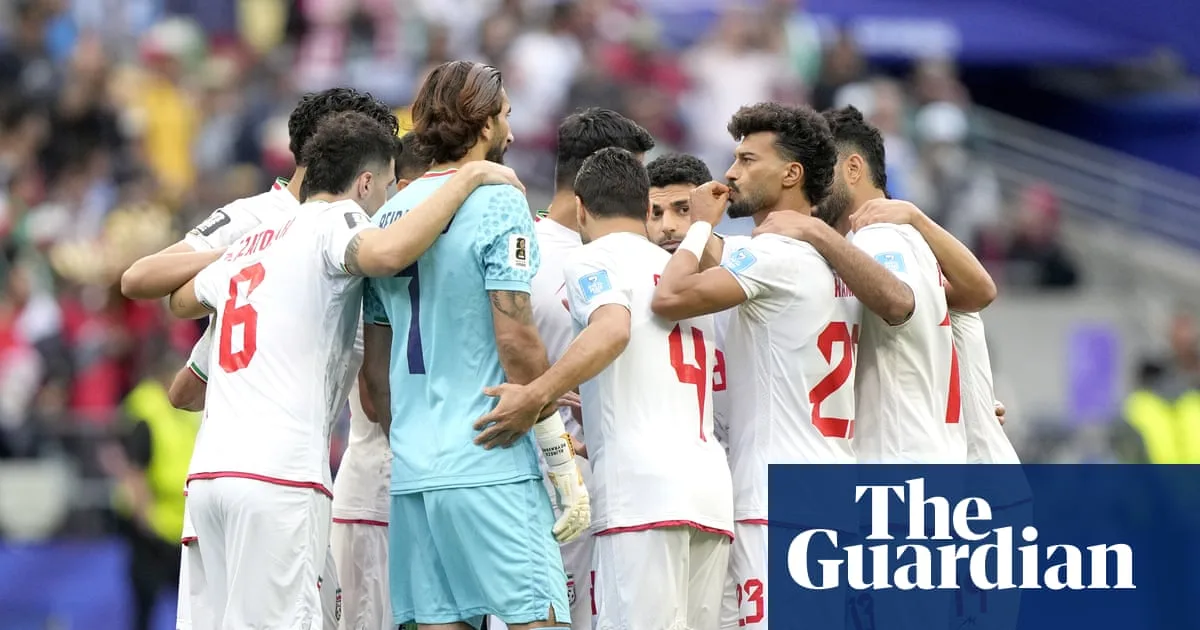
The Iranian national football team's participation in the 2026 FIFA World Cup has been thrown into serious doubt following recent military strikes by the United States and Israel against Iran. This escalating geopolitical conflict has created unprecedented tensions just four months before the tournament's opening matches, raising questions about whether Iran will compete or face replacement by another nation.

Political Statements Fuel Boycott Speculation

Former US President Donald Trump has publicly stated that it would not be "appropriate" for Iran to participate in this summer's World Cup following the military actions against the country. Trump posted on Truth Social that while the Iranian team is technically welcome, he doesn't believe "it is appropriate that they be there, for their own life and safety." This statement echoes earlier comments from Iran's sports minister Ahmad Donyamali, who had previously indicated that "the conditions for participation do not exist" for Iran at the tournament.

FIFA President Gianni Infantino had previously claimed to have received assurances from Trump that Iran would be welcome at the World Cup. However, the global football governing body has yet to respond to recent developments regarding Iran's potential withdrawal or exclusion from the competition.

Unprecedented Sporting and Political Conflict

The situation represents an extraordinary convergence of international politics and global sport. There has never been a World Cup boycott on political grounds in the tournament's modern history, with the last boycott occurring sixty years ago when African teams protested unfair qualification allocations. More significantly, there has never been a situation where a World Cup host nation has attacked a qualified participant so close to the tournament's commencement.

Iran's scheduled matches present particular complications, as all three of their group stage games are set to be played in United States cities. The team is scheduled to face New Zealand and Belgium in Los Angeles on June 15 and June 21 respectively, followed by a match against Egypt in Seattle on June 26. This geographical reality amplifies security concerns and logistical challenges.

Historical Context and Previous Tensions

Political tensions surrounding Iran's World Cup participation predate the recent military strikes. The Iranian football federation previously boycotted November's World Cup draw in Washington DC, citing "unsportsmanlike actions" by host countries after the United States failed to issue a visa to Iranian football president Mehdi Taj. This earlier boycott demonstrated Iran's willingness to use sporting participation as political leverage.

The situation has been further complicated by leadership changes in Iran following the death of Supreme Leader Ayatollah Khamenei, who has been succeeded by his son Mojtaba Khamenei. This transition adds another layer of uncertainty to Iran's decision-making process regarding international sporting engagements.

Potential Replacements and FIFA Regulations

FIFA's World Cup regulations provide the governing body with broad discretion in handling team withdrawals or exclusions. The regulations state that "FIFA shall decide on the matter at its sole discretion and take whatever action is deemed necessary" if any participating member association withdraws or is excluded. This could include replacing Iran with another national team.

The most likely replacement candidate would be the United Arab Emirates, who narrowly missed automatic qualification and were subsequently eliminated in playoff rounds. Iraq represents another potential option, though their qualification status depends on upcoming intercontinental playoff matches against either Bolivia or Suriname in Mexico later this month.

FIFA regulations also grant the organization authority to "cancel, reschedule or relocate one or more matches (or the entire FIFA World Cup 26) for any reason at its sole discretion, including as a result of force majeure or due to health, safety or security concerns." This theoretically opens the possibility of relocating Iran's matches outside the United States, though such a move would create significant logistical complications.

Historical Precedent and Future Scenarios

While there is no direct precedent for this specific situation, FIFA has previously demonstrated flexibility in tournament organization. Last summer, Mexican side Club Leon was removed from the Club World Cup due to multi-club ownership rules, with FIFA organizing a playoff between Los Angeles Football Club and Club America to determine their replacement.

The most dramatic potential scenario would involve the United States and Iran meeting in the knockout stages of the tournament. This could occur if both teams finish as runners-up in their respective groups, with that potential fixture scheduled for Arlington, Texas. Such a match would represent an extraordinary collision of sport and geopolitics on American soil.

As the World Cup approaches, FIFA faces mounting pressure to address this unprecedented situation while balancing sporting integrity with legitimate security concerns. The organization's response will establish important precedents for how global football navigates complex geopolitical conflicts in future tournaments.