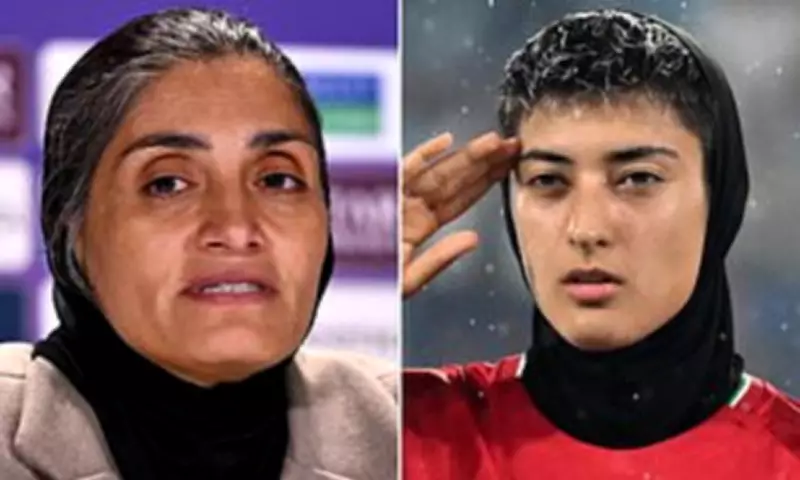
Ominous remarks from an Iranian state television presenter targeting the national women's football team during the Asian Cup tournament had severe psychological consequences, according to coach Marziyeh Jafari. The comments reportedly drove several players to seek asylum in Australia, where the competition was held.
Heavy Atmosphere Created by Media Backlash
The tournament in Australia coincided with US and Israeli air strikes on Iran that resulted in the death of Supreme Leader Ali Khamenei. When the Iranian women's team chose to stand in silence during their national anthem before their opening match against South Korea on March 2 on the Gold Coast, state TV presenter Mohammad Reza Shahbazi branded them as 'wartime traitors'.
In a statement originally posted by Iran's football federation (FFIRI) on its Telegram page last Friday - which has since been deleted - coach Jafari explained the impact of this public condemnation. 'Our girls were affected in the first match by the heavy atmosphere that had been created,' she stated.

Federation Asked to Pursue the Matter
Jafari added pointed criticism of those who failed to understand the tournament context. 'But the greater mistake was made by those who, at home, failed to understand that atmosphere and sounded the call to arms against the daughters of this land,' she said, directly referencing the presenter's inflammatory comments.
'What I have asked of the federation is to pursue the matter, because it affected our players psychologically, and we suffered the consequences,' Jafari emphasized. 'I am certain that if that atmosphere had not been created, not a single one of our players would have stayed in Australia.'
Asylum Applications and Reconsiderations
Australia granted humanitarian visas to five Iranian players who sought asylum during the tournament, with two additional squad members receiving asylum approval on Wednesday. However, one player ultimately decided to return to Iran despite initially considering staying.
Jafari described how Australian authorities approached the situation. 'Australian police called the players in several stages and sat down with them one-on-one to try and persuade them to stay,' she revealed. 'Fortunately, the majority of the team members responded negatively.'
Player's Change of Heart
In a surprising development, midfielder Mohaddeseh Zolfi, who had initially indicated she would remain in Australia, reconsidered her decision. She withdrew her asylum application and informed the Iranian embassy of her intention to return home.
Tony Burke, Australia's Home Affairs Minister, confirmed that Zolfi had complete autonomy over her decision. 'Australia is a country where people can freely change their minds,' he stated. 'We respect her decision...and we also made her fully aware of the potential risks she would face if she returned to Iran.'
The incident highlights the complex intersection of sports, politics, and media influence, with Jafari's comments providing rare insight into how state media criticism can directly impact athletes' psychological wellbeing and life decisions during international competitions.