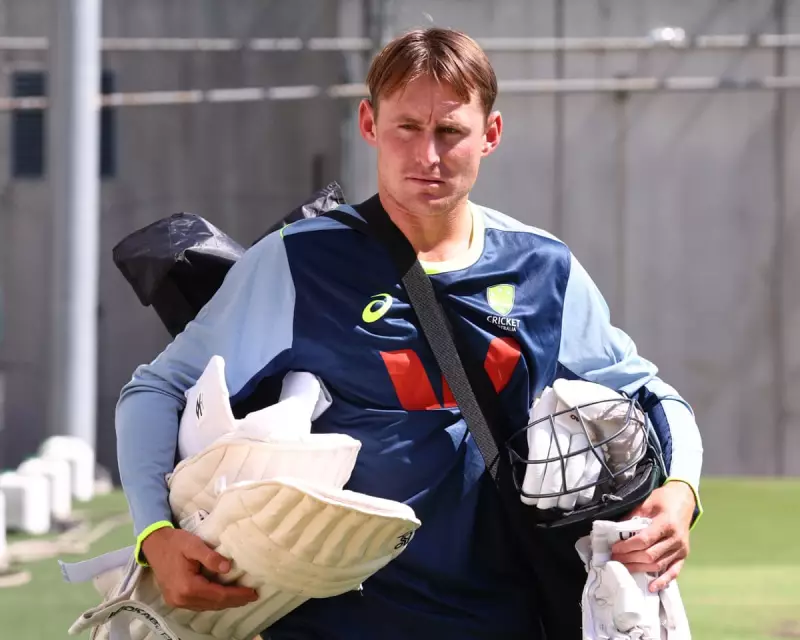
Australian batsman Marnus Labuschagne has pointed to his side's extensive familiarity with day-night cricket as a decisive factor heading into the second Ashes Test, a pivotal pink-ball encounter starting Thursday at Brisbane's Gabba.
Experience Gap Gives Australia the Upper Hand
While England have not faced the pink ball in a Test match for nearly three years, Australia have hosted more day-night fixtures than the rest of the world combined. Furthermore, Cricket Australia has strategically scheduled Sheffield Shield matches under lights for years to prepare domestic players for the international stage. Ben Oliver, CA's head of national teams, stated these games are designed to "enhance the experience for domestic players and best prepare them for the challenges of international cricket."
Labuschagne acknowledged the inherent challenge of the pink ball, admitting a personal preference for the traditional red ball due to greater familiarity. "There's a few intricate things about the pink ball that make it a bit of a different game," he said. However, he emphasised that Australia have turned this novelty into a strength. "It's become something that Australia have been very good at. We've learned over time the different moments of the game and how to play them. Hopefully that can be an advantage for us."

Starc's Swing and Labuschagne's Stellar Record
Australia's advantage is twofold, boasting both batting proficiency and bowling firepower tailored to the conditions. Labuschagne's own statistics are compelling; his batting average in day-night Tests stands at an impressive 63.86, which is a remarkable 38% higher than his overall career average of 46.34.
With the ball, the hosts possess in Mitchell Starc what Labuschagne described as the world's premier pink-ball bowler. "I think the stats probably say that," he noted, attributing Starc's success to a combination of high pace, late swing, and the unique behaviour of the pink ball. "It swings later and more inconsistently, which makes it hard to line up," Labuschagne explained.
Mastering the Shifting Conditions
The key to success in a day-night Test, according to Labuschagne, is adapting to the dramatic shifts in conditions caused by the changing light. "The different conditions at different times of day certainly has more impact," he observed. He highlighted the need for tactical flexibility, where recognising and capitalising on specific phases is crucial.
He cited his partnership with Nathan McSweeney against India in Adelaide last year as a perfect example. Navigating a tricky night session set the platform for dominance the following day. "If you win the toss [and bat first] it can set the match up really nicely for you to continue to have the night session," Labuschagne said, outlining the strategic benefit of controlling the game's rhythm.
Finally, the batsman offered a nuanced view on the modern debate around flexible batting orders, pushed by teammates Pat Cummins and Travis Head. While acknowledging that different times of day may suit different players, he affirmed a classic principle: "At the end of the day it doesn't matter where you bat, you've just got to find a way to score runs." As the Gabba lights prepare to shine, Australia's pink-ball pedigree suggests they are best equipped to do just that.