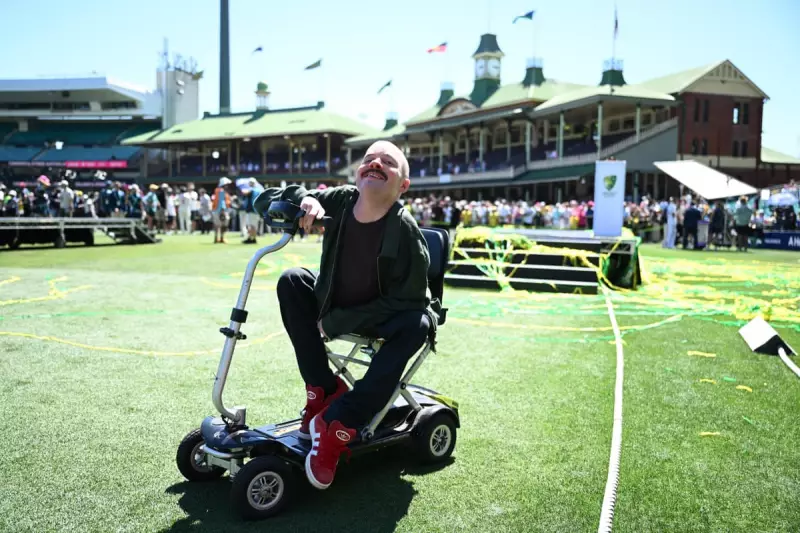
For freelance journalist Charles Reynolds, the 2025-26 Ashes series presented a dual reality: a catastrophic sporting campaign for England, but a surprisingly seamless experience of touring Australia with a disability.
An Away Ashes Too Good To Miss
Despite pre-tour trepidation about the physical demands of an eight-week journey, Reynolds, who was born with a form of muscular dystrophy, decided covering an away Ashes was an unmissable opportunity. Entering his 13th year as a journalist, he was determined not to let his disability dictate his life. His only prior Ashes experience in Australia was as a fan during the 2006-07 series, a benchmark he hoped wouldn't be surpassed for disappointment.
The tour began in Perth, a paradise after over 20 hours of travel, where Reynolds attempted to blend in by consuming "industrial quantities of smashed avocado" and growing a moustache. However, the series swiftly unravelled for the England team with an unthinkable two-day catastrophe in Perth, followed by a day/night humiliation in Brisbane.

‘Phenomenal’ Accessibility Down Under
While England floundered, Reynolds discovered a contrasting level of ease in navigating Australia with a mobility scooter. He found the accessibility of public transport "phenomenal" compared to the UK, praising the widespread availability of lifts, level boarding, and most notably, the consistently helpful staff.
"Most trams and trains I can just drive my mobility scooter straight on to," he reported. In instances where a ramp was needed, staff were always on hand to deploy one without fuss. In Melbourne, he learned the simple process of going to the front of the train where the driver would personally assist with a ramp. The experience almost won him over to the ubiquitous Australian phrase, "too easy."
From Banter to Patronising Sympathy
The only noted downside, for a self-described "miserably cynical and reserved Englishman," was the relentless upbeat and chatty nature of Australians. This became particularly grating as the series progressed and the tone of Ashes-related interactions shifted from friendly competitive banter to patronisingly sympathetic following England's repeated defeats.
The media circus provided its own absurdities. Reynolds recalled laughing aloud when a journalist asked England captain Ben Stokes if the team "owed an apology to Queenslanders" after players were photographed riding e-scooters without helmets. Watching England then be thrashed by eight wickets at the Gabba, he mused that perhaps an apology was indeed warranted.
An encounter in Adelaide underlined the mood. As Reynolds stopped to put on his accreditation, an elderly woman remarked, "Good on ya for getting out of the house." He initially bristled at the perceived patronisation, but then reflected on England's batting performances and conceded that every England supporter was doing well to even get out of bed.
A brief respite came with England's shock victory in the Melbourne Test, celebrated on a Christmas Day spent with fellow journalists. Culinary highlights included The Guardian's Ali Martin's barbecue skills and Barney Ronay's potatoes. The win was swiftly downplayed by Australians justifying "why it didn't count."
The series concluded in Sydney with the "reassuring embrace of yet another Ashes Test defeat." For Reynolds, the tour ended with the wistful hope that in four years' time, things might be different for England, coupled with a suppressed fear that they may never win a series in Australia again.
His final challenge was the 23-hour flight home, a journey requiring its own resilience. For the journalist, the personal victory was in conquering the tour itself, proving that covering an Ashes series in Australia, even with a disability, was far from an insurmountable task—unlike, it seemed, England's quest for the urn.