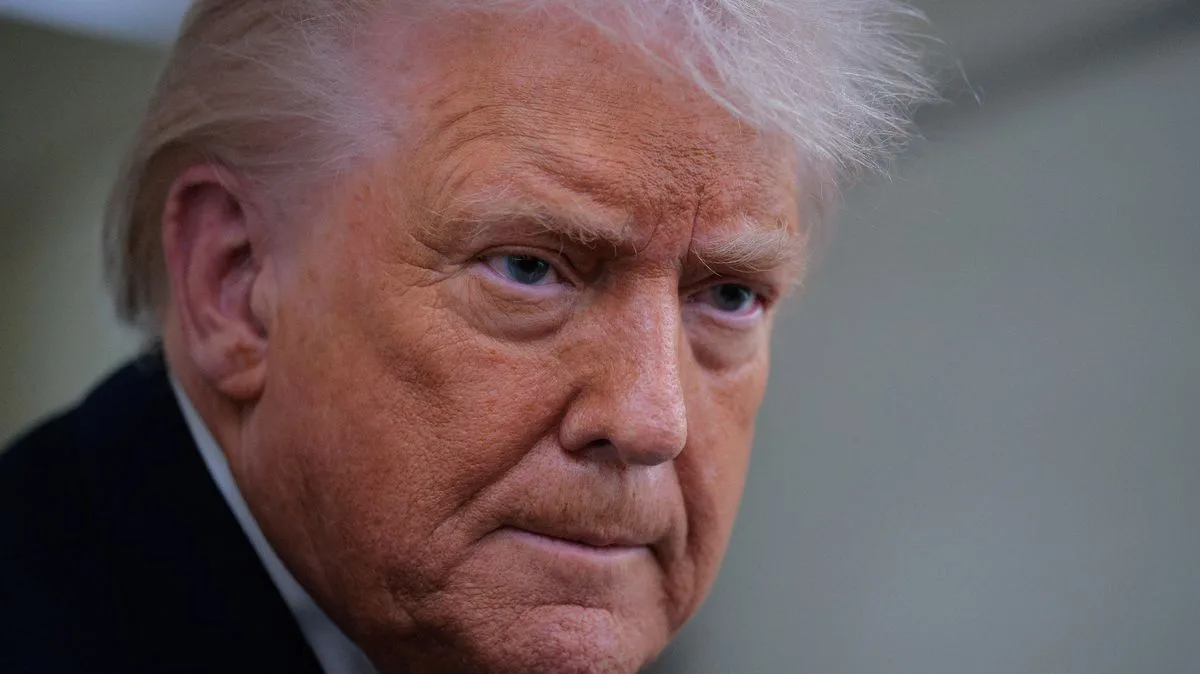
US President Donald Trump's recent behaviour, including threats of military action against Iran and a push to acquire Greenland, has prompted psychologists and security experts to warn of a 'risky' leadership style that could have dangerous consequences. Trump's actions, described as dominance-driven and attention-seeking, are seen as deliberate power plays to control the narrative, according to chartered psychologist Dr Katie Barge.
Speaking to the Mirror, Dr Barge noted that while a public figure cannot be diagnosed, Trump's behavioural patterns strongly suggest a provocative leadership style. 'Rapid policy reversals, grand promises, and seemingly petty gestures aren't random—they function as power plays,' she said. This comes after Trump confused Iceland and Greenland during a speech at the Davos forum, further fuelling questions about his mental acuity.
Trump's approach to Greenland has been particularly contentious. He has argued that US control over the Danish territory is vital for national security, citing threats from Russia and China. However, William Freer, a research fellow at the Council on Geostrategy, told the Mirror that existing agreements already allow the US significant military access. 'The recent pressure stems more from the mineral wealth of Greenland,' Freer said, noting the US's reliance on China for critical minerals.

Trump's tactics have drawn sharp criticism, with some labelling him a 'bully' and 'international gangster' on BBC's Question Time. Despite claiming he would not use military force to acquire Greenland, Trump has employed maximalist demands and tariff threats, unsettling allies accustomed to a more restrained America. Freer described these actions as 'deeply disturbing' for US partners.
The president's transactional approach to international relations, likened to buying an 'underperforming golf resort', has raised fears of a destabilised world order. As Trump continues to test boundaries, experts warn that his psychological profile could lead to risky decisions with far-reaching implications.