Trump's White House Ballroom Renovation Faces Criticism Over Design Flaws
An architectural analysis of the blueprints for President Donald Trump's White House ballroom renovation project has exposed significant design flaws, casting a shadow over the ambitious construction effort. The project, which involves building a new ballroom wing on the site of the former East Wing, is currently awaiting a final vote this Thursday from the National Capital Planning Commission (NCPC) and the Commission of Fine Arts.
Construction cranes have been active above the White House for weeks, preparing the groundwork for Trump's plans. However, just days before the crucial approval vote, a detailed analysis by the New York Times has brought to light several embarrassing problems with the design.
Symmetry and Historical Integrity Compromised
The ballroom's placement on the old East Wing site is set to disrupt the visual balance of the entire White House complex. Critics argue that the addition is bigger and bulkier than the West Wing, creating an asymmetrical appearance that clashes with the building's original aesthetic.

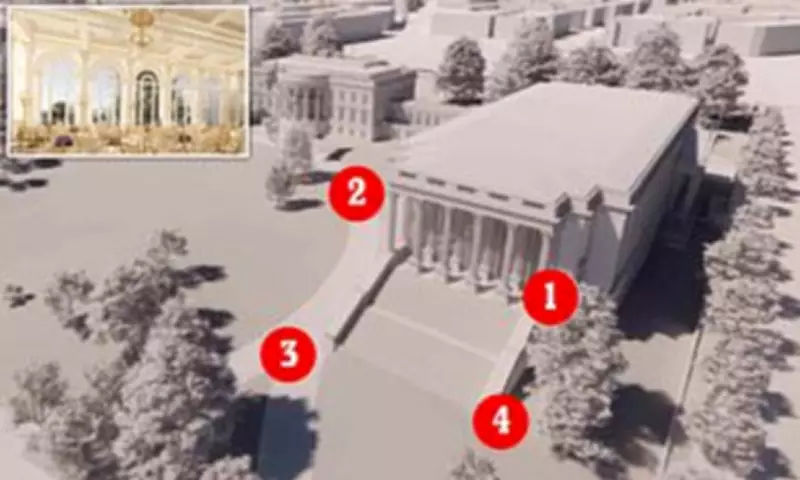
Furthermore, the design will cut across a visual line from the US Capitol, a feature intended by architect Pierre L'Enfant to symbolise the separation of the Executive and Legislative branches in Washington, D.C. Additional assaults on symmetry include the rerouting of a sidewalk and the inclusion of an oversized portico.
Functional and Aesthetic Issues Identified
The Times analysis highlights several practical shortcomings in the ballroom's design:
- A grand staircase at the front does not lead into the ballroom itself, with the true entrance located awkwardly at the side of the building.
- A flurry of columns inside will block natural light, potentially creating a dim and unwelcoming interior.
- The portico is unnecessarily large, further exacerbating the imbalance with the existing structure.
- The design requires relocating an existing path, which critics say ruins the symmetry of the White House grounds.
Carol Quillen, president and chief executive of the National Trust for Historic Preservation, which has sued the administration over the project, emphasised to the Times that public projects should not reflect the vision of a single individual. She noted, 'No project belonging to the public should be the vision of just one man.' Quillen added, 'Even if we are slow and we make mistakes and we fight, that process has meaning to us.'
Administration Defends Speed and Funding
In response, Will Scharf, White House staff secretary and chair of the NCPC, defended the project's rapid pace as an example of the administration's efficiency. He told the Times, 'If not for President Trump, his desire to move quickly, and his raising the money to fund this, a project like this could languish for years with no decision or action.' Scharf argued that without Trump's drive, the project might still be debated at NCPC meetings two decades from now.
Trump himself has criticised the National Trust for Historic Preservation, labelling it the 'Radical Left National (No!)Trust for Historic Preservation' and accusing its members of being 'so-called preservationists' who 'couldn't care less' about America. He has also touted his role in funding the construction, which is estimated to cost between $300 and $400 million, claiming it relies entirely on donations from business leaders without using taxpayer funds.
The controversy underscores the tension between modernisation and preservation in historic government buildings, with the final vote poised to determine the future of this high-profile renovation.