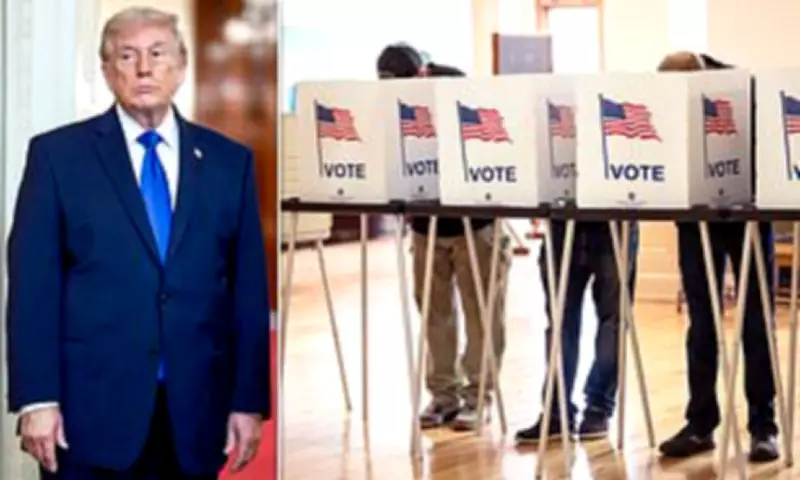
Attorneys with close ties to former President Donald Trump are actively urging him to declare a national emergency, a move that would confer sweeping powers to control the upcoming crucial midterm elections. This push aligns with Trump's longstanding rhetoric about "rigged elections" and his refusal to concede the 2020 presidential race to Joe Biden.
Legal Push for Executive Action
Peter Ticktin, a lawyer who has known Trump since their days together at New York Military Academy and has represented him in court, is part of a group of pro-Trump attorneys communicating with the White House regarding this election plan. Ticktin and his allies have drafted a 17-page presidential executive order arguing that alleged Chinese interference in the 2020 election justifies such an emergency declaration.
The draft order states, "There is now clear and compelling evidence from court cases and forensic analysis that these threats have not been mitigated but instead have intensified. This constitutes an unusual and extraordinary threat to the national security and foreign policy of the United States." However, no concrete evidence currently supports these claims. A 2021 review by multiple U.S. intelligence agencies concluded that China considered interfering but did not act on it.

Proposed Measures Beyond Congressional Reach
The proposed executive order would go significantly further than the SAVE Act, legislation Trump has championed to require voter ID at polls, which faces opposition from Congressional Democrats. Without needing congressional approval, the order would effectively mandate voter ID nationwide, ban mail-in voting, and require ballots to be counted by hand.
Ticktin told The Washington Post that while Congress and states traditionally oversee elections, "here we have a situation where the president is aware that there are foreign interests that are interfering in our election processes. That causes a national emergency where the president has to be able to deal with it." He specifically pointed to mail-in ballots and voting machines as conduits for foreign meddling.
White House Coordination and Political Backing
ABC News reported that Trump has personally reviewed the document, and Ticktin confirmed "certain coordination" with the White House. White House spokeswoman Abigail Jackson stated, "President Trump is committed to ensuring that Americans have full confidence in the administration of elections, and that includes totally accurate and up-to-date voter rolls free of errors and unlawfully registered non-citizen voters."
She added, "The President has urged Congress to pass the SAVE Act and other legislative proposals that would establish a uniform standard of photo ID for voting, prohibit no-excuse mail-in voting, and end the practice of ballot harvesting."
Democratic Opposition and Skepticism
Senator Mark Warner, a Virginia Democrat and ranking member on the Senate Intelligence Committee, dismissed the push, saying, "We've been raising the alarm for weeks about Trump's attacks on our elections — now we're getting details about how they might be planning to do it. Let's be clear: there's no national emergency. This is a plot to interfere with the will of voters."
Despite this, Ticktin and his allies believe their proposals will soon be incorporated into an executive order. Trump hinted at this on Truth Social on February 13, writing that he would be "presenting" an executive order "shortly."
SAVE Act Stalls in Senate Amid Political Maneuvering
Trump emphasized the importance of the SAVE Act during his recent State of the Union address, calling it necessary to "stop illegal aliens and others, who are unpermitted persons, from voting in our sacred American elections" and insisting "the cheating is rampant." He claimed "overwhelming" bipartisan agreement on the policy, urging Congress to "unite and enact this common-sense, country-saving legislation right now."
However, the bill has stalled in the Senate. Trump accused Democrats of opposing it because "they want to cheat. They have cheated. And their policy is so bad that the only way they can get elected is to cheat and we're going to stop it."

Senate Republicans Divided on Strategy
Trump's push, backed by House conservatives and loyal supporters ahead of the midterms, has pressured Senate Majority Leader John Thune. Thune supports the legislation but noted that Senate Republicans "aren't unified on an approach" after Trump's speech.
To bypass Democratic opposition, Trump and allies have suggested a "talking filibuster," reminiscent of the movie 'Mr. Smith Goes to Washington,' where senators speak indefinitely to block legislation. This would require Republicans to keep the Senate open, forcing Democrats to deliver prolonged speeches. Thune indicated that his caucus lacks sufficient support for this tactic, stating, "we aren't there yet."
Even if Republicans break an initial filibuster, Democrats could offer unlimited amendments, forcing tough votes in an election year and potentially adding their own priorities with bipartisan support. Each amendment would trigger new rounds of speeches, complicating the process.
Internal GOP Tensions and Broader Implications
The situation places Thune in a difficult position with Trump and voters who view the SAVE Act as essential for GOP midterm success. Some Republicans fear the process could lead to rules changes that erode the legislative filibuster. Senator Thom Tillis of North Carolina said, "I agree with the SAVE Act. But I'm not going to nuke the filibuster."
Other Republicans, like Senator Lisa Murkowski of Alaska, oppose the SAVE Act, and former GOP majority leader Mitch McConnell has historically opposed similar measures. The House approved the bill earlier this month on a mostly party-line vote of 218-213.
Trump has signaled he will blame Democrats, and possibly Thune, if Republicans lose congressional majorities in November, despite the GOP winning control of Congress and the White House in 2024 without the bill's requirements. This underscores the high-stakes political battle over election integrity and executive power as the midterms approach.