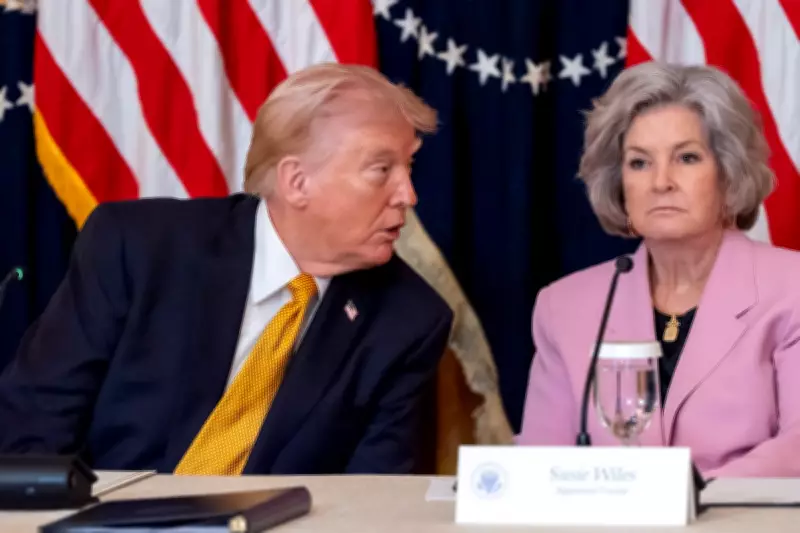
White House Chief of Staff Susie Wiles has reportedly expressed serious concerns that presidential aides are providing President Donald Trump with what she describes as "a rose-colored view" of the ongoing Iran war and its significant domestic impacts, according to new revelations from inside the administration.
Mounting Domestic Consequences of the Conflict
It has now been over a month since the United States and Israel initiated coordinated military strikes against Iranian targets. During this period, the conflict has produced substantial consequences on American soil. Gasoline prices across the United States have surged dramatically, now averaging more than four dollars per gallon nationwide. The human cost has also been severe, with thirteen American service members confirmed dead and more than three hundred troops sustaining injuries as the hostilities continue to escalate.
Trump's Public Portrayal Versus Internal Concerns
During a nationally televised address delivered on Wednesday evening, President Trump vigorously promoted what he perceives as decisive victories in a conflict he asserts began due to an imminent Iranian threat to American security. "Never in the history of warfare has an enemy suffered such clear and devastating large-scale losses in a matter of weeks," Trump declared. "Our enemies are losing and America, as it has been for five years under my presidency, is winning, and now winning bigger than ever before," he added, seemingly referencing both his first term and the initial year of his current second term.

However, internal reports paint a contrasting picture of the president's daily engagement with the war. According to information from NBC News, President Trump reportedly spends considerable time watching compilation videos that highlight the most successful strikes on Iranian targets. These daily briefings, curated by aides, are said to shield him from the broader negative repercussions of the conflict, including the political and economic fallout.
Wiles Calls for More Forthright Communication
Citing two White House sources, Time magazine reported on Thursday that Chief of Staff Susie Wiles has grown increasingly concerned that the president is receiving an unrealistically optimistic assessment of how the American public views the Iran war. In response, Wiles has allegedly instructed staff members to be "more forthright with the boss" regarding the substantial political risks and economic dangers associated with the prolonged military engagement.
This internal tension emerges against a backdrop of significant public skepticism. A recent poll conducted by The Economist in partnership with YouGov reveals that a majority of Americans, fifty-nine percent, oppose the war with Iran, while only twenty-eight percent express support. Furthermore, when questioned about the accuracy of information provided by the Trump administration regarding the war's progress, fifty-five percent of respondents believed the government has not been truthful, with a mere twenty-five percent affirming they have received accurate updates.
Discrepancy Between Claims and Intelligence Assessments
President Trump asserted in his address that Iran's "ability to launch missiles and drones is dramatically curtailed." Yet, a CNN report published on Thursday presented conflicting intelligence, indicating that recent U.S. assessments suggest Iran still retains approximately half of its missile launchers and possesses thousands of operational drones.
The president told reporters on Tuesday that he believes the war could conclude within two to three weeks. However, public opinion suggests Americans are far less optimistic about a swift resolution. The same poll indicated that fifty-nine percent of respondents consider it somewhat or very unlikely that the United States and Iran will reach a negotiated settlement to end the war within the next month. Only twenty-two percent viewed such an outcome as somewhat or very likely.
The Independent has contacted the White House seeking official comment on these reports regarding internal briefing practices and the chief of staff's concerns, but no immediate response has been provided.