Trump Braces for Historic 'No Kings' Protest as Organisers Predict Nine Million Participants
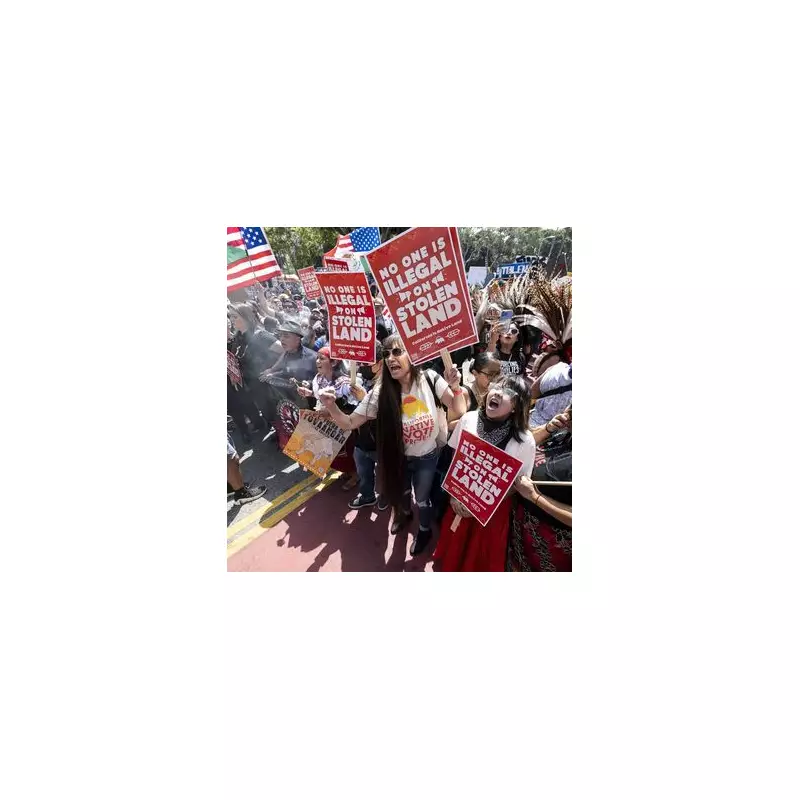
The United States is preparing for what could become the most significant public demonstration in its history, as organisers of the No Kings protest movement announce a third nationwide march this spring. With predictions of up to nine million participants, this event threatens to dwarf previous rallies and present a formidable challenge to President Donald Trump's administration.
Growing Movement Against 'Authoritarianism'
Organisers behind the burgeoning protest movement have framed the upcoming demonstration as a direct response to what they describe as authoritarian tendencies within the Trump presidency. The movement, which draws support from a diverse coalition of groups across the country, has become a focal point for mounting frustration with the administration's policies and approach to governance.
Ezra Levin, co-executive director of the non-profit organisation Indivisible, provided a stark assessment of the movement's expectations when speaking to the Associated Press. "We expect this to be the largest protest in American history," Levin declared, adding his prediction that millions of Americans would take to the streets on March 28th.

Catalysts for Mass Mobilisation
The protest movement has gained significant momentum following controversial actions by federal immigration authorities in Minneapolis, where Immigration and Customs Enforcement (ICE) raids and shootings have sparked nationwide outrage. Organisers specifically cite the tragic deaths of Renee Good, a mother of three, and Alex Pretti, an intensive care nurse, as pivotal moments that have refocused and energised their movement.
Levin explained the protest's renewed urgency, stating: "This is in large part a response to a combination of the heinous attacks on our democracy and communities coming from the regime, and a sense that nobody's coming to save us." The organiser emphasised that the demonstration aims to show solidarity with Minnesota communities and immigrant populations across the nation while opposing what they characterise as "the secret police force that is murdering Americans and infringing on their basic constitutional rights."
Administration Response and Escalating Tensions
The Trump administration has faced mounting criticism for its handling of the protest movement and the events that have fuelled its growth. Following the Minneapolis shootings, President Trump appeared to downplay the role of federal agents in the incidents, while Department of Homeland Security Secretary Kirsti Noem controversially labelled both Good and Pretti as "domestic terrorists." These responses have further inflamed public sentiment and contributed to the protest movement's expansion.
President Trump has previously responded to the demonstrations in unconventional ways, including sharing a bizarre AI-generated video depicting him as a monarch dumping brown sludge on protesters from an aircraft. Despite these provocations, the President has maintained his position against the movement's central premise, insisting "I'm not a king" in response to the protests' branding.
Historical Context and Future Implications
Previous No Kings demonstrations have already drawn millions of participants across multiple cities, establishing the movement as a significant force in American political life. The upcoming spring protest represents a substantial escalation in both scale and ambition, with organisers coordinating what they describe as a nationwide response to perceived overreach by federal authorities.
As the March 28th date approaches, political observers are watching closely to see whether the protest will indeed reach the historic proportions predicted by its organisers. The event promises to test both the administration's response to mass dissent and the organisational capacity of a decentralised protest movement that has tapped into deep-seated frustrations across American society.