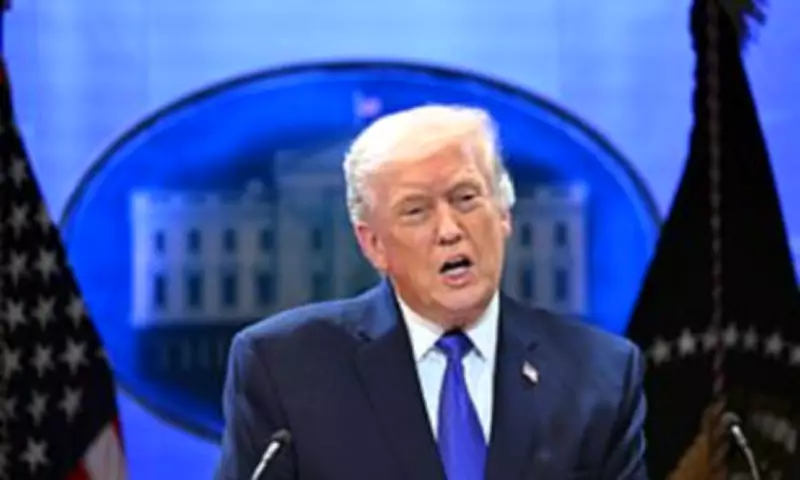
In a striking development from the White House, former President Donald Trump issued a veiled warning suggesting that foreign influence and covert political machinations may have pressured the Supreme Court to rule against his ambitious tariff plans. Speaking during a Friday afternoon briefing, Trump addressed the high court's recent 6-3 decision that struck down his sweeping tariff agenda, initially rolled out in early April 2025.
Supreme Court Decision Halts Tariff Agenda
The landmark ruling effectively freezes the varying tariff rates that Trump deployed under the International Emergency Economic Powers Act of 1977. This legal framework, originally designed for national emergencies, was utilized by the administration to impose tariffs on a broad scale. The court's decision not only halts these measures but could also compel the administration to repay approximately $175 billion in tariff revenues already collected, posing a significant financial and policy setback.
Trump's Allegations of External Pressure
From the White House Briefing Room, Trump expressed his firm belief that the court's judgment was unduly influenced. 'It's my opinion that the court has been swayed by foreign interests and a political movement that is far smaller than people would ever think,' he stated. He ominously added, 'And I think certain justices are still afraid of that,' implying that some of the nine Supreme Court justices might be ruling against him out of intimidation from unnamed foreign entities.

'They don't want to do the right thing,' Trump continued. 'They're afraid of it.' When pressed for clarification about the alleged political and foreign influence, the president described shadowy, unnamed individuals with 'undue influence' over the Supreme Court. He elaborated, 'Foreign interests are represented by people that I believe have undue influence and a lot of influence over the Supreme Court, whether it's through fear or respect or friendships, I don't know, but I know some of the people that were involved on the other side, and I don't like them.'
Vague References and Journalistic Teasing
Trump further criticized these individuals, calling them 'real slime balls,' and emphasized the need to uphold the Constitution. However, when journalists sought more details to identify the 'foreign interests' and 'political movement' behind the alleged pressure campaign, Trump remained cryptic. 'You'll find out,' he teased, without providing additional information, leaving the specifics of his claims shrouded in mystery.
Implications for Policy and Governance
This controversy highlights ongoing tensions between executive power and judicial independence, particularly in matters of international trade and emergency authorities. The Supreme Court's decision underscores the legal limits of using the International Emergency Economic Powers Act for tariff impositions, setting a precedent that could affect future administrations. The potential $175 billion repayment adds a layer of economic urgency, impacting federal budgets and trade relations.
As this story develops, it raises critical questions about the integrity of judicial processes and the potential for external pressures in high-stakes political decisions. The allegations, while unsubstantiated, reflect broader concerns about foreign interference and domestic political dynamics in the United States.