President Donald Trump has branded the United States as "stupid" following his attendance at Supreme Court arguments concerning his administration's efforts to terminate birthright citizenship. The president departed the Supreme Court chamber abruptly, just as Solicitor General John Sauer, his former personal attorney, was concluding his presentation before the high court.
Trump's Early Departure and Judicial Skepticism
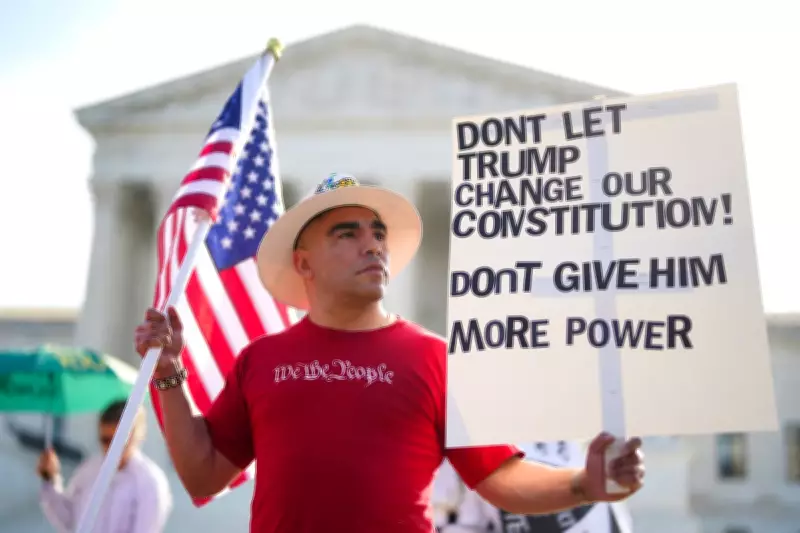
Trump left halfway through the proceedings, a move that coincided with several key justices, including three he appointed to the nine-member bench, appearing skeptical of the administration's arguments to block automatic citizenship. The Supreme Court is currently deliberating whether Trump can unilaterally redefine American citizenship through an executive order, with a decision anticipated by July.
Truth Social Rant and International Context
After the arguments concluded, Trump took to Truth Social to vent his frustrations, writing, "We are the only country in the world STUPID enough to allow 'Birthright' Citizenship!" However, this claim is contradicted by research from the Pew Research Center, which indicates that thirty-two other countries, predominantly in the Western Hemisphere, have birthright citizenship laws substantially similar to those of the U.S. Additionally, approximately fifty more nations have more limited variations of such citizenship provisions.

Broader Implications and Legal Scrutiny
The case represents a landmark legal battle with significant implications for immigration policy and constitutional interpretation. Trump's administration has faced intense scrutiny over its attempts to alter citizenship norms, with critics arguing that such changes require congressional approval rather than executive action. The Supreme Court's deliberations will likely hinge on interpretations of the Fourteenth Amendment and historical precedents regarding citizenship rights.
As the legal process unfolds, the outcome could reshape the landscape of American citizenship, affecting millions of individuals and setting a precedent for future presidential powers. The president's comments have sparked widespread debate, highlighting the polarized views on immigration and national identity in contemporary U.S. politics.