

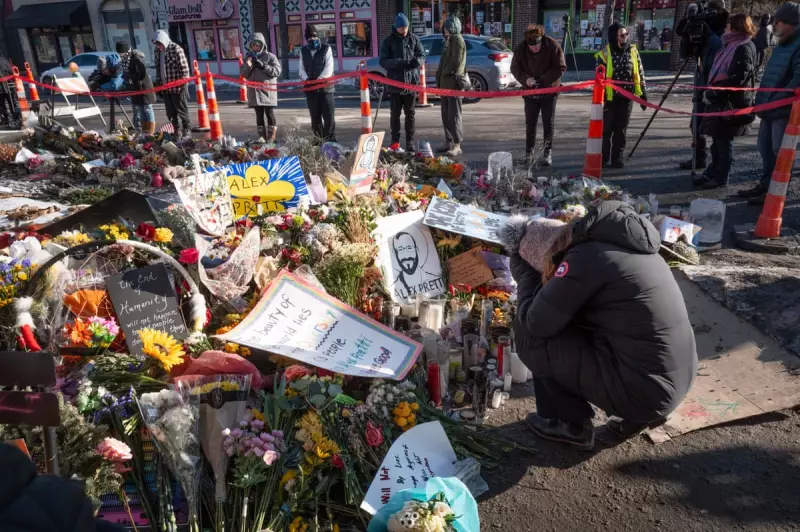
Political Fallout Intensifies Over Minneapolis ICE Agent Shootings
As public outrage continues to mount following the fatal shootings of two protesters by Immigration and Customs Enforcement agents in Minneapolis, the White House finds itself in a defensive posture, attempting to manage the escalating political crisis. While Donald Trump did not personally fire the weapons that killed Renee Good and Alex Pretti, he bears significant political responsibility for having endorsed and enabled the frequently lawless conduct of his administration's deportation agents.
Unjustified Use of Lethal Force
Renee Good and Alex Pretti should never have lost their lives. Extensive video evidence that has emerged from the incidents shows that neither individual posed any credible threat to the agents present or to anyone else at the scene. Their only perceived transgression was participating in a protest against ongoing deportation raids. Despite this, agents with apparent trigger-happy tendencies shot them needlessly—Good as she was manoeuvring her vehicle away from the agents, and Pretti while he was already restrained on the ground by officers. There exists no plausible argument of self-defence that could justify these tragic killings.
Yet, the Trump administration has consistently and reflexively defended deportation agents whenever they employ lethal force. On each of the sixteen occasions since July where agents have discharged their firearms—whether during detentions or at protests—Trump officials have prematurely declared the actions justified, often without awaiting proper investigations and sometimes in direct contradiction of clear video evidence.

Senior Officials Blame the Victims
The killing of Alex Pretti serves as a particularly stark example. Stephen Miller, the deputy national security adviser who orchestrates the deportation sweeps from the White House, labelled Pretti a "domestic terrorist". Similarly, Homeland Security Secretary Kristi Noem, who oversees the raids, accused Pretti of involvement in "domestic terrorism". However, detailed video analysis demonstrates conclusively that Pretti presented no danger whatsoever to the officers who ended his life. These high-ranking Trump officials effectively blamed the victim for his own death.
In response to growing public hostility, Trump has removed Gregory Bovino, the border patrol commander who had been leading the deportation operations in Minneapolis. However, the president has notably failed to repudiate the inflammatory statements made by Miller and Noem. Many argue he should dismiss them both for encouraging lawlessness by defending the indefensible.
Trump's Own Problematic Response
Trump's initial reaction to Pretti's killing was to castigate Democrats for creating "chaos" by refusing to cooperate with the deportation sweeps. Yet, as reported by the New York Times, video evidence indicates it was federal agents who needlessly escalated the situation, "shoving bystanders", "showering them with pepper spray at close range", issuing "muddled" directives, and missing clear opportunities to de-escalate the confrontation.
Compounding the issue, the Trump administration has avoided initiating proper criminal investigations. Currently, only a "use of force" review is being conducted regarding Pretti's death, rather than a criminal investigation into potential murder. Furthermore, the FBI supervisor in Minneapolis who attempted to investigate Renee Good's killing resigned after her superiors in Washington pressured her to discontinue the inquiry. Once again, the signal from senior Trump officials appears to be that even unjustified lethal force will be treated with excessive leniency.
Media and Public Reaction
Trump's supporters have echoed this troubling narrative. Fox News commentators suggested Pretti was responsible for his own death, arguing that if he hadn't attended the protest, he wouldn't have been killed. Co-host Charlie Hurt stated on Fox & Friends, "He should not have been there"—a sentiment that starkly disregards First Amendment rights to peaceful protest.

Others have noted that Pretti was lawfully carrying a firearm, as if this might somehow justify his killing. Video evidence clearly shows he never drew the weapon or removed it from its holster; it appears agents took it from him before shooting him as he lay restrained and helpless. This blame-the-victim argument has even provoked outrage among some of Trump's Second Amendment supporters, who question when lawfully carrying a gun—without brandishing or using it threateningly—permits federal agents to shoot someone summarily.
The Power of Documentation
The real "weapon" that seemed to provoke Trump's agents was the mobile phone camera. Both Pretti and Good's wife were using their phones to film the agents' actions, a practice protected by the First Amendment and commonly employed by opponents of the raids to document potential misconduct. It is largely through this citizen documentation that the public knows the official cover stories for these killings are fictitious.
While we may never know precisely what motivated the agents to shoot Good and Pretti needlessly, it is difficult to ignore the role their frustration with being recorded may have played—standing between their apparent aggressive instincts and a desire for impunity.
A Broader Political Reckoning
Trump once famously claimed his supporters were so loyal he could "shoot someone on Fifth Avenue" without losing votes. There has been a disturbing element of truth to this, as many supporters seem to admire his willingness to challenge the system, even when it involves crossing legal boundaries.
However, most Americans do not favour a police state, which is what Trump appears to be attempting to impose on Democratic-run cities through these aggressive tactics. The raids themselves are concerning enough, but if Trump's deportation agents can kill with impunity, and if the instinct of Trump and his senior officials is to excuse lawlessness rather than uphold the law, then the president deserves the plummeting poll numbers he now faces. For the safety of city dwellers across the United States, one can only hope his notorious quest for public approval might eventually lead to a significant change in direction.





