Trump Unleashes Fury on Supreme Court Following Tariff Rebuke
In a dramatic turn of events, former President Donald Trump encountered a significant judicial setback on Friday, 20 February 2026, when the US Supreme Court delivered a sharp rebuke by declaring many of his global tariffs illegal. This ruling marks the first time the court has overruled a policy from Trump's second term, dealing a blow to his aggressive economic agenda.
Supreme Court Ruling Sparks Presidential Outburst
The court's decision, made by a 6-3 majority, determined that a 1977 law intended for national emergencies did not provide legal justification for the majority of Trump's tariffs imposed on countries worldwide. Trump, unsurprisingly, responded with a torrent of insults directed at the justices who ruled against him, including two he appointed during his first term.
On his Truth Social platform, Trump labelled the justices as "fools and lap dogs", accusing them of being "very unpatriotic" and "disloyal to the Constitution". He baselessly claimed the court had been "swayed by Foreign Interests", while praising the three conservative dissenters: Clarence Thomas, Samuel Alito, and Brett Kavanaugh.

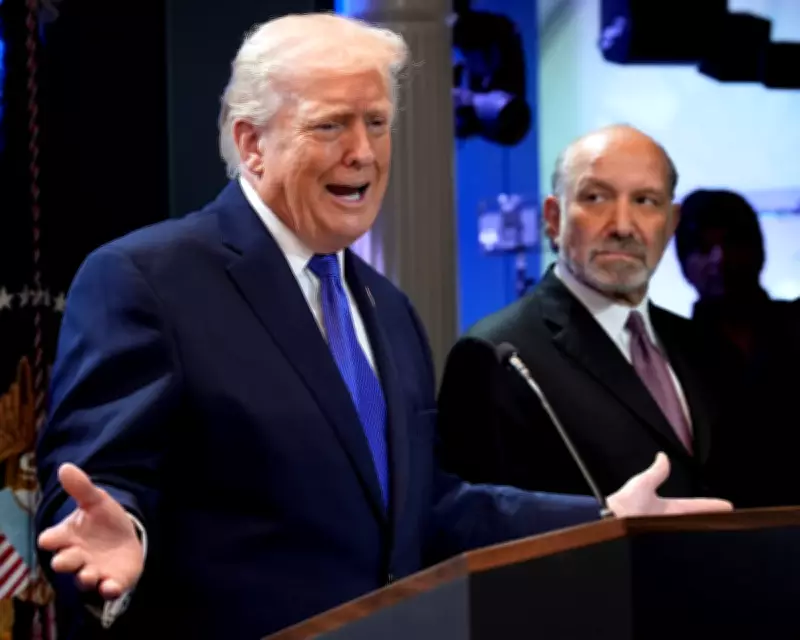
At a subsequent press conference, Trump escalated his rhetoric, calling the six justices a "disgrace to the nation" and stating they were now "barely" invited to the upcoming State of the Union address. He asserted that the ruling had emboldened him to pursue "very powerful alternatives" to the overturned tariffs.
New Global Tariff Imposed in Retaliation
True to his word, Trump later signed documents imposing a 10% tariff on all countries, set to take effect on Tuesday, 24 February 2026. A White House fact sheet confirmed this move, which business groups and international allies, including Britain and the EU, are cautiously assessing for its broader implications.
This swift action underscores Trump's unwavering commitment to his trade policies, despite judicial pushback. The new duty is seen as a direct response to the Supreme Court's ruling, aiming to maintain his economic stance on the global stage.
Broader Political and Legal Context
The tariff controversy unfolded alongside other significant developments in US politics. A federal judge accused the Trump administration of "terror" against immigrants, citing reckless law violations and violence, including the killings of US citizens by immigration officers. Additionally, the FDA retreated from plans to ban artificial colors in food, loosening labeling requirements despite safety concerns.
In diplomatic circles, US Ambassador to Israel Mike Huckabee sparked controversy by suggesting Israel has a biblical right to take over the Middle East. Domestically, Florida Republicans passed a bill to rename West Palm Beach airport after Trump, while New Mexico reopened an inquiry into Jeffrey Epstein's ranch amid public pressure.
Other notable events include a $70m aircraft considered for deportation flights with luxurious interiors, a California bill to ban immigration agents near polling places, and investigations into a deadly avalanche in Lake Tahoe. These stories highlight the multifaceted challenges and debates shaping the political landscape under Trump's leadership.