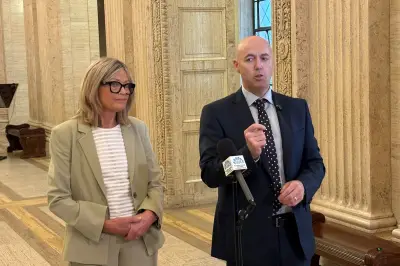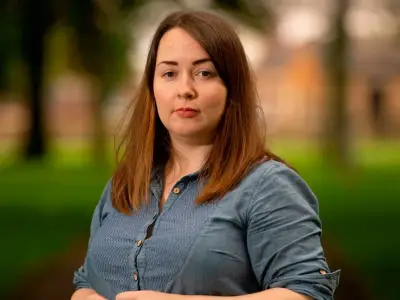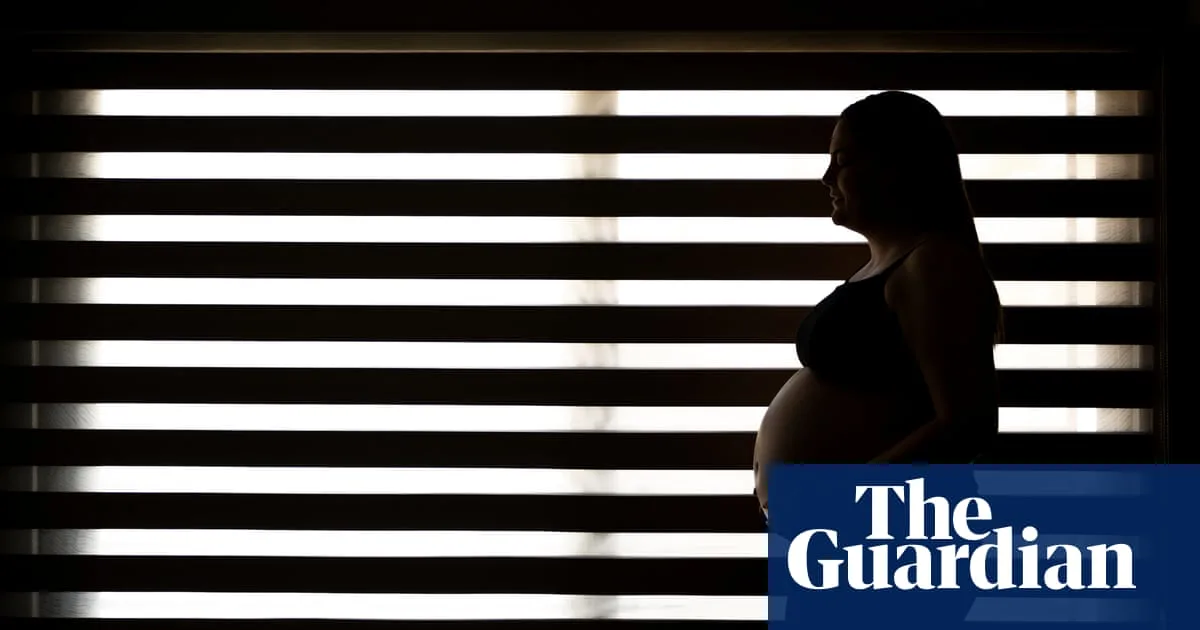
Political commentators are dubbing it the 'MAGA baby boom' after a remarkable cluster of pregnancy announcements emerged from the highest levels of the Trump administration. Within a single month, three prominent women connected to the former president's inner circle revealed they were expecting, creating what experts describe as a fascinating case of workplace 'social contagion'.
A Remarkable Three-Week Span
The announcements began with White House Press Secretary Karoline Leavitt, 28, who revealed on December 26th that she was pregnant with her second child, a girl. Just 25 days later, Katie Miller, 34, wife of Trump's deputy chief of staff for policy Stephen Miller, announced she was expecting her fourth child. The sequence culminated yesterday when Usha Vance, 40, wife of Vice President JD Vance, became the third administration insider to announce a pregnancy, expecting her fourth child, a boy, in late July.
This makes Usha Vance the first second lady in 150 years to announce a pregnancy while serving in that role. The timing has sparked widespread discussion about whether this represents mere coincidence or something more significant within the political and cultural environment of the current administration.
Experts Weigh In on 'Pregnancy Clusters'
Dr Carole Lieberman, a leading forensic psychiatrist based in Beverly Hills, California, explained to Daily Mail that such 'pregnancy clusters' are not entirely unheard of. 'There are many theories as to why "pregnancy clusters" exist,' she noted. 'It's a form of "social contagion"... and a positive life experience.'
Dr Lieberman suggested the specific environment within the Trump administration might be particularly conducive. 'Karoline Leavitt, Usha Vance and Katie Miller are all in the Trump administration, where there's a general sense of optimism and forward thinking that would encourage women to bring babies into this world,' she observed. 'On top of this, both President Trump and Elon Musk are big proponents of women having babies because of the declining birthrate in America. So, unconsciously, being surrounded by these messages [appears to] have had an impact.'
A Supportive Workplace Culture
In her pregnancy announcement on Instagram, Karoline Leavitt described expecting a child as the 'closest thing to Heaven on Earth' and thanked President Donald Trump and Chief of Staff Susie Wiles for their support. Speaking to Fox News, she highlighted the family-friendly atmosphere among colleagues. 'Nearly all my West Wing colleagues have babies and young children, so we all really support one another as we tackle raising our families while working for the greatest president ever,' Leavitt stated.
This supportive environment is precisely what medical experts point to as a potential factor. Dr Sujatha Reddy, an OB-GYN from Atlanta, Georgia, told Daily Mail: 'I love hearing that [Leavitt's colleagues are supportive] as I think the workplace can be difficult for new moms and families. If you feel like you have support, that may push the decision a little bit because you feel you will be able to keep your job and raise a baby.'
Dr Reddy elaborated on the psychological mechanisms at play: 'Oftentimes, there may be a pregnancy cluster in friendship circles or a co-working space because women are at the same stage of life. They may see a colleague who is pregnant too and think, "I want to try that". Someone may see a baby and think, "Oh my god, what an adorable baby!", and maybe that means they decide that they want to have a baby too.'
Historical Precedents and Research
This phenomenon extends far beyond the political sphere. A 2014 study examining 33,000 female co-workers across 6,000 companies found that in the year following a colleague giving birth, the rate of first pregnancies among other women in that workplace doubled. The effect, however, tended to decline after approximately two years.
Recent years have seen several notable workplace pregnancy clusters. Last year, 14 labour and delivery nurses at a Wisconsin hospital all became pregnant around the same time, which hospital executives called an 'incredible full-circle moment'. Similarly, six on-air anchors and reporters at CNBC experienced simultaneous pregnancies, with one reporter telling PEOPLE there was 'something powerful' in the shared experience, adding 'you're not doing this alone'.
Perhaps most strikingly, in 2021, 36 neonatal intensive care nurses at a children's hospital in Missouri all became pregnant at about the same time, attributing their closeness to pandemic experiences and workplace bonds.
The Broader Political Context
The 'MAGA baby boom' occurs against a backdrop of declining national birth rates and explicit political messaging encouraging family formation. During Trump's first term (2017-2021), America's birth rate fell seven percent overall. Under the Biden administration, rates declined a further four percent to reach a record low of 10.67 births per 1,000 people in 2024.
President Trump, who has five children, has actively positioned himself on this issue, calling himself the 'fertilization president' and overseeing policies aimed at reducing costs for fertility treatments. Vice President JD Vance has publicly called for Americans to have more children, stating at a 2024 March for Life rally: 'I want more happy children in our country, and I want beautiful young men and women who are eager to welcome them into the world and eager to raise them.'
This messaging appears to resonate with certain demographics. Popular Catholic writer Peachy Keenan, a mother-of-five from California, told the Daily Telegraph she was inspired by Trump to have more children. 'To save our country, we need to get out and push the babies out, and to do it in mass scale,' she said. 'When did raising your own baby become this political taboo?'
Meanwhile, figures like entrepreneur Elon Musk, who reportedly has 14 children and is a prominent Trump ally, have repeatedly warned that falling birth rates represent 'the biggest danger civilization faces by far'.
A Personal and Political Convergence
For the women at the centre of this story, their pregnancies represent both personal joy and an alignment with broader administration values. Leavitt publicly congratulated Vance on her pregnancy via social media, writing: 'Congratulations to our great Vice President and lovely Second Lady Usha Vance.'
Dr Reddy notes that such clusters often occur among friends or colleagues in similar life stages. 'They've been to each other's weddings, have been bridesmaids together, spent most of their lives together, and it often comes down to just the right age, right timing,' she explained. 'One might be on a second baby, one on a first baby, it might be coincidence or the social drive of wanting a child.'
Whether driven by subconscious social influence, supportive workplace policies, shared life stages, or political messaging, the simultaneous pregnancies of these three Trump administration women have undoubtedly captured public attention. They serve as a prominent example of how personal family decisions can intersect with political culture, creating what some are calling a defining demographic trend of the current political era.