The View panel erupts in fiery clash over Iran airstrikes
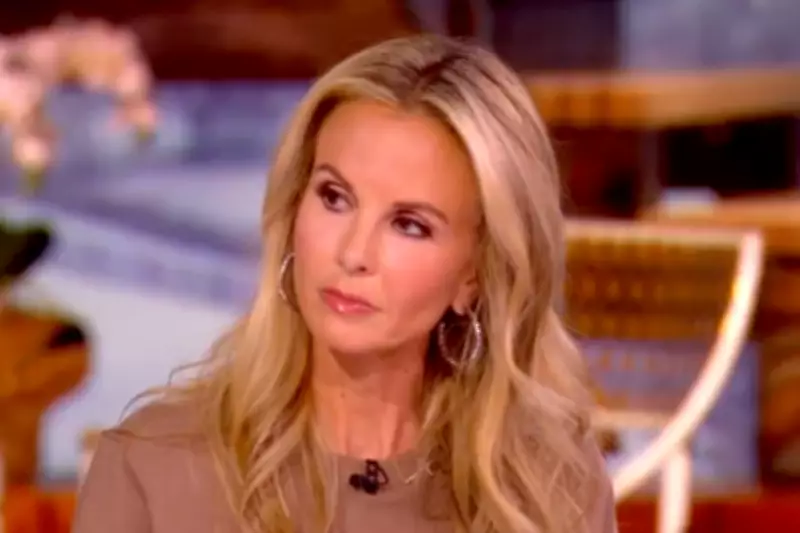
The atmosphere turned tense on Monday's episode of The View as guest host Elisabeth Hasselbeck clashed with regular panelists over recent joint U.S. and Israeli airstrikes on Iran. The military action, which resulted in the death of Iran's supreme leader and triggered retaliatory attacks across the Middle East, sparked a passionate debate about presidential authority and international consequences.
Navarro's mixed feelings and constitutional concerns
Ana Navarro opened the discussion by expressing conflicted emotions about the airstrikes. "I don't think Americans are going to support it if the president does not clearly explain why we went in there and what the end game is," she stated. While acknowledging she celebrated the death of Ayatollah Ali Khamenei with Iranians worldwide, Navarro voiced serious reservations.
"I am furious that we are going into war yet again without congressional approval," she declared. "I am furious that the American people have not been brought into this. I am furious that we are doing this alone." Navarro drew parallels to Trump's earlier capture of Venezuelan President Nicolás Maduro, but emphasized crucial differences between the two nations.

"Venezuela is not Iran," she insisted. "We are seeing retaliation by the Iranians that the Venezuelans didn't have the ability to do. He thinks he's Alexander the Great, but Venezuela is not Iran."
Hasselbeck's defense of the military action
Elisabeth Hasselbeck, the former co-host known for her conservative perspective, presented a starkly different viewpoint. She argued the airstrikes represented a positive development for both Iranian citizens and global geopolitics.
"We have 47 million Iranian women who now have a hope of freedom. That's a good thing," Hasselbeck asserted. "We have a disgusting terrorist regime ended, and the people finally have hope to create their own nation again."
The guest host further contended that the military action strategically disrupted Iran's oil supply to China, preventing Beijing from gaining excessive global influence. "This is a strategic move geopolitically that we may not fully understand, but I absolutely trust that this is best for our nation. We should be America first," she concluded.
Hostin's constitutional condemnation
Sunny Hostin delivered the most direct criticism of the military action, labeling it unequivocally illegal. "The bottom line is that this is an illegal war. This is an unconstitutional war," she stated firmly. "Only Congress can wage war. That's the first thing. I think we have to call a thing a thing. So this is an illegal war. This is a presidential war."
Hostin challenged the notion that the airstrikes had achieved meaningful regime change, noting that Trump had suggested potential leaders who were subsequently killed. "Now you have people in Iran picking their own people, so you don't have a regime change, just like you don't have a regime change in Venezuela," she argued.
The panelist expressed disappointment with Trump's approach, contrasting it with his previous peace-oriented rhetoric. "I thought this was going to be the president of peace. I thought this president wanted to win a Nobel Peace Prize. That is not what I'm seeing," Hostin remarked.
Political divisions come to the forefront
The debate inevitably turned to domestic politics when Hostin referenced voting patterns. Hasselbeck responded without hesitation: "I proudly voted for Trump because the alternative was not great, and we would absolutely be under the wrong power if the alternative came to be."
The discussion grew so heated at points that moderator Whoopi Goldberg had to intervene, reminding the panelists not to speak over one another. Hasselbeck was filling in for Alyssa Farah Griffin, who is currently on maternity leave, following last week's controversial guest host Savannah Chrisley who had drawn viewer criticism.
The episode highlighted deep divisions not only about Middle East policy but about fundamental questions of constitutional authority and presidential power in military matters.