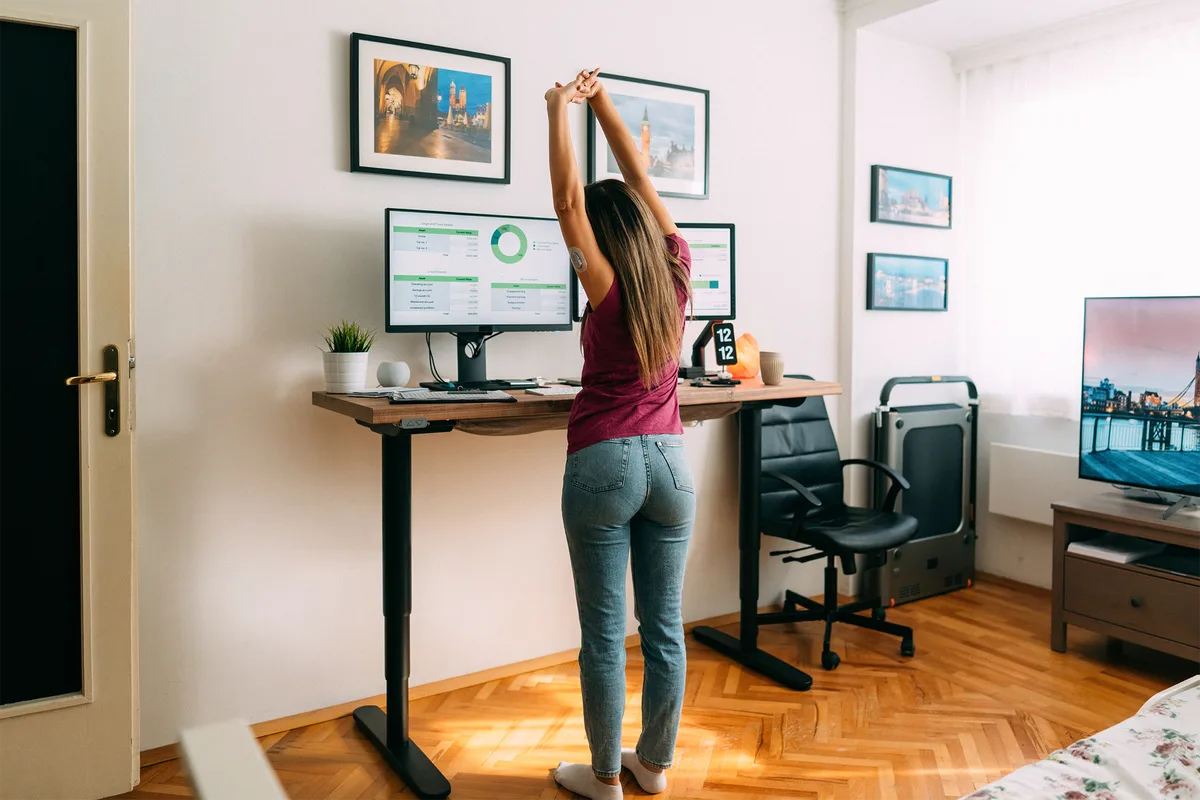
For years, the mantra “sitting is the new smoking” has dominated workplace health advice. But experts now argue this oversimplifies a complex issue, as prolonged standing also carries significant health risks. The real problem, researchers say, is not the posture itself but the duration spent in any static position.
Musculoskeletal disorders remain the most common workplace health problem in Europe, with 78% of work-related illnesses in Spain attributed to such conditions. While sitting strains the lumbar, neck and shoulders, standing for hours is linked to fatigue, lower back pain and excessive pressure on legs and feet. Neither option is harmless when maintained for too long.
The foot, as the body’s mechanical foundation, often bears the brunt of prolonged standing. A study of assembly line workers found that a full day on their feet led to measurable postural changes, altered pressure distribution on the soles and frequent discomfort in the lower back, knees and feet. Different feet respond differently to workplace demands, highlighting the need for personalised solutions.
The European Agency for Safety and Health at Work (EU-OSHA) emphasises that varying posture, incorporating movement and reducing time in static positions is healthier than relying on any single solution. Height-adjustable desks, ergonomic chairs and insoles may help, but experts caution they cannot compensate for a poorly designed workday.
Effective prevention involves regular short breaks, task rotation, workstation adjustments, suitable footwear and regular physical exercise. The key takeaway is that the human body is designed to change and move; problems arise when work forces it to stay static for too long.