Supreme Court Rejects Trump's Tariff Powers, Exposing Conservative Discontent
Supreme Court Rejects Trump's Tariff Powers, Conservatives Rebel

Supreme Court Delivers Major Blow to Trump's Tariff Agenda

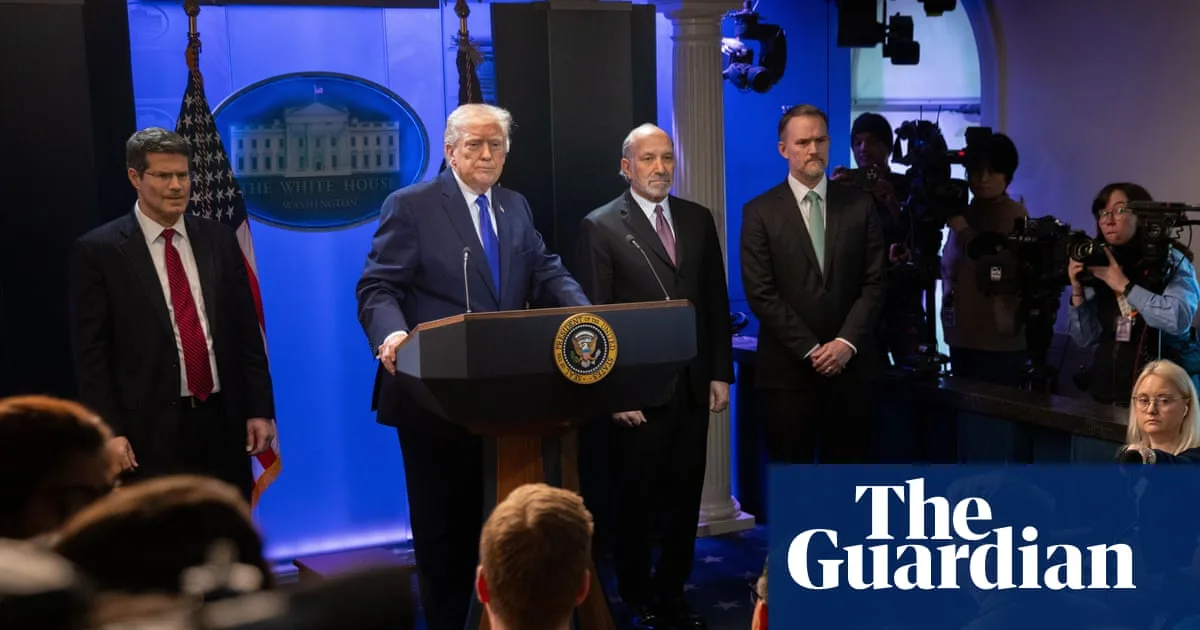
President Donald Trump faced a significant setback to his domestic agenda on Friday when the Supreme Court ruled against his authority to unilaterally levy tariffs. The decision represents a profound challenge to one of Trump's signature policies, given his frequent declarations that tariffs are "my favorite word." The ruling could provide substantial relief for businesses and consumers alike, who have borne the brunt of these import taxes through either absorbed costs or passed-on price increases.

Conservative Justices Join Liberals in Landmark Ruling

Perhaps the most striking aspect of the ruling was the composition of the majority. Three of the court's six conservative justices—Chief Justice John Roberts, along with Trump-appointed Justices Neil Gorsuch and Amy Coney Barrett—sided with the three liberal justices to form a 6-3 majority. Only Justice Brett Kavanaugh, another Trump nominee, dissented in favor of the president.

Justice Gorsuch issued a particularly forceful concurring opinion, emphasizing the constitutional separation of powers. "Yes, legislating can be hard and take time," Gorsuch wrote. "And, yes, it can be tempting to bypass Congress when some pressing problem arises. But the deliberative nature of the legislative process was the whole point of its design."

Chief Justice Roberts echoed this sentiment, stating that the president had asserted "the extraordinary power to unilaterally impose tariffs of unlimited amount, duration, and scope" without clear congressional authorization. This rebuke is notable given that Roberts and other conservative justices have often been accused of rubber-stamping Trump's executive authority.

Republican Relief and Political Calculations

The court's decision was met with quiet relief among many Republicans on Capitol Hill, despite public statements of support for the president from figures like House Speaker Mike Johnson. Senator Susan Collins of Maine, the most vulnerable incumbent Republican, stated, "Today's Supreme Court ruling reaffirms that only Congress has the constitutional authority to impose tariffs, and the President can only do so under a clear and limited delegation of authority from Congress."

Collins highlighted her past opposition to Trump's tariffs on Canada, which shares a border with her state. Similarly, libertarian Republican Representative Thomas Massie, who is ideologically distant from Collins, recently noted that only five other House Republicans joined him in opposing Trump's tariffs. While this number appears small, it likely represents a broader silent contingent of Republicans who privately oppose the tariffs but fear political retribution.

Voter Discontent and Electoral Implications

Polling data suggests that Republican voters overwhelmingly dislike the tariffs. Trump's approval ratings began to decline sharply following his announcement of the "Liberation Day" tariffs. More than half of Americans disapprove of his economic actions, with nearly half believing the country is worse off after a year of his presidency.

This growing discontent may make Republicans in swing districts increasingly hesitant to publicly support tariffs, especially as primary season ends and general election preparations begin. The court's ruling provides them with political cover to distance themselves from an unpopular policy without directly confronting the president.

A Bitter Reality for Trump

Ultimately, this outcome should not have surprised Trump. The legal and political challenges to his tariff agenda were foreseeable when he campaigned on sweeping protectionist measures. Initially, many Americans distrusted Democratic alternatives, but now even conservatives are recognizing that the tariffs represent a raw deal with little legal foundation.

The Supreme Court's decision underscores a bitter truth for the president: many of the judges he nominated, the Republicans he supported, and the voters who elected him simply do not want to pay more for products due to his tariffs. This ruling not only curtails his executive power but also exposes significant fractures within the conservative coalition that once seemed unshakeable.




