Keir Starmer Defends UK Stance on Iran Strikes Amid Political Pressure
Prime Minister Keir Starmer has firmly rejected accusations of weakness in his response to Iran's recent military actions, insisting his "total focus" remains on protecting British nationals in the Middle East. The controversy erupted after Iran launched what Sir Keir described as "indiscriminate" retaliatory strikes against neighbouring countries including Cyprus, Kuwait, Qatar, Iraq, the UAE, and Bahrain, following US and Israeli attacks over the weekend.
Parliamentary Exchanges Reveal Deep Divisions
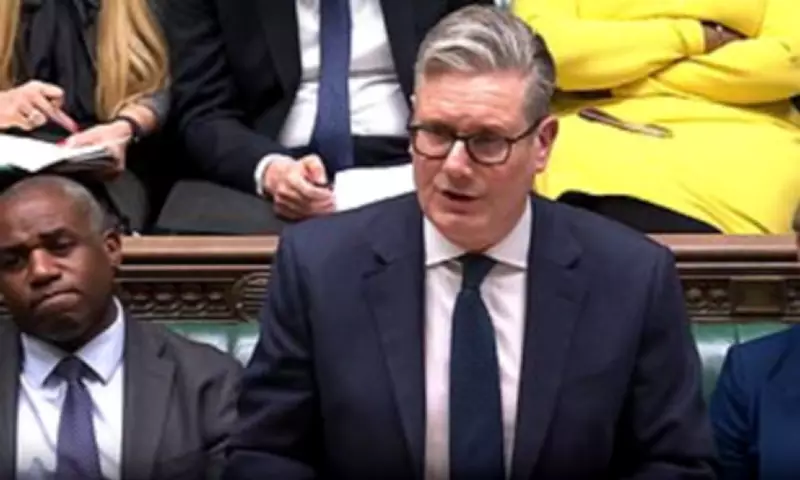
During a tense session in the House of Commons on Monday, the Prime Minister faced sustained pressure from left-wing MPs, including many from his own Labour Party, who urged him to avoid deeper UK involvement in the escalating conflict. Sir Keir defended his initial decision not to permit US forces to use British bases for strikes against Iran, while later granting permission for defensive operations targeting Iranian missile launchers and storage facilities to protect Gulf allies.
Conservative MP Mark Pritchard delivered particularly pointed criticism, telling the Prime Minister: "It is not his finest hour, he is looking very weak and that is not in the national interest." He accused Sir Keir of "fretting about his own backbenchers" and "looking to the Left of his own party as much as looking to the Middle East."

The Prime Minister responded emphatically: "I have been absolutely focused only on British nationals this weekend, that has been the total focus of my attention."
Left-Wing MPs Invoke Lessons of Past Conflicts
Several Labour MPs invoked Britain's involvement in previous Middle Eastern conflicts while questioning the government's current approach. John McDonnell, the former shadow chancellor, warned: "From Iraq to Afghanistan to Libya, I think many of us know the way this goes. It's easy for politicians to start the war and fire the weapons, it's when the shooting ends that the nightmare begins."
McDonnell reminded Sir Keir of his leadership campaign promise to ensure parliamentary votes on military action, asking: "Can I ask him to assure us, so we don't drift into this war as we have in the past, that there will be a vote in this House?"
The Prime Minister clarified that such votes apply specifically to "offensive action deploying our troops or military and that is not this situation."
Green Party Criticism and Wider Political Context
The debate occurred against the backdrop of Labour's recent by-election defeat to the Green Party in Gorton and Denton, adding political urgency to the Prime Minister's position. Ellie Chowns, leader of the Greens in the Commons, condemned what she called "deeply irresponsible and illegal" US and Israeli attacks on Iran, describing Donald Trump as "a clearly unstable loose cannon" and Israeli Prime Minister Benjamin Netanyahu as "a war criminal."
Green leader Zack Polanski, who is not an MP, separately demanded that Sir Keir withdraw permission for US forces to use British bases, accusing the Prime Minister of allowing the UK to be "dragged into another illegal war in the Middle East." Polanski pointed to Sir Keir's 2020 leadership campaign promise of "no more illegal wars" and his proposed "Prevention of Military Intervention Act," suggesting: "Keir Starmer of a few years ago wouldn't have supported this war."
Your Party MPs Deliver Blunt Criticism
MPs from the newly formed Your Party delivered some of the session's most pointed remarks. Zarah Sultana asked the Prime Minister: "Is the genocide of the Palestinian people not enough for this Labour Government? Is he proud to be another Labour PM obediently following Washington into yet another illegal war in the Middle East making us all less safe? How much does he enjoy being Donald Trump's poodle?"
Former Labour leader Jeremy Corbyn, now a Your Party MP, questioned whether the UK was "sharing information with the US to further their war aims against Iran" and urged instead for Britain to "adopt a stance of trying to bring about an immediate ceasefire."

Government's Legal Position and Operational Details
Sir Keir emphasized that his decisions were "fully in line with international law," with the government publishing a legal summary asserting that UK actions constitute "collective self-defence." The Prime Minister revealed that regional leaders had requested greater UK protection from Iranian missiles during his conversations with them.
While specific bases to be used by US forces remain undisclosed, previous references have included Diego Garcia in the Indian Ocean and RAF Fairford in Gloucestershire. British forces have already engaged in defensive operations, shooting down Iranian drones threatening northern Iraq and Qatar.
Conservative Response and Security Concerns
Conservative shadow foreign secretary Dame Priti Patel criticized Green Party positions as "wacky posturing" that was "reckless and a threat to our national security." She highlighted concerns about Green deputy leader Mothin Ali's attendance at a "Stop The War" protest where pro-Iranian regime symbols were displayed.
Ali defended his attendance, stating: "I'm proudly anti-war. And to be anti-war that means looking to explore all possible diplomatic solutions. The US and Israel took a unilateral decision in the midst of negotiations to kill the Iranian leader, and opted for war. This is deplorable."
As the Middle East crisis continues to escalate, the parliamentary debate revealed significant divisions within British politics regarding the appropriate response, with the Prime Minister maintaining that protection of British nationals remains his paramount concern while facing substantial pressure from multiple political directions.