
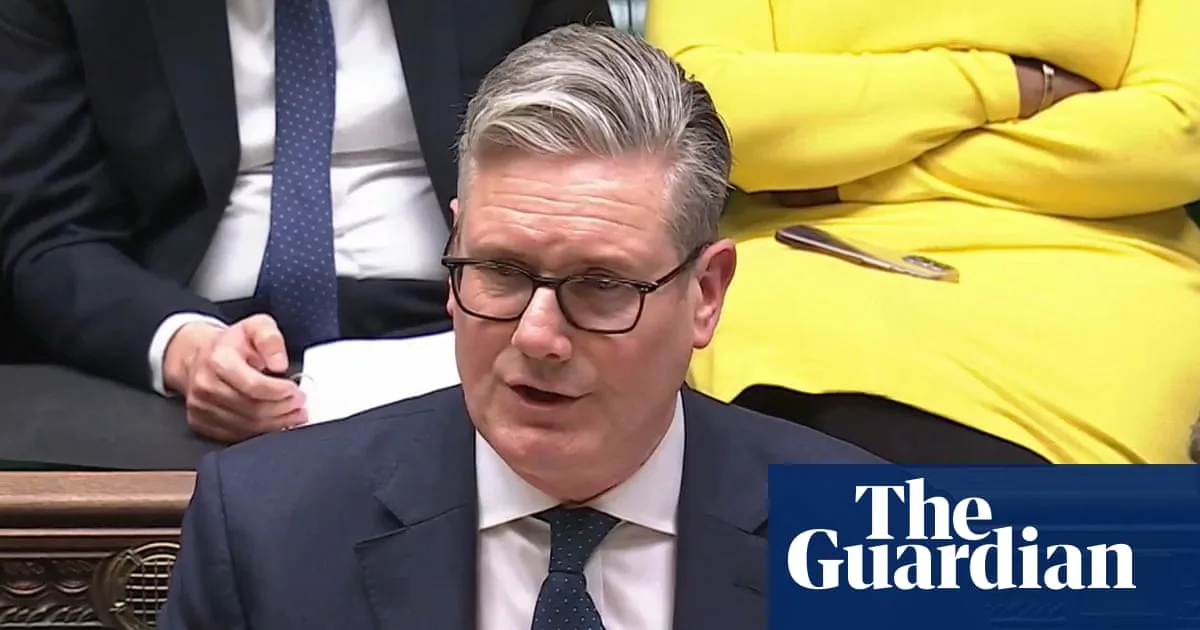
Prime Minister Keir Starmer has issued his strongest rebuke yet of Donald Trump's actions in Iran, stating that the UK does not believe in 'regime change from the skies'. Speaking in the Commons, Starmer defended his decision to permit the US to conduct defensive strikes on Iranian missile sites from RAF bases, but made clear the UK would not join offensive strikes by Israel and the US on Iran.
Starmer suggested he had qualms about the US action, referencing the Iraq War as a lesson learned. 'We all remember the mistakes of Iraq, and we have learned those lessons. Any UK actions must always have a lawful basis, and a viable thought-through plan,' he said. He added that he would not risk the lives of British military personnel unless an operation had a 'proper lawful basis'.
The Prime Minister said the UK was deploying planes and allowing the use of bases for defensive purposes because of Iran launching strikes on the UK's allies in the region. 'It is clear that Iran's outrageous response has become a threat to our people, our interests and our allies, and it cannot be ignored,' Starmer said. He confirmed that the RAF had intercepted an Iranian drone strike heading for a coalition base in Iraq, and that two drones were fired at RAF Akrotiri in Cyprus.
Defence Secretary John Healey said damage from the drone attacks was minimal, but that families living at RAF Akrotiri were being moved to alternative temporary accommodation. The base is not being used to launch US strikes. A Cypriot news agency reported the damage was caused by small low-flying drones launched by Hezbollah, an Iranian proxy group from Lebanon, though the UK Ministry of Defence did not formally confirm this.
Conservative leader Kemi Badenoch accused Starmer of using international law as cover for a weak position, and of making a U-turn after Iran's retaliation became clear. She noted that President Trump had publicly rebuked Starmer for taking too long to grant access to bases. Starmer responded by reiterating the UK's longstanding position that the best way forward is a negotiated settlement in which Iran gives up any nuclear ambitions and ceases destabilising activity across the region.




