

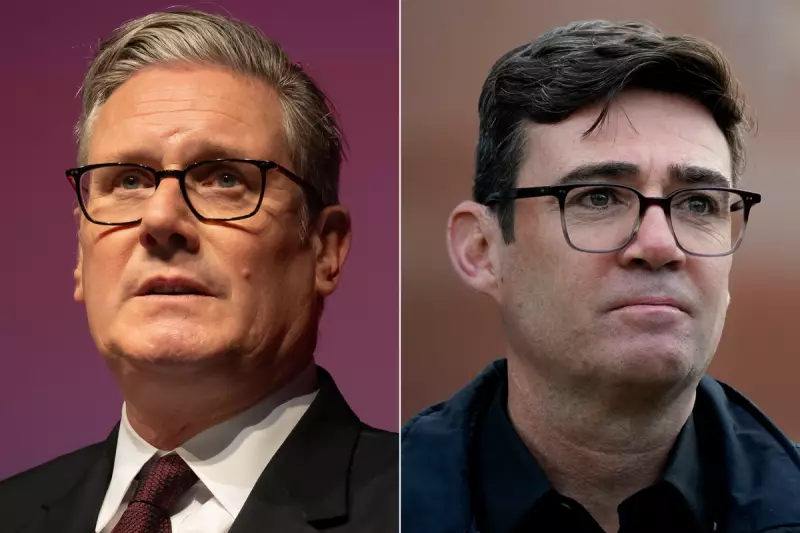
Labour Civil War Erupts as Starmer Blocks Burnham's Westminster Return
Sir Keir Starmer has ignited a fierce internal conflict within the Labour Party by personally voting to block Andy Burnham's attempt to return to the House of Commons. The Prime Minister joined other members of the party's powerful National Executive Committee (NEC) in rejecting his potential leadership rival's request to stand in the Gorton and Denton by-election, with the decisive vote ending 8-1 against Mr Burnham.
Fury and Warnings of 'Bloodletting'
The controversial decision, made during a meeting lasting just one hour, has sparked immediate fury among Labour MPs who believe it exposes significant weaknesses in Sir Keir's leadership. Senior figures within the party have delivered stark warnings that this move could trigger what they describe as "bloodletting" within the Parliamentary Labour Party and potentially hasten the Prime Minister's political demise.
Former Cabinet minister Louise Haigh expressed her profound disappointment, stating the decision was "incredibly disappointing" and urging the NEC to reconsider. "Otherwise I think we'll all come to regret this," she warned, capturing the mood of many colleagues who fear the consequences of blocking one of Labour's most popular figures.

Leadership Rivalry at the Heart of the Conflict
At the core of this political storm lies the longstanding perception of Mr Burnham as Sir Keir's most significant leadership rival. Many within Labour see the Greater Manchester Mayor as the natural successor should a leadership challenge emerge, particularly as the party continues to trail behind Reform UK in recent polling.
The decision effectively prevents Mr Burnham from returning to Westminster, at least in the short term, and has been interpreted by many as a strategic move by Sir Keir to neutralise a potential threat to his position. This interpretation has only intensified the internal divisions now threatening to tear the party apart.
Senior Figures Voice Their Opposition
Prominent Labour voices have lined up to criticise the Prime Minister's decision. Suspended MP Diane Abbott argued that blocking Mr Burnham made Sir Keir appear "weak," while former shadow chancellor John McDonnell denounced the official reasoning as "an insult to people's intelligence." Mr McDonnell went further, attacking what he called the "political cretins" advising the Prime Minister and predicting the decision would accelerate his fall from power.
Karl Turner, Labour MP for Kingston upon Hull East, echoed these sentiments on Times Radio, stating bluntly: "There'll be a lot of bloodletting in the Parliamentary Labour Party as a result of this decision."
Union Backlash and Democratic Concerns
The controversy has extended beyond Parliament to Labour's crucial union backers. Andrea Egan, the new general secretary of Unison – one of Labour's largest financial supporters – expressed the anger felt by many trade unionists. "I know many, many trade unionists will be so disappointed and angry at local members not being given a say over who their candidate should be," she stated. "This isn't the way any democratic organisation should be run."
The Transport Salaried Staffs' Association (TSSA) joined this chorus of disapproval, calling on the party to "change course" and reconsider its position. This union backlash represents a significant challenge for Sir Keir, threatening both party unity and financial support.
Defenders of the Decision Emerge
Despite the widespread criticism, some allies of the Prime Minister have defended the NEC's decision. Housing Secretary Steve Reed argued that voters had elected Mr Burnham to serve a four-year term as mayor in 2024 and generally "don't like" mid-term elections. "So we're not going to go back and ask the people of Greater Manchester, over two million of them who are entitled to vote, to elect somebody else to complete the next two years," he explained.

Rugby MP John Slinger suggested the "quick and clear decision" would allow the party to "move on from the damaging introspection and psychodrama of the last week" and unite behind the eventual candidate. The Usdaw trade union also expressed acceptance of the decision, acknowledging "the major disruption that would be caused by Andy Burnham abandoning his current role" and calling for unity.
Abstention and Leadership Ambitions
In a significant development, Home Secretary Shabana Mahmood abstained from the crucial vote. While sources indicated this was customary as she chaired the discussion, her decision not to support blocking Mr Burnham could prove advantageous for her own perceived leadership ambitions. Being able to tell Labour MPs and members that she did not vote against Mr Burnham positions her differently from the Prime Minister in this internal conflict.
Ms Mahmood had previously urged her party to avoid Conservative-style "psychodrama" over the selection row, highlighting the tensions between different factions within Labour's senior ranks.
Leaked Letters and Procedural Concerns
The controversy has been further complicated by revelations of a leaked letter from the wider NEC calling for a "pause" in the selection process over fears of a "stitch-up." The document, seen by the BBC, suggested that "any attempt to rule out certain candidates will be seen as undemocratic interference" and argued the timetable should be delayed to include the full committee in decision-making.
When questioned about this on the BBC's Sunday with Laura Kuenssberg programme, Ms Mahmood defended the process as following "normal practice" for selection decisions and noted that "big rows over selection" were not unusual for the party.
Growing Backlash Against Burnham's Bid
Even before the NEC's decision, Mr Burnham faced growing opposition from within his own party regarding his decision to seek a Westminster return. Scottish Labour MP Joani Reid publicly objected, warning of an "energy-sapping distraction, which is why many of us would probably have preferred Andy Burnham to stay out of it."
Tom Rutland, Labour MP for East Worthing and Shoreham, echoed this sentiment on social media, stating: "Those who chose to run for election in 2024 to different positions – with significant responsibilities and a mandate from their voters - should stay in them."
As Labour grapples with this deepening internal crisis, the party faces fundamental questions about democracy, leadership, and unity that could define its future direction and electoral prospects.





