Senate Holds Constitutional Power to Curb Trump's Iran War but Political Will Lacking
Sending American troops into conflict represents one of the most significant decisions any president can undertake. However, expectations that the Republican-dominated Congress will take decisive action to restrain President Donald Trump's military escalation in Iran appear increasingly futile.
The Constitutional Framework Versus Political Reality
The United States Constitution explicitly grants Congress the sole authority to declare war, establishing a crucial check on executive power designed to ensure democratic accountability. Yet this constitutional safeguard faces substantial erosion in the current political climate.
Following coordinated U.S.-Israeli strikes that killed Iran's Supreme Leader Ayatollah Ali Khamenei and claimed four American service members by Monday, Democratic Senator Tim Kaine of Virginia launched scathing criticism. Kaine questioned whether Trump possesses sufficient mental capacity to comprehend the ramifications of his military decisions while championing a War Powers Act resolution through Congress.

This legislative mechanism, originally enacted in 1973 following Vietnam War controversies, mandates presidential notification to Congress within 48 hours of troop deployments. Furthermore, it requires withdrawal within 60 days unless Congress formally authorizes continued military engagement.
Bipartisan Efforts Meet Partisan Resistance
Representatives Ro Khanna, a California Democrat, and Thomas Massie, a Kentucky Republican—the unlikely pairing that previously forced disclosure of Epstein files—have pledged to advance War Powers Act legislation in the House. Their collaboration highlights rare cross-aisle cooperation on executive oversight.
Nevertheless, congressional history reveals consistent rejection of such measures. Earlier this year, after Trump's military intervention in Venezuela, initial Republican support for a War Powers resolution collapsed when Senators Josh Hawley of Missouri and Todd Young of Indiana reversed their positions following presidential pressure.
Multiple factors explain this congressional reluctance:
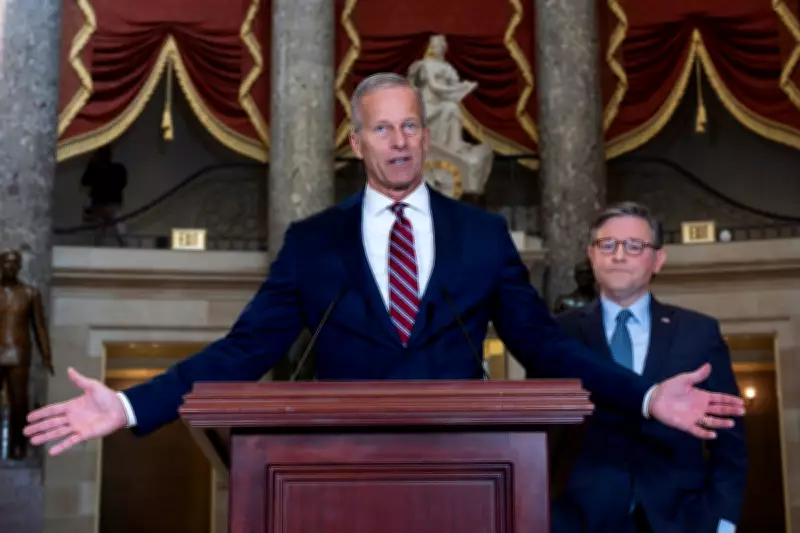
- Republican apprehension toward confronting Trump, with party leadership including House Speaker Mike Johnson and Senate Majority Leader John Thune effectively rubber-stamping presidential actions
- Widespread Republican antipathy toward Iran's regime, transcending personal opinions about Trump himself
- Perceived success of Trump's previous military operations, creating dangerous precedent
Historical Precedents and Current Escalation
Trump's earlier strikes against Iranian nuclear facilities initially appeared successful, with the president eventually brokering a ceasefire between Iran and Israel. Similarly, his surprise operation in Venezuela that captured President Nicolás Maduro and First Lady Cilia Flores achieved tactical objectives despite leaving the nation profoundly unstable.
Secretary of Defense Pete Hegseth emphasized during Monday's briefing that the Iran campaign would avoid what he termed "politically correct" warfare, declaring "We fight to win" while dismissing comparisons to prolonged conflicts like Iraq.
Yet Iran represents a fundamentally different commitment—a potentially extended military engagement that Trump appears prepared to pursue indefinitely. With Congress effectively neutered through partisan dynamics and institutional timidity, the president maintains unprecedented latitude to shape this conflict according to his preferences, regardless of constitutional design or historical precedent.