
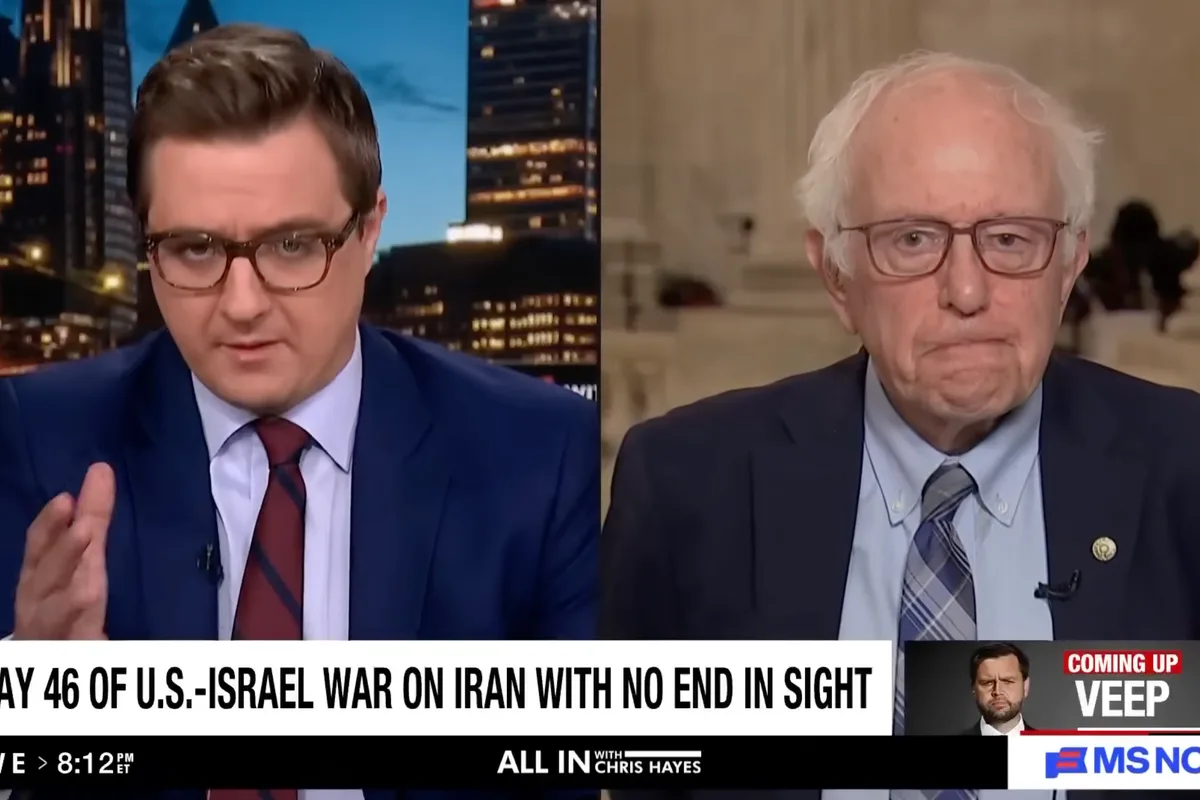
Senator Bernie Sanders has reacted with dismay to Donald Trump's top economic adviser voicing optimism about rising oil prices, saying simply: "God help us all." National Economic Council Director Kevin Hassett told CNBC that if oil prices were to fall after a resolution to the war in Iran, inflation could drop to near zero.
Speaking on MSNBC, Sanders dismissed Hassett's remarks as disconnected from reality. "Look, the reality is Netanyahu's wars in Gaza, West Bank, Iran, Lebanon have not only been grossly immoral and destructive, but they are also impacting billions of people throughout the world," he said. He pointed to the financial strain on American families, noting that petrol in Vermont now costs over $4 a gallon and higher elsewhere, leaving less money for food and rent.
Sanders also suggested that Republicans who backed Trump's promises to avoid endless wars and reduce prices were now questioning his leadership. "You got an endless war, which, by the way, may end up costing us a trillion dollars. And Trump's thought is that when we spend that money, we can cut back on healthcare and child care to pay for the war," he said, adding that the affordability crisis had been magnified.
Hassett, meanwhile, told CNBC that while Americans were frustrated at the pump, the benefit for oil producers and workers was significant enough that the overall GDP effect in the US was much smaller. The comments come as the average US petrol price stands at $4.11 per gallon, with West Coast drivers paying considerably more, and with the Strait of Hormuz effectively shut, oil prices hovering just below $100 a barrel.
The International Monetary Fund on Tuesday lowered its global growth outlook and warned the world economy could approach recession if the conflict worsens. Trump, however, told Fox Business the war was "very close" to ending, despite failed peace talks and similar previous assurances. Treasury Secretary Scott Bessent said a "small bit of economic pain" was worth long-term security, while Kansas Senator Roger Marshall argued that "national security is more important than your pocketbook."
Energy Secretary Chris Wright conceded that an earlier forecast for a summer resolution now looked "aggressive", saying energy prices would remain high and possibly rise until meaningful ship traffic resumes through the Strait of Hormuz. He admitted there was "a very real possibility" of further price increases in the coming weeks.




