Europe's New Digital Border System Sparks Airport Chaos and Hours-Long Queues
The full implementation of the European Union's new Entry/Exit System has triggered widespread disruption at major airport hubs across the continent, with holidaymakers facing hours-long queues and significant travel delays. The biometric border control process, now active in 29 countries, requires non-EU nationals to register fingerprints and photographs upon entry to the Schengen Area.
Widespread Disruption Across Multiple Countries
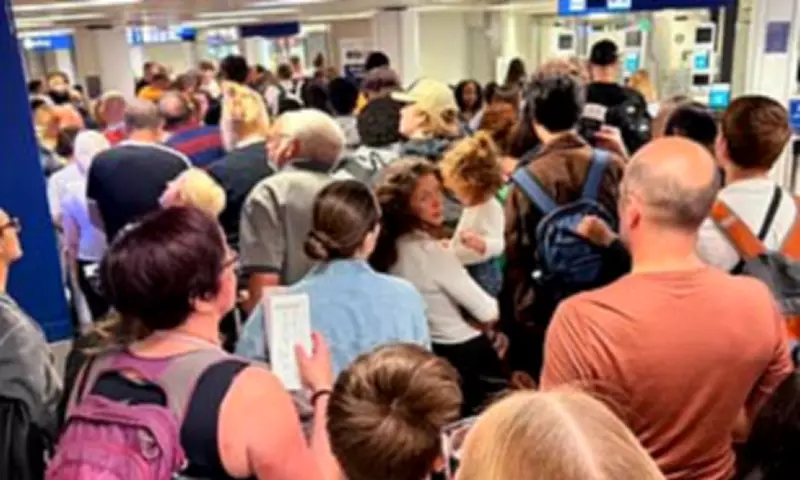
According to reports from the Airports Council International and passenger accounts, airports in at least 15 European nations have experienced "very bad" delays since the system became fully operational on April 10. The Financial Times has documented queues stretching up to three hours at peak times, with some destinations reporting even longer wait times.
Olivier Jankovec, director of ACI Europe, warned: "We are seeing those queueing times now at peak times when traffic is just starting to build up." The situation has become so problematic that some airports have temporarily suspended EES registration to prevent further chaos.

Portugal: Complete Chaos in Lisbon
Portuguese airports have been particularly affected, with Lisbon's Humberto Delgado Airport experiencing such severe congestion that authorities suspended EES registration over a recent weekend. Former UK and EU diplomat Rupert Joy described "complete chaos" at Lisbon airport, noting that "loads of people" were missing flights despite arriving hours early.
One Reddit user reported: "Line was hours long stretching through the whole very long terminal and then outside... Security has stopped using the new system and were stamping passports as fast as they could." Similar problems were reported at Porto and Faro airports, with travellers describing the new process as creating "massive queues."
Poland and Belgium: Extended Wait Times
In Poland, Krakow Airport has seen delays of up to two hours, with one traveller calling the EES system "a nightmare" on social media. Another passenger reported spending two hours in arrival queues and 90 minutes during departure, prompting warnings to allow extra travel time.
Brussels Airport in Belgium has also faced significant disruption, with passengers reporting wait times of up to three hours. One Reddit user described breastfeeding an eight-month-old while standing in line, highlighting the human impact of these extended delays.
Netherlands and Italy: System Overload
Amsterdam's Schiphol Airport confirmed "long delays" on its website, with passengers reporting two-hour waits and insufficient open passport gates. The situation was particularly difficult for elderly travellers and parents with young children.
In Italy, the heatwave conditions exacerbated problems at Milan's airports, where passengers reportedly experienced vomiting and fainting after three-hour waits. An easyJet spokesperson acknowledged the "unacceptable border delays" and urged authorities to implement flexibilities during the EES implementation phase.
Spain and France: Technical Failures
Spanish airports including Palma Majorca, Tenerife, and Almeria have been affected, with British tourist Jack Howes describing his experience as a "disaster" after multiple machine rejections. In France, Charles de Gaulle Airport in Paris faced four-hour immigration queues and repeated equipment failures over a weekend, with aviation analytics provider Schengen90 documenting 240-minute waits.
VisaHQ reported that French hubs experienced IT system problems and cybersecurity issues, while many airports only recorded personal information without collecting biometric data as required.
Germany and Greece: Long-Term Concerns
German airports including Frankfurt, Munich, and Berlin have reported queues of up to three hours, with Berlin Airport's website warning that "border control may take more time due to the additional steps required for EES registration" even in the long term.
In Greece, Rhodes Airport has seen extended wait times, though some passengers reported more manageable 45-minute queues during quieter periods. Border control staff have been manually processing EES registrations when machines are unavailable, creating additional delays.

System Requirements and Implementation Challenges
The Entry/Exit System mandates that all non-EU nationals, including UK citizens, must register biometric details including fingerprints and facial scans when entering the Schengen Area. Travellers must also provide proof of accommodation, sufficient funds, medical insurance, and a return ticket.
The European Commission and Airports Council International have acknowledged problems with IT systems and implementation, with Jankovec calling for "the ability to fully suspend EES registration whenever there are excessive waiting times at border control that are just unmanageable."
As the peak travel season approaches, airports and border authorities face mounting pressure to resolve these implementation issues before summer traffic creates even greater congestion at Europe's major transport hubs.