In a stark assessment of the current political landscape, former Conservative Minister Jacob Rees-Mogg has issued a dire warning about the state of Britain under the Labour administration. He contends that the nation is in a profound mess, with the potential for conditions to deteriorate even further if a fragmented left-wing coalition assumes power after the next General Election.
A Critique of Labour's Leadership and Policies
Rees-Mogg reflects that while the previous Conservative government faced criticism for lacking direction and failing to curb small boat crossings, the current Labour leadership under Sir Keir Starmer has proven equally, if not more, problematic. Despite initial perceptions of Starmer as a plausible and competent figure, his tenure has been marred by endless policy reversals that would embarrass even a seasoned London taxi driver.
Economic mismanagement, driven by what Rees-Mogg describes as ignorance and weakness, has inflicted harm on the country. Meanwhile, illegal immigration continues to be ignored, with the rights of criminals seemingly prioritised over those of British citizens. This combination of factors has left Britain in a precarious position, with opinion polls suggesting Labour may fail to secure an overall majority, necessitating a coalition government.

The Spectre of a Frankenstein Coalition
The prospect of such a coalition, which Rees-Mogg likens to the beauty and coordination of Frankenstein's monster, is deeply alarming. It would likely involve an alliance with what he terms the "Loony Left" parties, including the Greens, Jeremy Corbyn, the Liberal Democrats, and the Scottish Nationalists. This grouping, he argues, would represent the most left-wing administration ever witnessed in British politics.
Drawing a biblical analogy, Rees-Mogg references King Solomon's son Rehoboam, who increased the tax burden on his people, declaring, "My father chastised you with whips, but I will chastise you with scorpions." He suggests that a left-wing coalition would similarly impose scorpion-like policies on the nation, exacerbating current issues to dramatic extremes.
Potential Consequences of a Left-Wing Alliance
Under such a coalition, Rees-Mogg predicts a series of detrimental outcomes. Green policies, led by figures like Zack Polanski—who once claimed hypnotic powers—might attempt to mesmerise the nation into economic growth, but in reality, they would shutter the economy and drive up prices. Taxation would soar to penal levels, immigration control would vanish, and union barons would gain unprecedented access to Downing Street.
Furthermore, Britain could find itself subjected to EU influence once more, while authoritarian measures such as digital ID and the abolition of jury trials, favoured by Labour, would be implemented. The SNP's attacks on property rights in Scotland would spread across the UK, threatening every liberty and prompting wealth creators to flee. Rees-Mogg even warns that England could descend into a state reminiscent of Zimbabwe, evoking a warm nostalgia for the relative comfort of the 1970s.
A Call for Unity on the Right
Rees-Mogg emphasises that these threats should galvanise those on the right of British politics. The future of the nation is at stake, and it is not merely a parlour game where leadership is inconsequential. He laments that duty, an unfashionable word in today's society focused on instant gratification and individual "truth," must override personal ambition to achieve a united front.
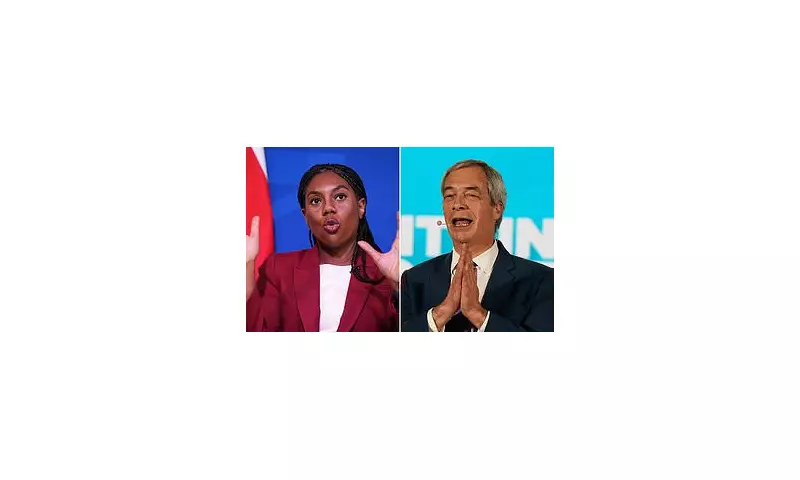
He notes that in 2024, the Conservative Party and Reform were politically poles apart, with the Tories not serious about immigration and still aligned with green lobby interests. However, recent developments have shifted this dynamic. Kemi Badenoch's pledges to leave the European Convention on Human Rights and repeal the Human Rights Act demonstrate a clear determination to assert ministerial control over judges, a policy mirrored by Reform.

Converging Policies and Electoral Opportunities
Both parties now recognise the folly of wealth-destroying green policies, drawing lessons from the United States' economic growth versus Europe's stagnation. They agree that taxation is too high and must be reduced, though this requires cutting spending. Reform has sensibly retreated from abolishing the two-child benefit cap, acknowledging that welfare has become a lifestyle choice with harmful consequences.
Constitutionally, both sides view Tony Blair's post-1997 changes as mistakes and advocate for restoring democratic control by abolishing quangos and reining in judicial overreach. Rees-Mogg argues that immigration, for instance, will never decrease if lawyers rather than MPs make the law.
A recent poll indicates that a combined Reform and Tory vote could exceed 40%, potentially securing a thumping majority against a splintered left. This presents a tremendous opportunity for success, akin to Margaret Thatcher's 1979 victory, if only sensibility prevails.
Overcoming Obstacles: Hope and Personality
Yet, this possibility is currently blocked by two main obstacles: hope and personality. Rees-Mogg identifies hope as an equal problem for both sides, with Nigel Farage believing Reform can surpass 40% in the polls, rendering the Tories irrelevant, and Kemi Badenoch expecting to restore the Conservatives to a similar level, leaving Reform in the dust. He deems this a foolish risk when the hard left waits to assume office if the right remains divided.
The less attractive obstacle is personality, with neither side willing to defer to the other. Inelegant attacks, such as those by Robert Jenrick on former colleagues, have not helped. However, Rees-Mogg points to David Cameron's effective partnership with Nick Clegg as proof that such trivia can be set aside.
The Imperative of Duty and Sacrifice
Ultimately, Rees-Mogg calls for a collective sense of duty. If unity within the wider Tory family necessitates Nigel Farage serving as Deputy Prime Minister or even Prime Minister in a coalition, it is a price worth paying to save the country from a Frankenstein-designed left-wing alliance. The stakes are too high to allow personal ambitions or hopeful fantasies to jeopardise Britain's future.