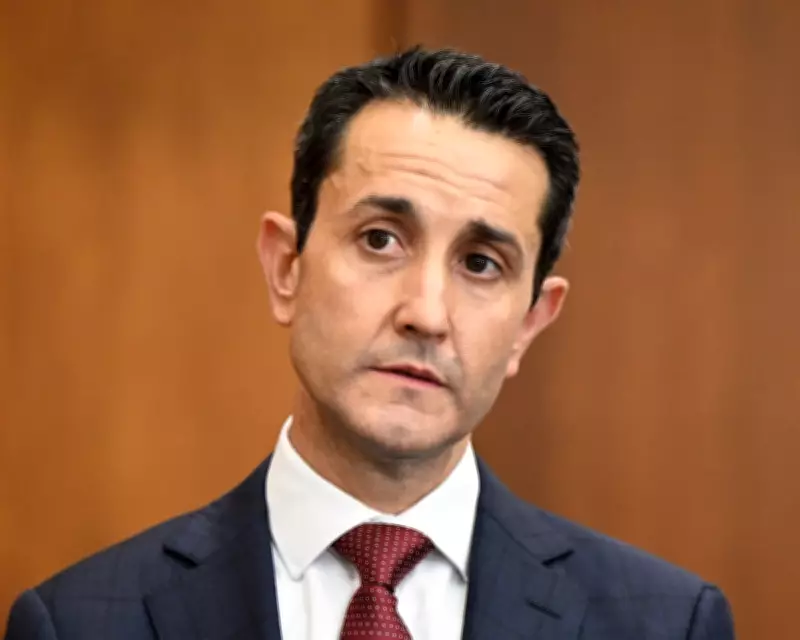
Queensland Premier David Crisafulli's Liberal National Party is embroiled in a multifaceted political struggle, grappling with contentious debates over abortion legislation, gun control reforms, and the alarming resurgence of One Nation. This confluence of issues threatens to unravel the party's hard-won unity and could have significant implications beyond the state's borders.
A Crack in the Facade of Unity
In a political landscape where conservative factions often descend into internal discord, Crisafulli's LNP has stood out as a bastion of stability. The premier inherited a party historically plagued by factional infighting and a series of electoral defeats, yet under his stewardship, it has projected an image of remarkable cohesion. However, this veneer of unity was breached on Tuesday when LNP member for Mackay, Nigel Dalton, defied party lines on a procedural motion aimed at curtailing parliamentary debate on abortion.
Dalton described his decision as "deeply personal," though he struggled to articulate the broader ramifications for the LNP's internal dynamics. This incident underscores the delicate balancing act Crisafulli must perform, navigating between the party's grassroots—whose average age is 72 and who largely oppose abortion access—and the urban electorate that has historically been alienated by the LNP's hard-right stance.

Pragmatism Versus Ideology
Crisafulli's leadership has been characterised by a triumph of pragmatism over ideological purity. In the lead-up to the state election, he successfully urged the party's culture warriors to temper their rhetoric on abortion, fearing that a hardline position could jeopardise a potential second term. This strategic silence, however, is becoming increasingly untenable as One Nation gains traction in polls nationwide.
Queensland, the birthplace of One Nation, has long been a fertile ground for fringe politics. The LNP's historical vulnerability emerges when forced to contend on this secondary front, as evidenced by the 1998 state election where One Nation captured 11 seats and ousted the conservative coalition from power.
Gun Control and Electoral Calculations
The national push for stricter gun regulations following the Bondi attack presents another volatile issue for the LNP. The party finds itself caught between urban voters, whose support is crucial for retaining power, and regional constituents where One Nation is poised to perform strongly. The LNP's proposed solution, criticised as the "weakest in the nation," risks satisfying neither demographic.
Compounding these challenges is the LNP's ambiguous stance on optional preferential voting, a policy that some MPs fear could inadvertently bolster One Nation's chances in regional seats. In response, the party has reverted to its electoral-winning strategy: a relentless focus on youth crime. Crisafulli's government is preparing to introduce a third tranche of "adult time" legislation, continuing the tough-on-crime narrative that propelled them to victory.
The One Nation Threat Looms Large
However, this approach carries its own perils. Having outflanked Labor by promising harsher measures, the LNP now faces the prospect of being outdone by One Nation, which can appeal to regional discontent without concern for moderate urban sensibilities. Online anti-crime groups on platforms like Facebook reveal persistent dissatisfaction in areas where One Nation is expected to poll well, indicating that the government's crackdown has done little to assuage public fears.
Dalton's floor-crossing on abortion is more than a minor rebellion; it signals a potential unraveling of the LNP's disciplined facade. Crisafulli now confronts a critical choice: tolerate open dissent or enforce strict party discipline. Neither option is ideal for a party striving to keep its ideological fissures concealed.
A Battle on Two Fronts
The LNP's stability has hitherto relied on MPs setting aside differences to unite against Labor. For regional representatives like Dalton, whose Mackay constituency is a prime target for One Nation, defeating Labor is no longer the sole objective. The party must now wage a war on two fronts, defending its flanks against a resurgent One Nation while maintaining internal cohesion.

As anti-choice groups intensify pressure on LNP MPs and gun control debates simmer, Crisafulli's pragmatic leadership will be tested like never before. The cracks that have emerged may well determine not only the LNP's fate in Queensland but also influence conservative politics across Australia.