FBI Director Kash Patel Focused on Social Media Strategy After Charlie Kirk Assassination, Agents Reveal
Patel Prioritised Social Media Posts After Kirk Shooting

FBI Director's Social Media Focus During Crisis Call Revealed

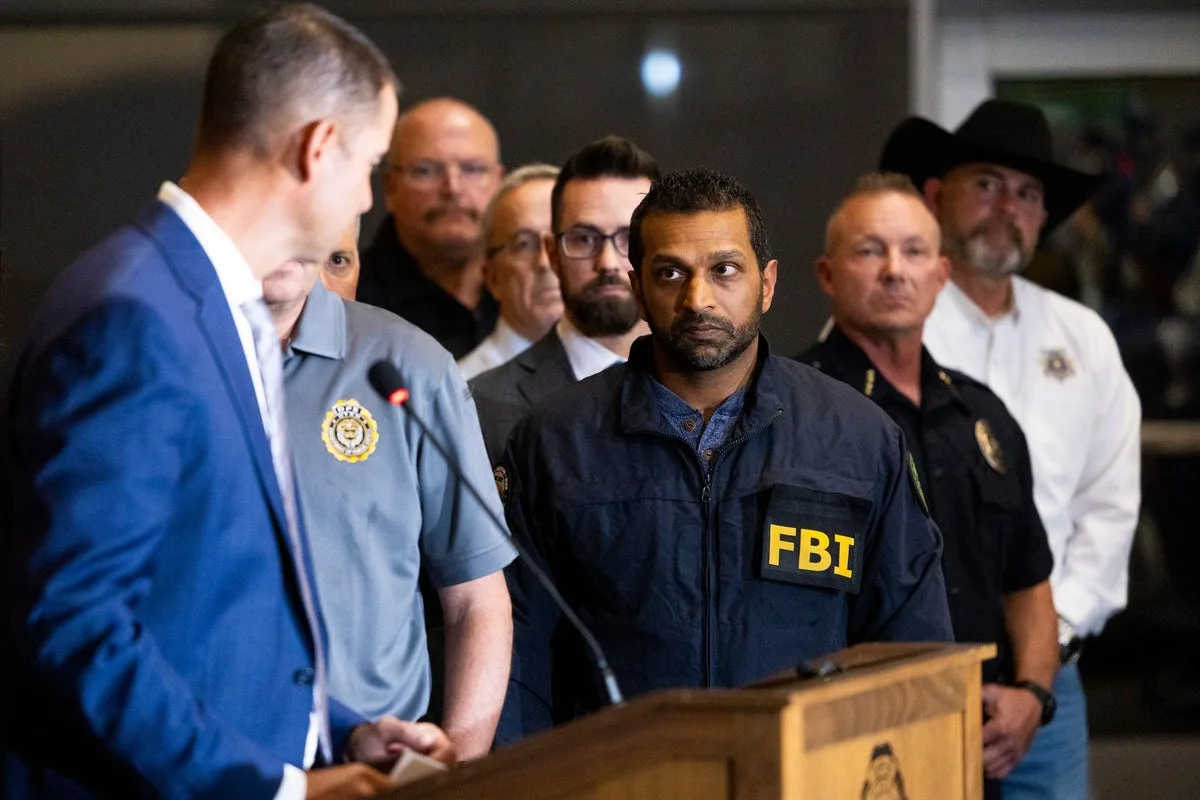
FBI Director Kash Patel reportedly prioritised planning social media posts for himself, former Deputy Dan Bongino, and the Salt Lake City field office in the immediate aftermath of right-wing activist Charlie Kirk's assassination, according to senior agency officials. The revelations come from current and former FBI agents who described a "surreal" conference call where traditional crisis management protocols were allegedly abandoned.

Emotional Response and Protocol Breach

During the conference call convened to discuss the initial facts of the Charlie Kirk assassination in Utah, Director Patel was described by a senior FBI executive as "super emotional" and reportedly "berated" the special agent in charge of the Salt Lake City field office. This exchange marked a significant departure from standard critical incident procedures, where officials with situational awareness typically brief field offices and executives on developing situations.

The unnamed senior FBI executive told the New York Times that Patel and Bongino began discussing their Twitter strategy during what should have been an operational briefing. "They're literally scripting out their social media, not talking about how we're going to respond or resources or the situation," the executive revealed. "He's screaming that he wants to put stuff out, but it's not even vetted yet. It's not even accurate."

Wide Pickt banner — collaborative shopping lists app for Telegram, phone mockup with grocery list

Premature Announcement and Aftermath

Memorably, Patel prematurely announced on X that the FBI had captured the suspect accused of fatally shooting Kirk on a college campus. However, that suspect was later released without charges, highlighting the dangers of unvetted information during developing investigations. Patel defended his social media post at the time, stating he was "telling the world what the FBI was doing as we were doing."

The senior FBI executive countered this defence, explaining that "the initial information that comes in is always wrong. There's too much coming in, and it takes time to vet. And it was obvious that Kash can't understand that and doesn't want to understand that."

Broader Leadership Concerns

The incident forms part of a broader pattern of concerns raised by current and former FBI officials about Patel's leadership since his confirmation under the Trump administration. Multiple sources have highlighted several controversial practices that have emerged over the past twelve months, creating what some describe as a fearful working environment within the bureau.

Mass Firings and Personnel Changes

One of the most significant changes under Patel's leadership has been the large number of firings across multiple teams. Several former FBI officials recounted being dismissed without formal accusations of wrongdoing for what they described as frivolous reasons. These included agents who worked on cases investigating President Donald Trump or matters perceived as having bias against Republicans.

Particular attention has been focused on personnel who worked on "Arctic Frost" – the Biden-era investigation into alleged election interference in 2020. With disclosures from Republican Senator Chuck Grassley's office, the names of FBI agents involved in the case have been publicly released and subsequently fired.

Polygraph Tests and Internal Surveillance

Among other concerning practices reported by former officials is the increased use of polygraph tests to assess employees' loyalty following media leaks. Tonya Ugoretz, former assistant director of the directorate of intelligence, revealed that "they were polygraphing their own senior leadership team because they were so mad about media leaks."

Polygraph tests are generally inadmissible in court due to their lack of scientific reliability, yet multiple employees described a fearful environment fostered by the constant threat of being fired or subjected to such testing.

Resource Allocation Controversies

Current and former FBI personnel have also raised concerns about Patel's use of agency resources, which they claim differs significantly from that of previous FBI directors. One particularly notable allegation involves the conversion of SWAT team personnel based in Nashville to protect Patel's girlfriend, 27-year-old country singer Alexis Wilkins.

Pickt after-article banner — collaborative shopping lists app with family illustration

The senior FBI executive stated that "in Nashville, those poor b*****ds – their SWAT team has actually been converted to her protection. They're not even doing their own SWAT arrests anymore. They've got to bring in other teams to do that, because they're guarding her all the time."

David Sundberg, former assistant director of the FBI's Washington field office, noted he had not heard of an FBI director utilizing SWAT to protect a family member or partner when the director was not also present since the 1990s, referencing one of the reasons former FBI Director William Sessions was fired in 1993.

Shift in Operational Priorities

Since assuming his role, Patel has reportedly shifted the FBI's focus toward supporting the Trump administration's mass deportation agenda, despite the bureau not historically maintaining immigration-focused teams. Agents originally assigned to cybersecurity and domestic crime have been redirected to assist local and state law enforcement in conducting immigration operations.

One FBI field officer leader, who identifies as conservative and believes in securing borders, nevertheless described the bureau's execution as "asinine," noting that "each region had to have a certain amount of arrests every single day."

Several former agents have expressed concerns that abandoning investigations into domestic organised crime, foreign cybersecurity, and other potential threats could leave the United States vulnerable to major attacks. One field officer recalled "praying that we didn't have a terrorist attack, mass shooting or cyberattack slip through the cracks because my agents, who were highly trained to protect against such threats, were assigned to immigration enforcement."

Agency Response and Denial

The FBI has strongly denied these allegations, characterising them as "a regurgitation of fake narratives, conjecture and speculation from anonymous sources who are disconnected from reality." In a statement to the Times, the bureau asserted that "they can whine and peddle falsehoods all they want – but it won't change the facts that the F.B.I. under this administration worked with partners at every level and delivered a historic 2025."

Despite these denials, the detailed accounts from multiple current and former officials paint a picture of an FBI undergoing significant cultural and operational shifts under Patel's leadership, with the Charlie Kirk assassination response serving as a particularly revealing example of these changes in action.




