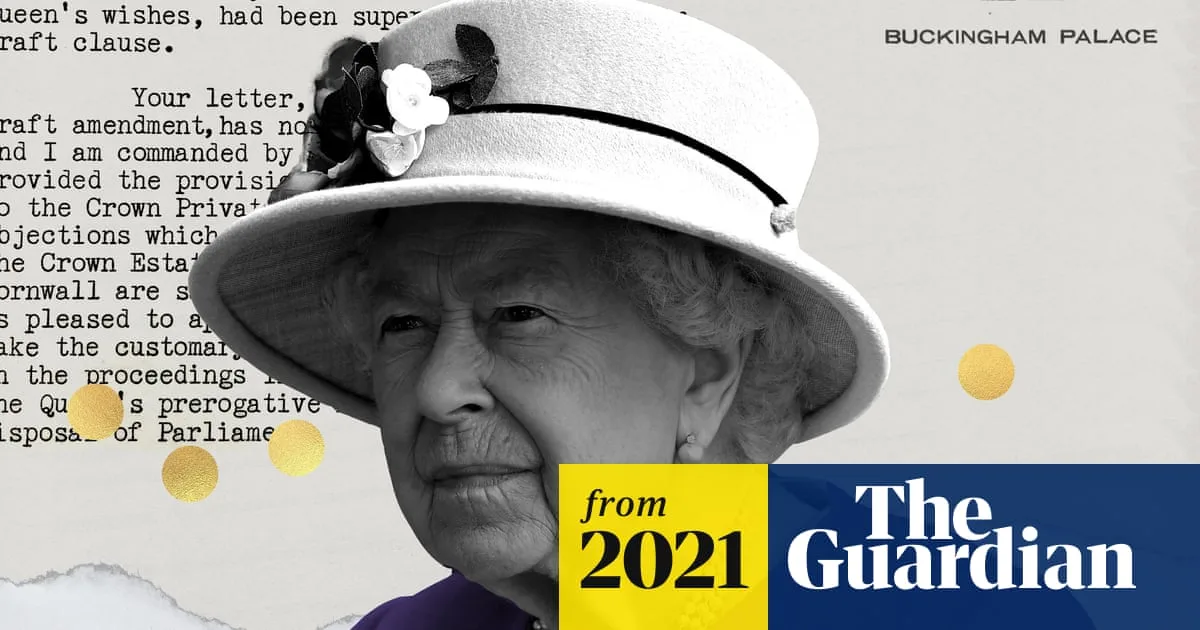
Buckingham Palace has denied claims that the Queen lobbied for changes to tax legislation benefiting MPs, following a Guardian investigation into the monarch's use of parliamentary procedures to influence laws. The investigation revealed documents showing the Queen's private solicitor sought exemptions from transparency measures in the 1970s to conceal her private wealth.
The documents, uncovered in the National Archives, show that in 1973, the Queen's lawyer, Matthew Farrer, met with civil servants to request that the monarch be exempted from a companies bill requiring disclosure of shareholdings. Farrer argued that revealing the Queen's investments would be 'embarrassing'. The government subsequently inserted a clause allowing exemptions for 'heads of state', effectively shielding the Queen's finances until at least 2011.
Constitutional experts have described the Queen's influence over legislation as unprecedented, with Thomas Adams of Oxford University stating it gave her 'the kind of influence over legislation that lobbyists would only dream of'. The Palace, however, maintains that the Queen acted within constitutional conventions and that the changes were made to protect national security and the monarchy's neutrality.
The Guardian's findings have sparked debate about the transparency of the monarchy and the use of 'Queen's consent', a procedure requiring the monarch's approval for bills affecting royal interests. While the Palace denies any impropriety, the documents suggest the Queen successfully lobbied to keep her private wealth hidden from public scrutiny.